
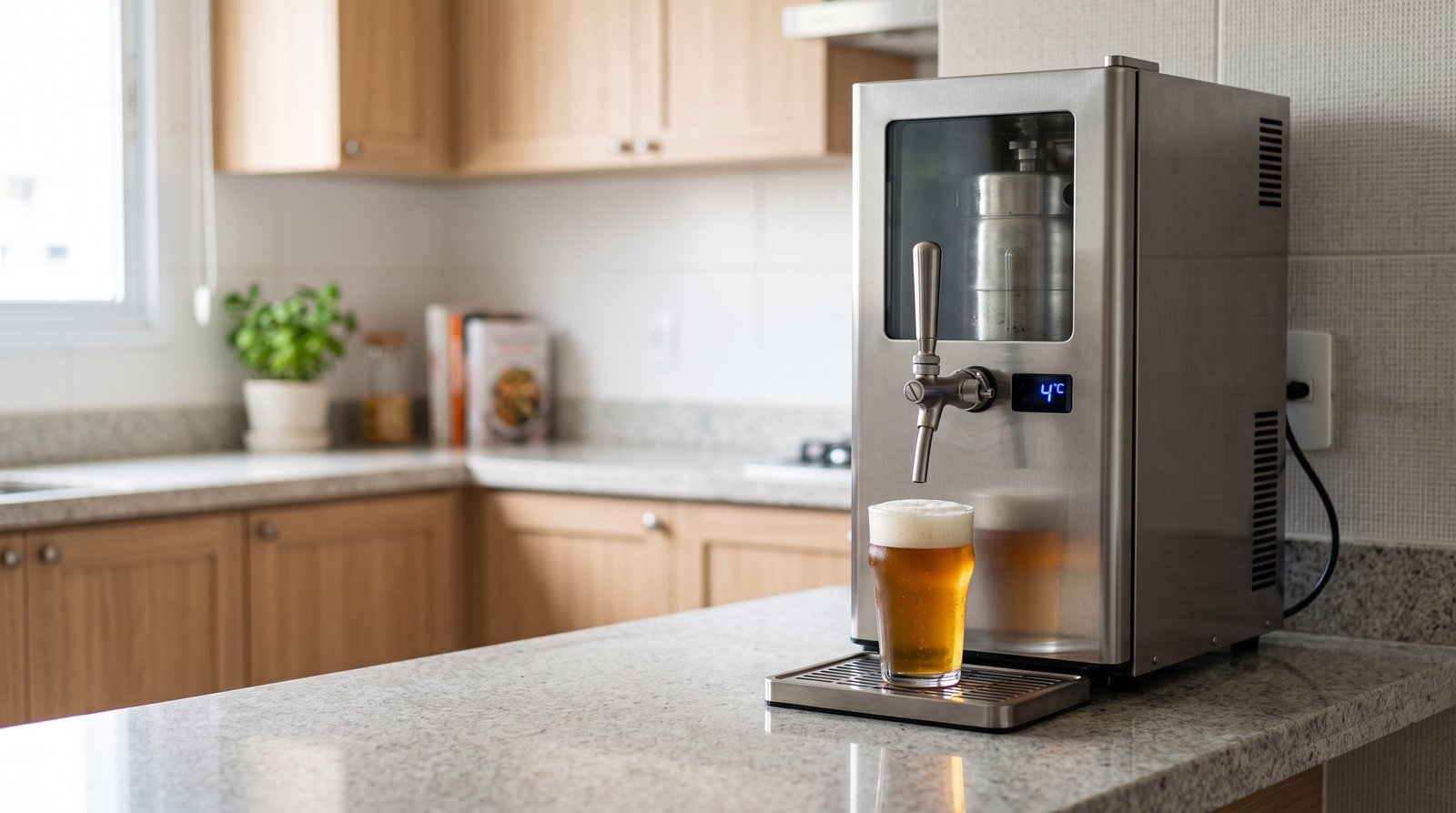
There is a moment at every family gathering when somebody asks where that came from. A beer tap on the kitchen counter, with the head just right and the glass frosting over, does not go unnoticed. It is one of the few appliances that draw the same reaction as a new piece of furniture.
That is why it sells. And it is precisely because it sells easily that a mistake costs so much in this category.
What a home beer dispenser is
It is a countertop appliance that does three things at once: it holds a small keg, keeps the drink at serving temperature and pushes the liquid up to the tap with carbon dioxide, so it comes out with pressure and with a head. Domestic models work with five-litre kegs, the same ones large breweries sell ready-filled, and there are ranges that take bigger kegs, of ten or twenty litres, for anyone who wants to fill up with beer from a local brewery.
The technical choice that changes the price is the cooling system: a compressor, which is a small fridge with a tap, or thermoelectric, lighter and cheaper. The performance gap between the two in a hot country is the one we already set out with all the figures in the find on the wine cooler, and it is worth reading before choosing the entry line.
But what decides this find is not the cold. It is the gas.
Models and variations
The Chinese shelf here is wider than it looks, and it runs from the countertop appliance for one household to the two-tap tower a customer installs in an outdoor entertaining area.
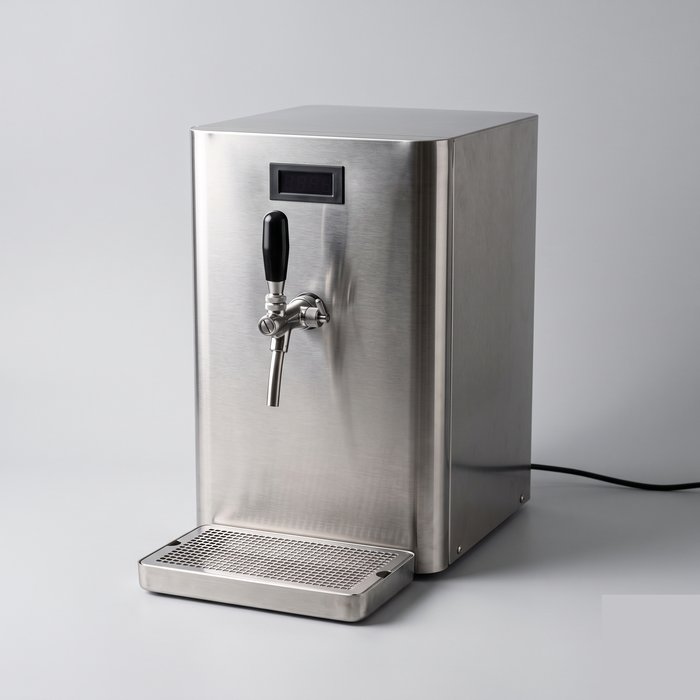
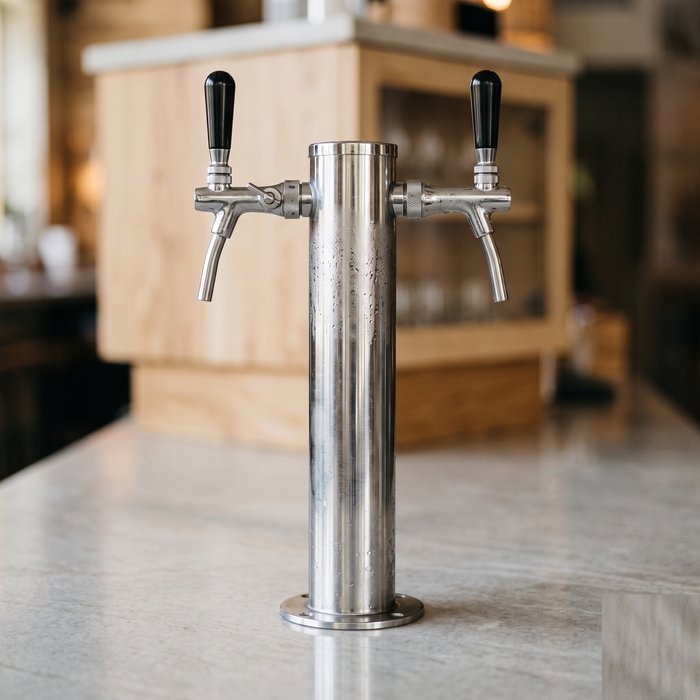
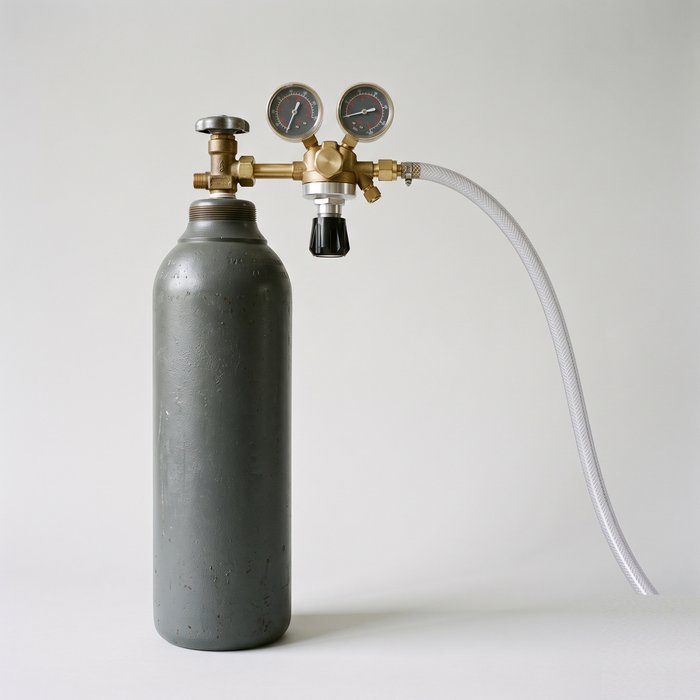
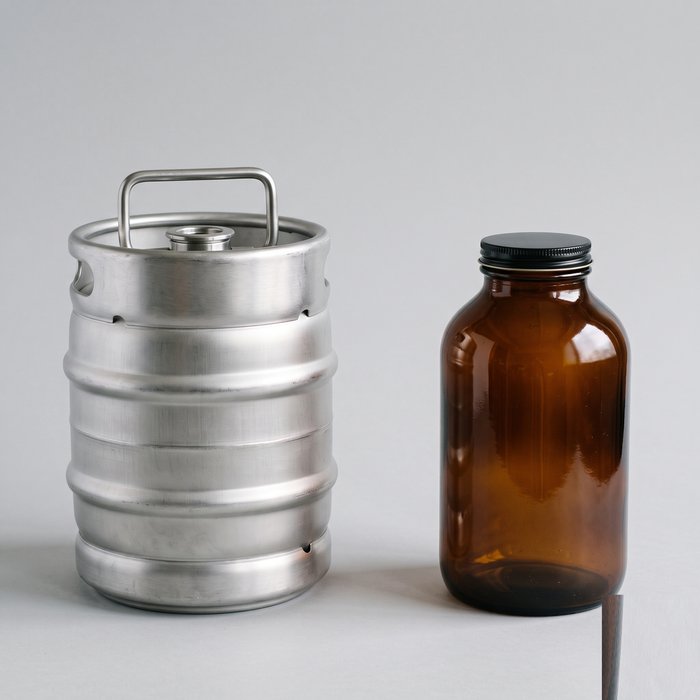
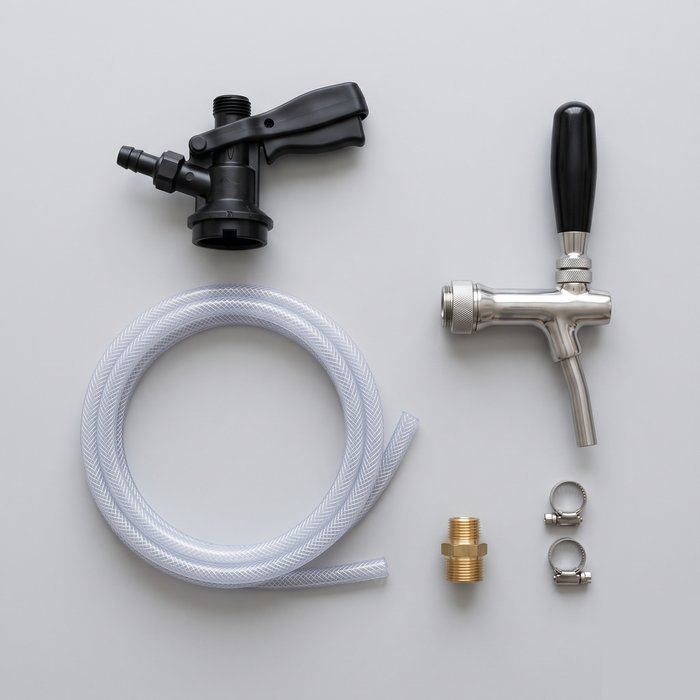
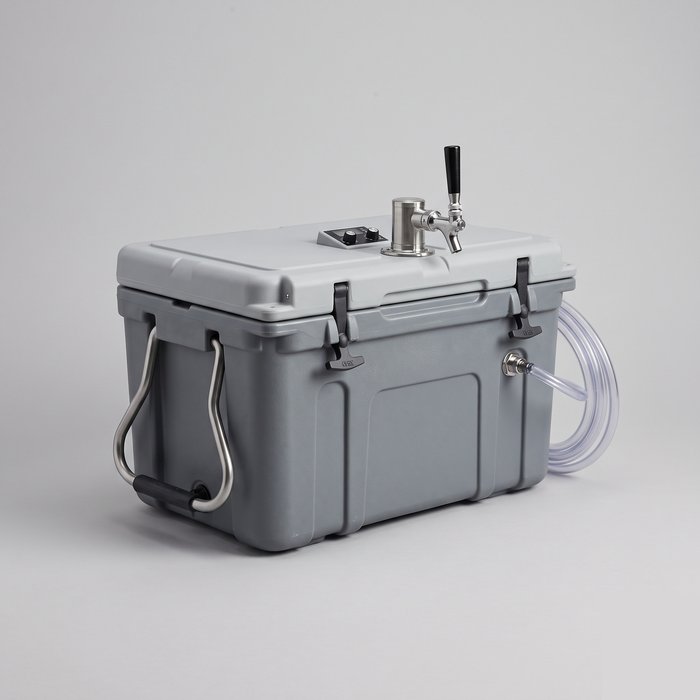
Look at the third tile, because it is the subject of this find. That is the cylinder and the regulator, which together cost little and decide whether the product works.
The wall: the part that does not ship
Carbon dioxide under pressure is class 2 dangerous goods, the gases class. A full cylinder does not travel inside a general cargo container with the rest of the order. The Chinese factory ships the cylinder empty, and very often simply leaves it out of the box. The appliance arrives technically complete, and still will not pour a glass, because what pushes the drink is missing.
Except that shipping the cylinder empty does not solve it either, and this is where most people go wrong. A CO₂ cylinder is a vessel that has to be refilled for its whole life, and in Brazil the refilling is done by an industrial gas distributor or a fire extinguisher company. They work with cylinders that follow the Brazilian manufacturing standard, ABNT NBR 16357, and that go through periodic inspection under ABNT NBR 12274, with a hydrostatic test every five years. That inspection depends on the markings stamped on the body of the cylinder itself: serial number, manufacturer, year of manufacture, service pressure, manufacturing standard and the stamp of the inspection body. A cylinder brought in from abroad, stamped with another standard, reaches the counter and is refused. And a cylinder nobody refills is scrap after the first use.
There is also the detail that passes on a photo and fails on the customer's counter: the thread. The CO₂ cylinder connection used in Brazil is ABNT NBR 209-1, equivalent to CGA 320. The regulator leaving the Chinese factory usually comes with a W21.8 thread, from the European DIN 477 standard. The two do not meet. An adapter is on sale for a few reais, but putting an adapter inside every box is a patch, not a solution: it creates a leak point, confuses the customer and hands him a problem that belonged to the supplier.
The solution, and it fits on one line of the order: import the dispenser and the regulator already specified in CGA 320, with no cylinder at all, and set up an arrangement in Brazil with a gas distributor for the cylinder. The customer receives a set that works on day one and that he can refill in his own town for the rest of the product's life. Check that on the sample, with a Brazilian cylinder in hand, before releasing production.
Why this is an opportunity for Brazil
Brazil has commercial beer dispensers to spare, for bars and restaurants, sold by companies that already serve the trade. The domestic countertop version barely exists in retail, and whoever wants one today improvises a system with parts bought separately in three different places. It is a category with visible demand and disorganised supply, which is the favourite shape of anyone importing directly.
- The wall is the barrier to entry. Whoever solves the cylinder and the thread delivers a product that works, and whoever does not delivers a box the customer sends back. In a category like this, the technical work done before the order is worth more than the purchase price, and it protects the margin of the person who did it.
- The product sells the occasion. Nobody buys a beer dispenser out of need; they buy it for a barbecue, for a new house, for the entertaining area, for a year-end present. It is a purchase of desire, with a reference price well above the cost at origin.
- Two audiences in the same catalogue. The household and the small event. The same range serves the customer who wants it on the kitchen counter and the one who rents out party equipment, and the second one buys in quantity.
- The 2026 year-end window has already closed, and the next one is 2027. With a lead time of 60 to 120 days, anyone who wants to be on the shelf in December has to close the order by mid-year. The guide to planning your import in 2027 shows why only four months of the year work for opening a new production order.
Before importing: beyond the cylinder and the thread, confirm the framing at INMETRO. Portaria Inmetro 148/2022 works from a closed list and the beer dispenser does not appear on it under that name; what does appear is household and commercial refrigeration equipment, which pulls hard on the compressor model, which is a small fridge with a tap. The thermoelectric one is more arguable. Ask for the opinion in writing from an accredited certification body, with the datasheet of the exact model, before closing the order. Confirm as well the energy efficiency label, if the framing falls under refrigeration, and the voltage, because Brazil lives with both 127 and 220 volts and this product stays plugged in. Finally, check the keg coupler: there are different standards, and the appliance has to accept the keg your customer will actually find to buy here, not the one sold in China.
Put your own brand on it
In this category an own brand solves more than looks: it is what makes it possible to deliver the right set, rather than the generic box the factory ships to the whole world.
- Your brand on the product and on the packaging (private label / OEM): the logo on the body of the appliance, on the tap and on the box.
- Colour, finish and the make-up of the kit as you choose, with the regulator on the Brazilian thread, the hose at the right length and without the cylinder that cannot travel.
- Manual in Portuguese with the line cleaning procedure, which is what heads off the commonest complaint after the third keg.
Customisation usually calls for a slightly larger minimum order, and BCVN finds the right factory, negotiates the customisation, validates the sample and makes sure the product arrives exactly as you asked for it.
It is worth understanding how this works in practice before requesting the first sample: the guide on own brand in China: private label, OEM and ODM explains the difference between the three models and what each one changes in the minimum order and the lead time.
Where to buy a home beer dispenser in China
It is a refrigeration appliance, and it lives in the appliance aisle, not the housewares one. The map of the industrial clusters helps explain why the makers of compact refrigeration concentrate in a few cities, and what that changes in the price and the minimum order.
- Canton Fair, Phase 1 (electronics and home appliances): this is where the compact refrigeration manufacturers are, and the only place where you can compare compressor and thermoelectric in the same aisle, with the appliance switched on.
- Canton Fair, Phase 2 (home and housewares): worth a look for what goes with the product in the shop, from glasses and tankards to trays and bar accessories, which is where you build a bundle with a better margin than the appliance itself.
- Yiwu Fair: it serves the low-value accessory with a low minimum order, from the line cleaning kit to the glass holder. For the appliance itself the factory price is not at the stall, and what exists outside the market explains why.
Next edition, Canton Fair 2026 (140th): Phase 1 runs from 15 to 19 October 2026 and Phase 2 from 23 to 27 October, both in Guangzhou. The Yiwu Fair opens from 21 to 24 October, and fits into the gap between the two phases.
Read the complete guide to the Canton Fair 2026
This is a product whose sample has to be properly tested, not just switched on. Fill it, pressurise it with a Brazilian cylinder, pour, leave it standing for two days and pour again. What separates the good dispenser from the bad one is the seal on the coupler and the stability of the pressure across the keg, and neither of those appears on a datasheet. It appears in the third glass.
Frequently asked questions about importing a home beer dispenser
Can the dispenser be imported with the CO₂ cylinder full?
No. Carbon dioxide under pressure is class 2 dangerous goods, the gases class, and a full cylinder does not go into a general cargo container along with the rest of the order. The Chinese factory ships the cylinder empty or simply leaves it out, and the second option is the common one. That means the product arrives technically complete and still will not pour a single glass, because what pushes the drink is missing. The importer has to decide this before the order, and the right decision is almost always to buy the cylinder in Brazil, where any industrial gas distributor or fire extinguisher company sells and refills them.
Does the regulator in the box fit a Brazilian cylinder?
Frequently it does not, and this is where the sale turns into a return. The CO₂ cylinder connection standard used in Brazil is ABNT NBR 209-1, equivalent to CGA 320, while the regulator leaving the Chinese factory usually comes with a W21.8 thread, from the European DIN 477 standard. The two do not meet. Adapters are on sale, but putting an adapter inside every box is a patch, not a solution: it creates a leak point, confuses the customer and hands him a problem that belonged to the supplier. The right move is to specify the regulator in CGA 320 at the factory itself, before production, and to check that on the sample with a Brazilian cylinder in hand.
Does a home beer dispenser need INMETRO certification?
It depends on the model, and the answer has to come in writing before the order. Portaria Inmetro 148/2022 works from a closed list, and the beer dispenser does not appear on it under that name. What does appear is household refrigeration equipment and commercial refrigeration equipment, which pulls hard on the compressor model, which is a small fridge with a tap. The thermoelectric countertop model is more arguable. Add to that the energy efficiency label, when the framing falls under refrigeration, and the voltage, because Brazil lives with both 127 and 220 volts and this product stays plugged in. Ask an accredited certification body for an opinion with the datasheet of the exact model, because the answer decides whether the cargo clears customs.