The importer starting out tends to treat China as one place. They send the same enquiry to twenty suppliers scattered across five provinces, get twenty different prices back and conclude that some are expensive and others cheap. It almost never is that. Most of the time what they are measuring is not how good each factory is: it is how far each one sits from the place where that product is actually made.
This guide is that map. Which city makes what, why China organised itself this way, and what the right city changes in the price, the minimum order and the lead time of your container.
Why China organises itself into one-product towns
The Chinese word for it is zhuanye zhen, specialist town, and the phenomenon came out of no ministry's plan. It came out of a snowball.
One factory does well somewhere. The component suppliers move in next to it, because that is where the customer is. Along come the people who cut the mould, the ones who do the plating, the ones who print the packaging, the ones who book the freight. The local workers learn that trade and become worth more there than anywhere else. A wholesale market opens to move what gets made. Twenty years on, what was one factory is a district where everything that product needs sits twenty minutes away. It is that density, and not the low wage, that holds up Chinese cost today, and the end of cheap labour shows why.
This is what makes the Chinese price possible. It is not just labour cost, which is no longer cheap anyway. It is that the supplier inside the cluster buys their components from whoever is on the next street, and the factory outside buys from them. One of them is never going to match the other, however well run it is.
The practical consequence for a buyer is blunt and simple: the same product has one price inside its cluster and another price outside it. And the difference never shows up in the conversation. It shows up in the quote, and you have no way of knowing whether you are comparing two factories or two geographies.
The Pearl River Delta: electronics, moulds and appliances
This is Guangdong province, in the south, and it is the region most importers meet first, because it is where the Canton Fair is held. Everything here is a few hours' drive from Guangzhou.
- Shenzhen: electronics. Boards, components, prototypes, batteries, cameras, anything with a circuit in it. The Huaqiangbei market is the beating heart of the world's electronic components, and it is where an idea becomes a working board in days rather than months.
- Dongguan: moulds, injection and assembly. The city between Shenzhen and Guangzhou is where designs become physical product at volume. If your item has a custom plastic part, the mould is probably born here.
- Foshan and Shunde: appliances and furniture. Shunde is home to China's big white-goods brands. Next door, in Lecong, sits the country's largest furniture hub. Foshan is also a powerhouse in tiles.
- Guzhen, in Zhongshan: lighting. A small town with tens of thousands of businesses in the sector. The industry's own sources talk of around 70% of Chinese lighting and close to half the world's, and even discounting the enthusiasm in those figures, the concentration is without parallel.
- Chaozhou: sanitary ware and ceramics. Toilets, basins, tableware porcelain.
- Chenghai, in Shantou: toys. Plastic, electronic and construction sets.
- Humen, in Dongguan: apparel. Fast fashion, with its own wholesale market.
The Yangtze Delta: small commodities, tools and textiles
It sits further north, around Shanghai, and covers mainly Zhejiang and Jiangsu. It is the region with the highest density of specialist towns in the country, and the one that tends to surprise anyone who only knows Guangdong.
- Yiwu: small commodities. The world's largest wholesale market, with tens of thousands of stalls of costume jewellery, stationery, toys, party goods, household items and accessories. We come back to it shortly, because Yiwu is not a factory cluster: it is a selling cluster, and that changes everything.
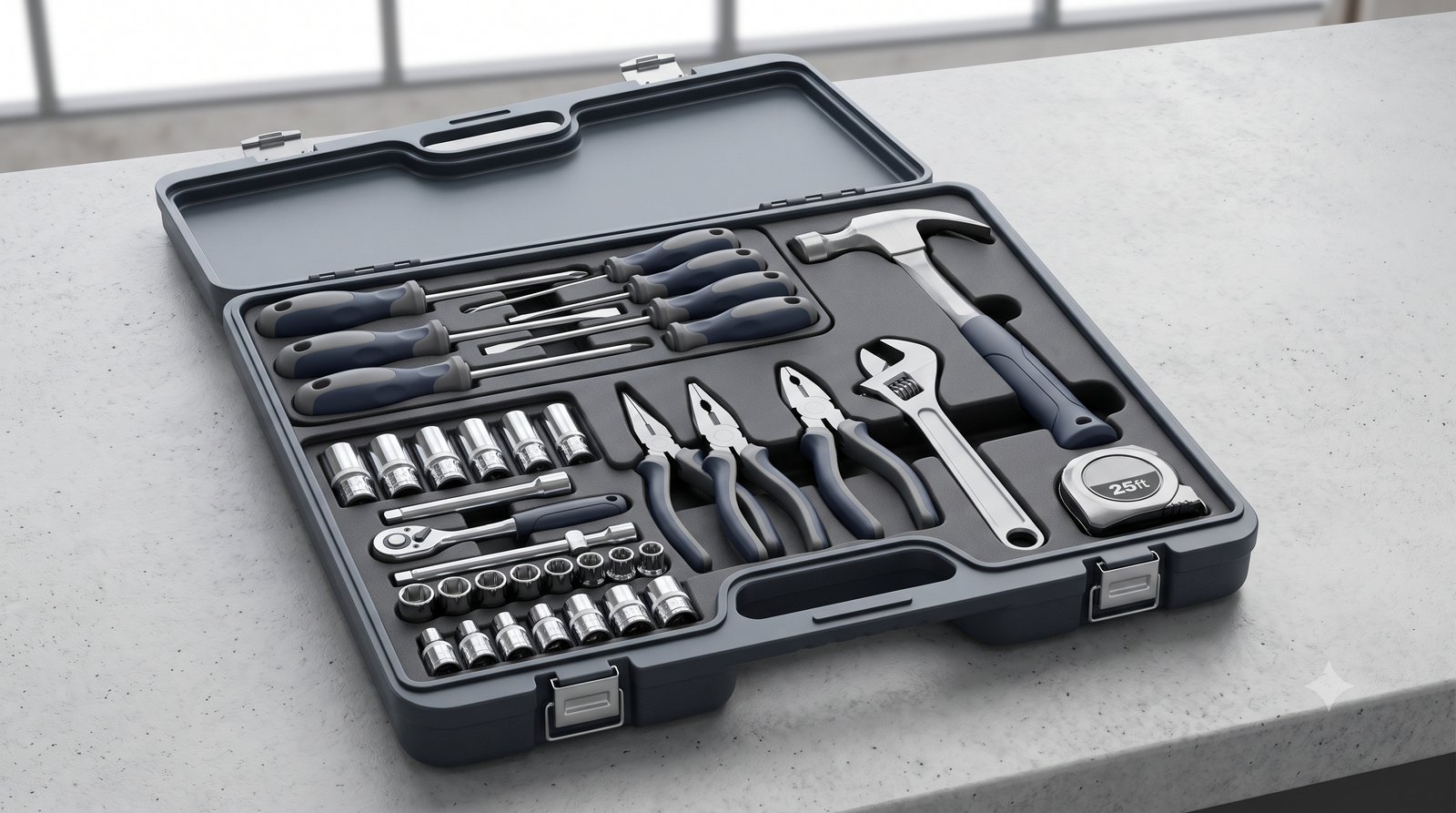
- Yongkang: tools and hardware. They call it China's hardware capital. Drills, spanners, ladders, padlocks, pressure cookers, light electric vehicles.
- Cixi and Ningbo: small appliances and moulds. Fans, heaters, vacuum cleaners, plus one of the largest concentrations of mould makers in the country.
- Wenzhou: footwear, valves, electrical goods. A city holding several clusters at once, historically the most entrepreneurial in the country.
- Keqiao, in Shaoxing: fabric. The world's largest textile market. Anyone in apparel settles their raw material here.
- Datang, in Zhuji: socks. The model taken to its extreme. Zhuji closed 2024 with more than ten thousand businesses in the trade and annual output above twenty billion pairs, something like a third of everything the world puts on its feet.
- Shengzhou: neckties. The largest producer in the world, in a city most importers have never heard named.
- Suzhou and Kunshan: larger-scale electronics. Computers, precision components, assembly for global brands.
Outside the two deltas
Focusing only on Guangdong and Zhejiang is the next mistake, and it costs money across whole sectors.
- Qingdao and Shandong province: agriculture and tyres. Agricultural machinery, implements, tyres, and a heavy appliance industry.
- Linyi, in Shandong: general goods and logistics. One of the largest wholesale centres in the north, and a logistics hub that often brings the inland freight down.
- Jinjiang and Quanzhou, in Fujian: footwear and sportswear. This is where China's big sports brands come from.
- Xuchang, in Henan: hair. Wigs, wefts and extensions, from a hub that supplies much of the world.
- Danyang, in Jiangsu: spectacle lenses.
- Chengdu, Chongqing and the interior. Volume electronics have been moving inland for a decade, chasing cost and labour. This is no longer the periphery: it is where a share of the world's computers is assembled.
The map, in one table
The useful reading is not memorising cities, it is knowing where to look when a new product turns up.
| If you buy | The cluster is | Reference trade fair |
|---|---|---|
| Electronics, boards, batteries | Shenzhen | Canton Phase 1, HK Electronics |
| Custom plastic parts, moulds | Dongguan | Canton Phase 1 |
| Large appliances | Foshan and Shunde | Canton Phase 1 |
| Small appliances | Cixi and Ningbo | Canton Phase 1 |
| Lighting and LED | Guzhen, in Zhongshan | Canton Phase 1 |
| Tools and hardware | Yongkang | Canton Phase 1 |
| Furniture | Lecong, in Foshan | Canton Phase 2 |
| Sanitary ware and ceramics | Chaozhou and Foshan | Canton Phase 2 |
| Fabric and apparel | Keqiao and Humen | Canton Phase 3, Intertextile |
| Toys | Chenghai, in Shantou | Canton Phase 3, China Toy Expo |
| Small commodities, jewellery, party goods | Yiwu | Yiwu Trade Fair |
| Agricultural machinery | Qingdao and Shandong | CIAME |
| Sportswear footwear | Jinjiang, in Fujian | Canton Phase 3 |
The calendar of Chinese trade fairs crosses with this table: every cluster has the fair where its manufacturers show up, and that is why picking the right phase of the Canton Fair matters as much as picking the fair.
What the map changes in your buying
Knowing the city is not geographical trivia. It changes four concrete decisions.
The price you are in a position to ask for. Inside the cluster, the supplier has the components at the door. Outside it, they are somebody else's customer. When two quotes for the same item come back with a gap the specification does not explain, geography is usually the explanation.
The lead time, when something goes wrong. A component runs short. Inside the cluster it is sorted the same day with the neighbour. Outside, it joins a queue for inland transport and your shipment slips by weeks. It is the difference between a problem and a delay.
The trip, if you go. One day in Guzhen is worth more to a lighting buyer than a week walking generic aisles. Anyone who plans the trip around the cluster map visits five factories making the same product in a day, compares on the spot and comes home with the decision made. Anyone who does not spends the week looking at samples.
The mistake the map prevents, and almost everyone makes Buying in a cluster that is not your product's because that is where a contact happened to turn up. The supplier accepts the order, subcontracts the production without saying so, and you end up with a factory that is not a factory, a lead time nobody controls and a quality problem with nobody to answer for it.
And there is the choice between market and factory town, which confuses a lot of people. Yiwu is breadth: tens of thousands of different items, low minimum orders, ideal for testing a market, almost always buying from a trading company rather than from whoever makes the goods. The factory town is depth: you reach the manufacturer, negotiate your own brand and a better price, and in return you accept a higher minimum order and less variety. One is for discovering, the other for scaling. Swapping them is expensive. The first satellite of this map is already out: inside Shenzhen, with the distinction that changes a trip the most, between the city that decides the product and the one that builds it. The second satellite covers the other end of the map: Yiwu beyond the market, on the district that surrounds the stalls and on who turns purchases from many suppliers into a single container.
What the map does not tell you
This is where this guide has to be honest, because the map solves less than it appears to.
The map gives you the city. It does not give you the factory. Guzhen holds tens of thousands of lighting businesses. Knowing your light fitting is born in Guzhen narrows the whole of China down to one city, which is enormous. But from a city of tens of thousands of businesses to a shortlist of three worth talking to, the map is no help at all.
And there are four things it will never tell you:
- Who is a factory and who is a trading company. Inside every cluster there are far more middlemen than manufacturers, and the middleman presents himself exactly as a manufacturer would: same catalogue, same photographs, sometimes the same office address. No directory settles this from a distance.
- Who has free capacity in your window. It is the question that actually decides your lead time, and the one no search answers. An excellent factory with the line full until March is, for your order, a bad factory.
- Where the quality sits inside the cluster. The concentration raises the floor, it does not guarantee the ceiling. Between the best and the worst factory in Guzhen the distance is still enormous, and neither of them is distinguishable by its address. That is why pre-shipment inspection does not stop being necessary just because you bought in the right city.
- What happens after the order is placed. No cluster prevents a raw material being swapped mid-production, nor explains why the third batch came out unlike the first.
The map is the hook. Presence is the sell. Knowing that Guzhen is the lighting capital is public knowledge, and it is worth a great deal. Being in Guzhen, walking into five factories in a morning, seeing who has their own line and who has only a showroom, and leaving with three names instead of ten thousand: that is not read, it is done on the ground.
That is exactly the distance between this article and a supplier. It shortens China to one city. From there on, it is people. For the energy chain, which cuts across several of these clusters at once, solar, batteries and electric cars And when the question stops being which city and becomes whether it is worth leaving the coast at all, China+1 and inland China separates the two possible moves, the change of province and the change of country.
Frequently asked questions about China's industrial clusters
What is an industrial cluster in China?
It is a city, and often a single district, where hundreds or thousands of factories making the same product sit together with the component suppliers, the mould shops, the finishing workshops and the freight agents that product needs. Guzhen makes lighting, Yongkang makes tools, Datang makes socks. That concentration is what makes the Chinese price possible: what in another country would be a supplier two thousand kilometres away is twenty minutes down the road.
Why does it matter which city makes my product?
Because it decides three things you feel in your margin. The price, because inside the right cluster your supplier buys components more cheaply than any factory outside it ever will. The lead time, because the missing part is on the next street rather than weeks away. And the quality that is achievable, because that is where the workers who know how to make it are. Buying the same item outside its cluster is usually both dearer and slower.
What is the difference between buying in Yiwu and buying in a factory town?
Yiwu is breadth, the factory town is depth. In the Yiwu market you see tens of thousands of different items in one place, with low minimum orders, but almost always buying from a trading company rather than from whoever makes the goods. In a factory town you reach the manufacturer, negotiate customisation and a better price, and in return you accept a higher minimum order and far less variety. One is for testing a market, the other for scaling.
Where are China's main industrial clusters?
Most sit in two deltas. In the Pearl River Delta, in Guangdong, you find Shenzhen (electronics), Dongguan (moulds and assembly), Foshan and Shunde (appliances and furniture), Guzhen (lighting) and Chaozhou (sanitary ware). In the Yangtze Delta, mainly across Zhejiang and Jiangsu, you find Yiwu (small commodities), Yongkang (tools), Cixi (small appliances), Wenzhou (footwear and valves) and Keqiao (fabric). Outside them there are strong hubs too, such as Qingdao in agricultural machinery and Jinjiang in sportswear.
Is knowing the right cluster enough to find a supplier?
No. The map gives you the city, not the factory. Guzhen alone holds tens of thousands of lighting businesses, and the map does not separate the factory from the trading company presenting itself as one, nor does it tell you who has free capacity in your production window, which is what actually decides your lead time. The cluster narrows the whole of China down to one city; getting from that city to a shortlist is groundwork.
Does the cluster guarantee quality?
It does not guarantee it, but it moves the average. A mature cluster has the supply chain, the trained workforce and the competition between thousands of factories, and that raises the floor of what is possible. Within the same cluster, though, the distance between the best and the worst factory is still enormous, and none of them is identifiable by its address. That is why pre-shipment inspection does not stop being necessary just because you bought in the right city.
BCVN — Brasil China Viagens e Negócios has connected Brazilian companies to the best suppliers in China and Asia since 2008. Find out about our services in commercial intermediation, quality inspection, factory audits and guided business trips to China's main trade fairs.
Trade fair products in the China Showcase
One product from each cluster on this map, each with its cost and resale logic. See more in the China Showcase.