What the Yiwu Trade Fair is
When importers talk about the "Yiwu Trade Fair" they usually mean the Yiwu International Trade City, the largest permanent wholesale market in the world, in the city of Yiwu, Zhejiang province, in eastern China. It is not a fair with fixed dates: it is a complex of five districts open all year round, Monday to Saturday, from 9am to 5pm.
Many of the products in Yiwu turn into import opportunities. See examples in our China Showcase, such as importing solar garden lights and pet products.
The numbers are striking: more than 75,000 stands, 210,000 m² of covered space and more than 400,000 types of product: from Christmas items to fashion accessories, from stationery to tooling, from toys to cosmetics. In 2025 the trade volume generated in Yiwu passed US$ 50 billion.
There is also the China Yiwu International Commodities Fair, a temporary event held every October that draws manufacturers and exporters from across the country for a few days. It complements the permanent market rather than replacing it.
Who Yiwu is for: retailers, shop owners, e-commerce, wholesalers and importers looking for consumer goods at factory prices, huge variety and accessible MOQs (minimum order quantities). If you import toys, decorations, accessories, household goods, stationery or gifts, Yiwu is probably the right place.
Yiwu solves breadth, but almost none of the goods you see there are made there: each comes from its own factory town. The map of China’s industrial clusters shows where each category comes from, and when it pays to go to the source instead of the market.
Yiwu vs. Canton Fair: which to visit?
This is the first question anyone planning a business trip to China asks. The answer depends on the type of product you import:
| Aspect | Yiwu Trade Fair | Canton Fair |
|---|---|---|
| Opening | Permanent (all year round) | Temporary (April and October) |
| Main focus | Consumer goods, household items, accessories | Every sector, including industry and technology |
| Exhibitor profile | A mix of manufacturers and trading companies | Predominantly manufacturers |
| Prices | Very competitive, wholesale level | Competitive, but larger volumes required |
| MOQ (minimum order) | Very low (1 box or less) | Generally higher |
| Machinery and equipment | Not available | Wide offering |
| Electricals and electronics | Basic products only | Vast offering, including high tech |
| Ideal for | Retail, e-commerce, gifts, household goods | Industry, high volume importers |
The two experiences are complementary: many importers combine a Canton Fair visit (in April or October) with 2 to 3 days in Yiwu on the same trip, making the most of the journey. From Guangzhou to Yiwu the high speed train takes about 4 hours.
The 5 districts of Yiwu: what each one holds
The Yiwu International Trade City is divided into 5 districts (区, qū), each specialising in specific product categories. Knowing the layout before you arrive is essential to avoid wasting time walking through areas that are irrelevant to you.
District 1: Toys, Accessories and Homeware
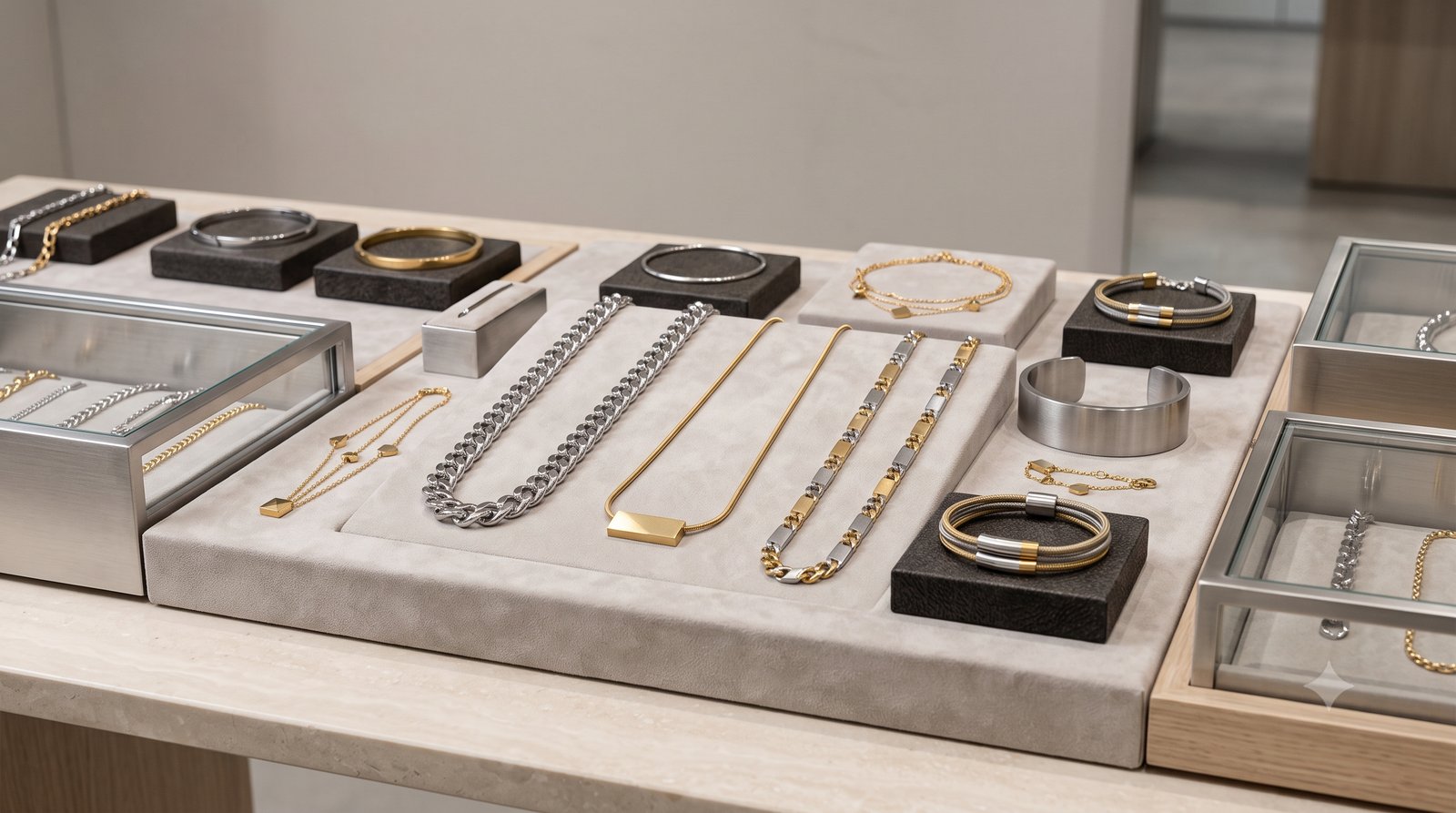
Costume jewellery, hair accessories, children's toys, artificial flowers, interior decoration and household goods. One of the most visited districts of all.
District 2: Tools, Electricals and Hardware
Hand and power tools, construction hardware, electrical materials, car parts and home accessories. Ideal for distributors and builders merchants.
District 3: Stationery, Cultural Goods and Crafts
Stationery, school supplies, religious items, festive decorations, packaging, gifts and collectables. Very popular with gift and stationery retailers.
District 4: Sports, Outdoor and Clothing
Sports goods, camping and outdoor gear, footwear, fashion and textile accessories. One of the newest and fastest growing districts in the complex.
District 5: Imported Goods, Food and Cosmetics
Products from other countries (Brazil included), processed foods, supplements, cosmetics and beauty products. It also concentrates the logistics and international freight offices, essential for anyone closing orders who needs to arrange shipping.
Planning tip: with 5 districts and tens of thousands of stands, try to allow at least 2 days in Yiwu. Spend the first day on a general reconnaissance. On the second, return to the shortlisted stands to negotiate and place orders. Arriving with a list of priority categories saves a great deal of time.
When to go to Yiwu
Unlike the Canton Fair, Yiwu has no season: the market operates all year round. Even so, some periods are more favourable than others:
| Period | Situation | Recommendation |
|---|---|---|
| Jan–Feb | Chinese New Year: partial and full closures for 2 to 3 weeks | Avoid |
| Mar–May | Full reopening after New Year. Spring, mild weather | Great window |
| Jun–Aug | Hot, humid summer. Market at full capacity, fewer business visitors | Good, but very hot |
| Sep–Nov | Autumn. Excellent weather. October: Yiwu Commodities Fair, market very busy | Excellent window |
| Dec | Pre Christmas: Christmas decoration stands at their peak. Mild winter | Good for decoration; avoid the end of the month |
If you want to combine the trip with the Canton Fair, the April (phases 1 and 2) and October (phases 1, 2 and 3) editions are the ideal windows for adding Yiwu to the same itinerary.
How to get to Yiwu
There are no direct flights from Brazil to Yiwu. The standard route from Brazil is:
- Flight from Brazil to Shanghai (Pudong) or Guangzhou, the most frequent routes out of São Paulo
- High speed train (高铁, gāotiě) or domestic flight to Yiwu or Hangzhou
- From Hangzhou to Yiwu: roughly 1h by train
- From Shanghai to Yiwu: roughly 2h by high speed train
- From Guangzhou to Yiwu: roughly 4h by high speed train
Yiwu has a local airport (YIW) with connections to Beijing, Shanghai, Guangzhou, Chengdu and other cities. For international travel, the main hubs are Shanghai Pudong (PVG) and Guangzhou Baiyun (CAN).
Essential apps for getting around China: 12306 (train tickets), DiDi (taxi and ridesharing, the equivalent of Uber) and Baidu Maps (navigation). Set everything up before you arrive: access to Google Maps and Uber is blocked in China.
How to buy in Yiwu: step by step
01 Arrive with a list of priority products
With tens of thousands of stands, visiting Yiwu without a plan is the recipe for leaving empty handed after two days of walking in circles. Before you go, define the categories and products you are after, and at what target price. That is what steers you through the relevant districts.
02 Identify manufacturers, not just traders
Yiwu is home to both direct manufacturers (工厂, gōngchǎng) and trading companies (贸易公司, màoyì gōngsī). Traders buy from factories and resell at a margin: the price is higher and the product traceability lower. Telling one from the other takes experience and, often, an on site check of the production facility.
03 Ask for samples before placing any order
Never close a volume order without having the physical sample in hand and approved. In Yiwu, samples are usually handed over on the spot or sent by courier within 3 to 5 days. Assess the material, the finish, the dimensions and how closely it matches what was shown on the stand.
04 Negotiate in Mandarin, or with someone who speaks it
Many sellers in Yiwu use translation apps and have functional English. Even so, the best prices, lead times and payment terms are won in Mandarin, by someone who knows the market's real parameters. Differences of 15 to 30% in the final price are common between buyers who negotiate with proper language support and those who do not.
05 Formalise the order with a written contract
Every order should be put in writing, with detailed specifications: quantity, material, colour, dimensions, packaging, delivery deadline and payment terms. A contract in English and Mandarin, signed and stamped by the Chinese company, is the minimum baseline of legal protection.
06 Inspect before shipment
Even in Yiwu, where prices are low and variety enormous, quality inspection before shipment is essential. Products approved on the stand can turn out different when produced at scale. A PSI (pre-shipment inspection) makes sure what leaves China is what you approved.
Common pitfalls for buyers in Yiwu
1. Confusing a showroom sample with mass produced goods. The Yiwu stand displays high quality samples, sometimes imported or made especially for demonstration. The product that arrives after a volume order can be inferior. The only way to avoid this is inspection before shipment.
2. Paying 100% upfront without guarantees. Suppliers with no track record with you do not deserve a 100% advance. The usual standard is a 30% deposit and 70% against presentation of the shipping documents. Steer clear of anyone demanding everything upfront by bank transfer with no contract.
3. Ignoring certification requirements in Brazil. Electrical products, toys, helmets, appliances and dozens of other categories require INMETRO certification to enter Brazil legally. Buying without checking can leave your cargo held at customs or destroyed.
4. Negotiating with no market price reference. Without knowing the real factory price, a foreign buyer pays the foreigner price, which can be 20 to 50% above what an experienced buyer would get. Knowing the benchmark figures before you negotiate is essential.
Why go to Yiwu with specialist support
Yiwu is enormous, fast moving and entirely in Mandarin. A general tour guide can handle basic translation, but cannot tell a manufacturer from a trader, does not know the market's real margins, will not help draft the purchase contract and has no way of following the process once you fly home.
BCVN offers something different: specialist business support covering the whole journey in Yiwu:
- Advance planning of the schedule based on the products you are looking for
- Focused navigation of the relevant districts, with no wasted time
- Telling manufacturers from traders and assessing the supplier profile
- Negotiation in Mandarin with real knowledge of market prices
- Drafting and reviewing the order documents (specifications, contract, PI)
- Quality inspection before shipment, with a technical report
- Logistics support for consolidation and shipping to Brazil
The practical result: you make every hour in Yiwu count, negotiate on the right terms and come home with formalised orders and inspected goods, not with business cards and hope. And if you want to understand what exists outside the market, the ring of offices, the consolidation warehouses and the factories in the neighbouring counties, read Yiwu beyond the market.
Frequently asked questions about the Yiwu Trade Fair
What is the Yiwu Trade Fair?
The “Yiwu Trade Fair” refers to the Yiwu International Trade City, the largest permanently operating wholesale market in the world, located in Yiwu, Zhejiang province, China. With more than 75,000 stands spread over 5 districts and more than 400,000 types of product, it is the world's leading destination for bulk buyers of consumer goods. There is also the China Yiwu International Commodities Fair, held every October, which is a temporary event.
What is the difference between Yiwu and the Canton Fair?
Yiwu is a permanent market focused on small commodities at wholesale prices: toys, accessories, household goods, Christmas items, stationery. It operates all year round. The Canton Fair is a temporary event held in Guangzhou twice a year, bringing together manufacturers from every sector, including machinery, electronics, textiles and industrial products. For retailers and e-commerce, Yiwu is usually the better fit. For industry and higher value added products, the Canton Fair is the stronger choice.
How do you get to Yiwu from Brazil?
There are no direct flights from Brazil to Yiwu. The most common route is to fly to Shanghai (Pudong) or Hangzhou and then take a high speed train to Yiwu, about 1h30 from Hangzhou or 2h from Shanghai. From Guangzhou (after the Canton Fair, for example), the high speed train takes roughly 4 hours. Yiwu has a local airport with domestic flights from the main Chinese cities.
What is the minimum order quantity in Yiwu?
The minimum order quantity (MOQ) in Yiwu varies by product and supplier, but it is generally much lower than at factories directly. It is common to find MOQs of 1 box, or even a single unit for samples, with volume orders starting at 1 crate or 1 carton. That makes Yiwu ideal for anyone wanting to test products or build a varied range without tying up a lot of capital.
Do I need an interpreter to buy in Yiwu?
Many sellers in Yiwu speak basic English and use translation apps, which allows for superficial communication. However, to negotiate prices, technical specifications, production lead times and payment terms to real advantage, Mandarin is indispensable. An interpreter who specialises in business, rather than just a tour guide, makes a significant difference to the terms you obtain.
Can I combine a visit to Yiwu with the Canton Fair on the same trip?
Yes, and it is a very common combination among importers. Phases 1 and 2 of the Canton Fair take place in April and October, and Yiwu is roughly 4 hours from Guangzhou by train. An efficient strategy is to attend the Canton Fair for 3 to 5 days and then travel to Yiwu for another 2 to 3 days on the same trip, covering complementary categories.
Trade fair products in the China Showcase
Real finds from the fairs this guide covers, each with its cost and resale logic. See more in the China Showcase.