
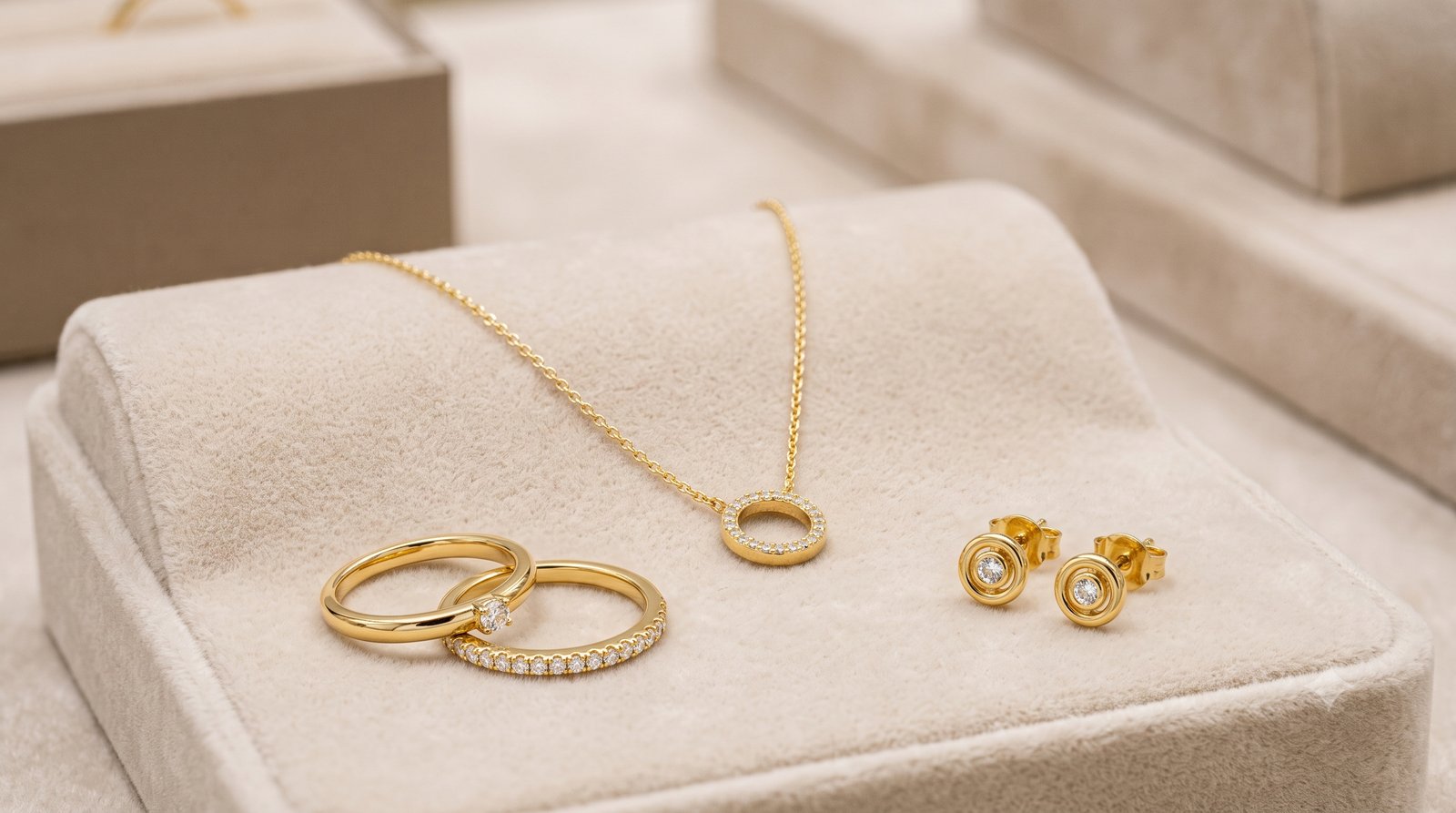
There is a piece of arithmetic every plated-jewellery reseller knows by heart, but few take all the way. The piece costs little, sells for a lot, and turns over fast. What holds most of them back is not demand, it is the source: nearly every reseller buys from a Brazilian wholesaler, who bought from an importer, who bought in China. Each link took its margin before the piece reached the window. The one who sees the opportunity is the one who decides to shorten that chain and buy where the piece is born.
What gold-plated jewellery is
Plated jewellery is a piece made of a base metal, nearly always brass, with a good thickness of gold plating over the surface. It imitates gold jewellery at a fraction of the cost and, when the plating is of good quality, it keeps its shine for a long time and stands up to daily wear. That is what separates it from ordinary costume jewellery: not the shape, but the durability of the plating and the finish.
That durability is what sustains the business. A piece that keeps its colour builds customer loyalty and generates repeat sales; one that flakes within weeks burns the brand. That is why, with plated jewellery, quality is not a detail, it is the product.
Models and variations
"Plated jewellery" is not a single product. In the aisles of the Chinese jewellery fairs it is a whole collection, and each line opens up a shelf and a sales occasion:
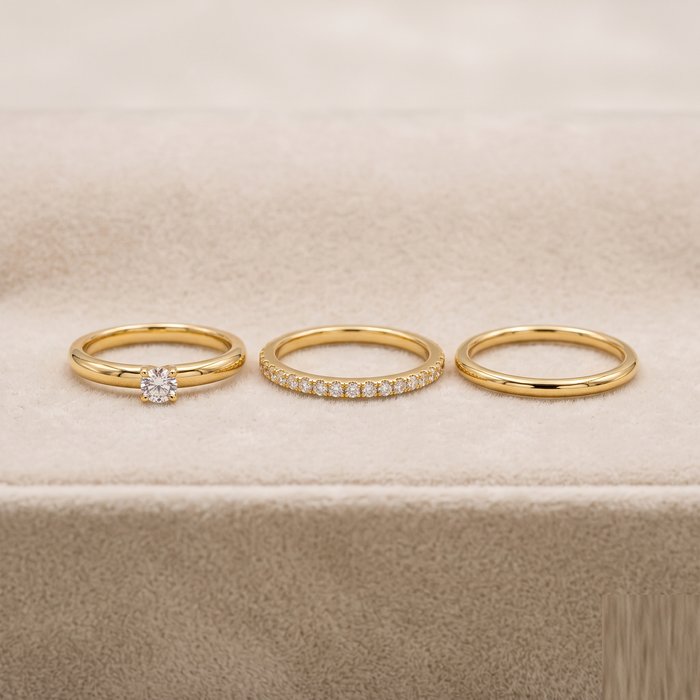
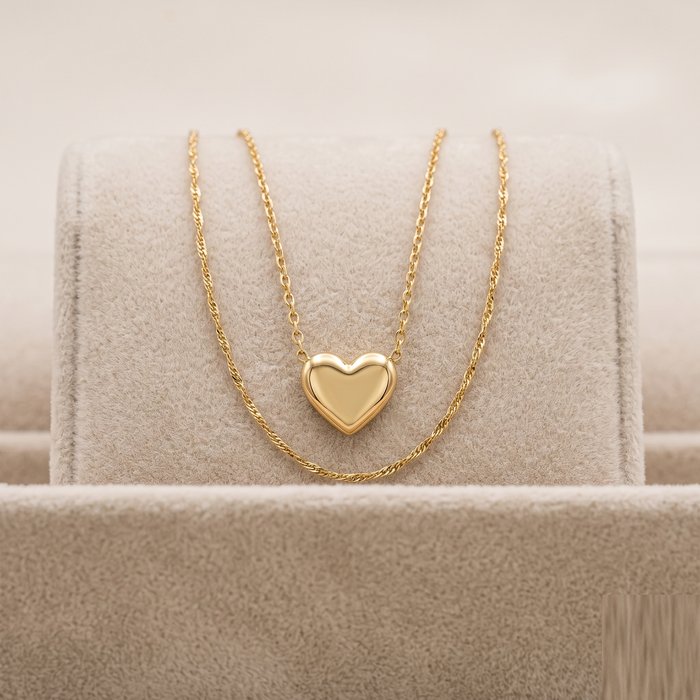
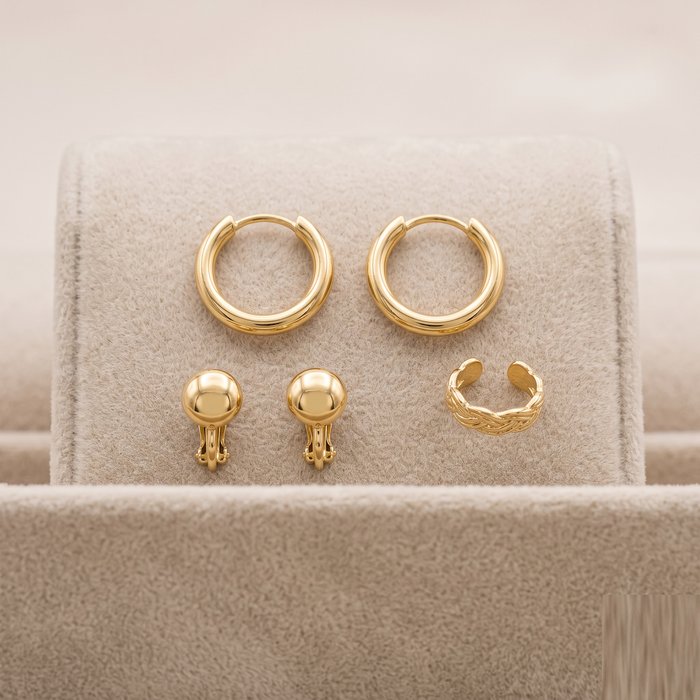
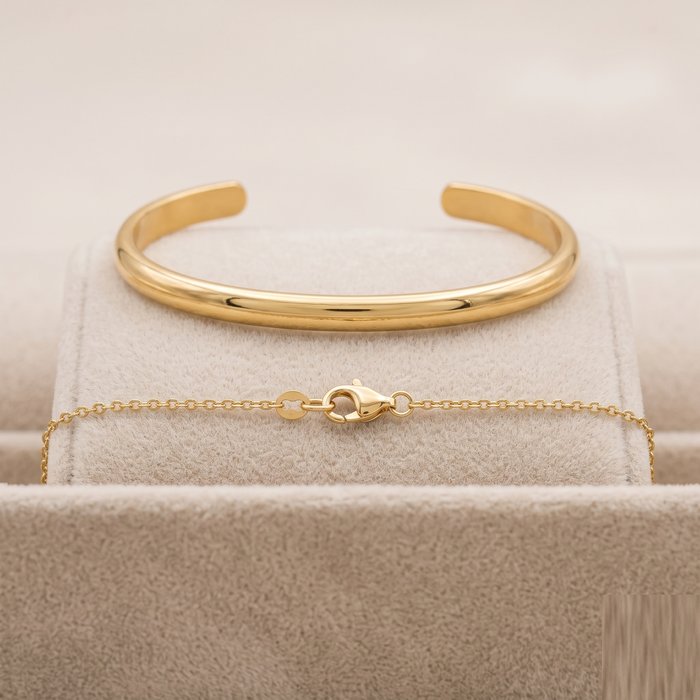
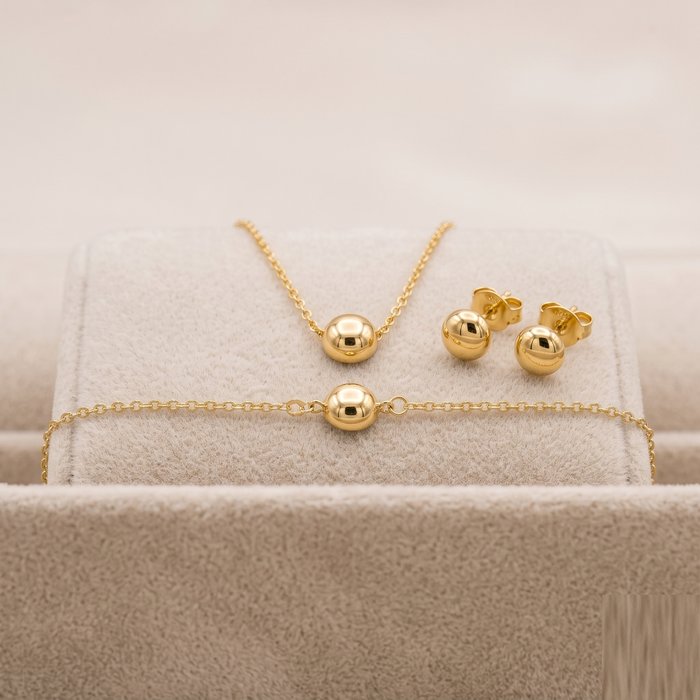
It is this variety that makes the trip worthwhile. The set, for example, is what raises the ticket per sale, and the seasonal collection is what brings the customer back each season. Seeing the lines side by side is what lets you build a shop mix instead of buying loose pieces.
Why this is an opportunity for Brazil
Brazil has one of the largest markets for plated jewellery in the world, sustained by an enormous network of resellers, shopping centre stores, kiosks and Instagram brands. It is a product of constant desire, present at every commercial date, and with an audience that refreshes the jewellery box with every trend.
- Shop-window margin: plated jewellery is one of the highest-margin products in accessory retail, because the price comes from the design and the brand, not from the cost of the metal.
- Buy low at source, resell high: China concentrates the world's manufacturing of plated jewellery. The cost at source is a fraction of the Brazilian wholesale price, and the gap widens with volume.
- Own branding is the business: plated jewellery is made to become a brand. With your design, your packaging and your name, you stop reselling everybody else's piece and start having your own.
- Timing: the typical lead time is 60 to 120 days. Whoever buys in September builds the stock for the end-of-year peak, when plated jewellery sells most as a gift.
Before importing: plated jewellery touches the skin all day long, and that is where the risk lies. Insist on a hypoallergenic alloy with a low nickel content (nickel is the number one cause of contact allergies) and free of excess lead and cadmium, and confirm the thickness of the gold plating in microns, which is what defines durability. This is a case where inspecting before shipment protects your brand from returns. See also how to check a Chinese supplier.
Put your own brand on it
Few products are as made for own branding (private label / OEM) as plated jewellery, because the perception of value lies almost entirely in the presentation and the story:
- Your brand on everything: the piece with your design, the packaging and the card with your name, and the display that turns an imported product into a shop with an identity.
- Collection, not piece: building lines and seasonal collections in your own style, instead of buying loose pieces from a catalogue.
- The right plating: setting the thickness and the tone of the plating (yellow gold, rose, rhodium) and the guarantee, which is what holds up your brand's promise.
That calls for direct negotiation with the factory and a sample validated before the batch. BCVN finds the right manufacturer, settles the customisation, validates the alloy and the plating and makes sure the piece arrives exactly as agreed.
It is worth understanding how this works in practice before requesting the first sample: the guide on own brand in China: private label, OEM and ODM explains the difference between the three models and what each one changes in the minimum order and the lead time.
Where to buy gold-plated jewellery in China
Plated jewellery is concentrated in the jewellery fairs and in the small goods fair, all within the September and October window:
- Shenzhen Jewellery Fair: from 12 to 16 September, the heart of manufacturing for plated jewellery, silver and gold plating. It is the ideal fair for anyone building a brand.
- Jewellery & Gem WORLD Hong Kong: in September, the international showcase, strong in finished jewellery, packaging and tools.
- Yiwu Trade Fair: from 21 to 24 October, the kingdom of the fast-turnover, impulse-priced item, ideal for volume and variety.
The itinerary the dates draw for you: Shenzhen, in September, for branded plated jewellery, and Yiwu, in October, for fast-turnover volume, are a few hours apart. You can build the premium collection and the impulse mix in the same season. See the guide to China's jewellery fairs and the full 2026 trade fair calendar.
It is also worth looking at stainless steel costume jewellery, the cheaper and more hard-wearing tier that rounds off the shelf for the same customer.
Plated jewellery is an old business with a simple truth: the piece is almost the same everywhere, what changes is who buys it and how they sell it. Importing directly is not about finding a piece nobody else has, it is about capturing the margin that today gets lost along the way and turning catalogue reselling into a brand with your own face on it. For the reseller, the question is not whether it sells, it is buying with the right alloy, the right plating, and with the brand being yours.
Frequently asked questions about importing gold-plated jewellery
What is gold-plated jewellery and what is it made of?
It is a piece made of a base metal, nearly always brass, with a good thickness of gold plating over the surface. It imitates gold jewellery at a fraction of the cost and, when the plating is of good quality, it keeps its shine for a long time. What sets it apart from ordinary costume jewellery is the durability of the plating and the finish, and it is precisely that durability that sustains repeat sales and the retail margin.
Is gold-plated jewellery imported from China safe? What about nickel?
It depends entirely on the supplier. Low-quality plated jewellery can have excess nickel in the alloy, which causes contact allergies, along with traces of lead and cadmium. That is why you insist on a hypoallergenic alloy, with a low nickel content, and check the thickness of the plating. A good supplier provides a test report and a sample; the pre-shipment inspection confirms the alloy and the plating and protects your brand from returns.
Can I import just a few pieces to test?
No. BCVN is an import consultancy for retailers and companies, and plated jewellery is a low-ticket product per piece: the sums only add up in volume, with freight and customs clearance diluted across thousands of pieces. It is precisely the volume that makes the margin worthwhile. Anyone who wants just a few pieces should buy from a distributor in Brazil; whoever has a shop, resells through a network or is building an own brand is BCVN's client.
Where can I buy gold-plated jewellery in China?
At the Shenzhen International Jewellery Fair, from 12 to 16 September 2026, the heart of plated jewellery manufacturing, at Jewellery & Gem WORLD Hong Kong, in September, and at the Yiwu Trade Fair, from 21 to 24 October, for the fast-turnover, high-volume piece. BCVN validates the manufacturer, the hypoallergenic alloy, the thickness of the plating and the customisation with your brand.