
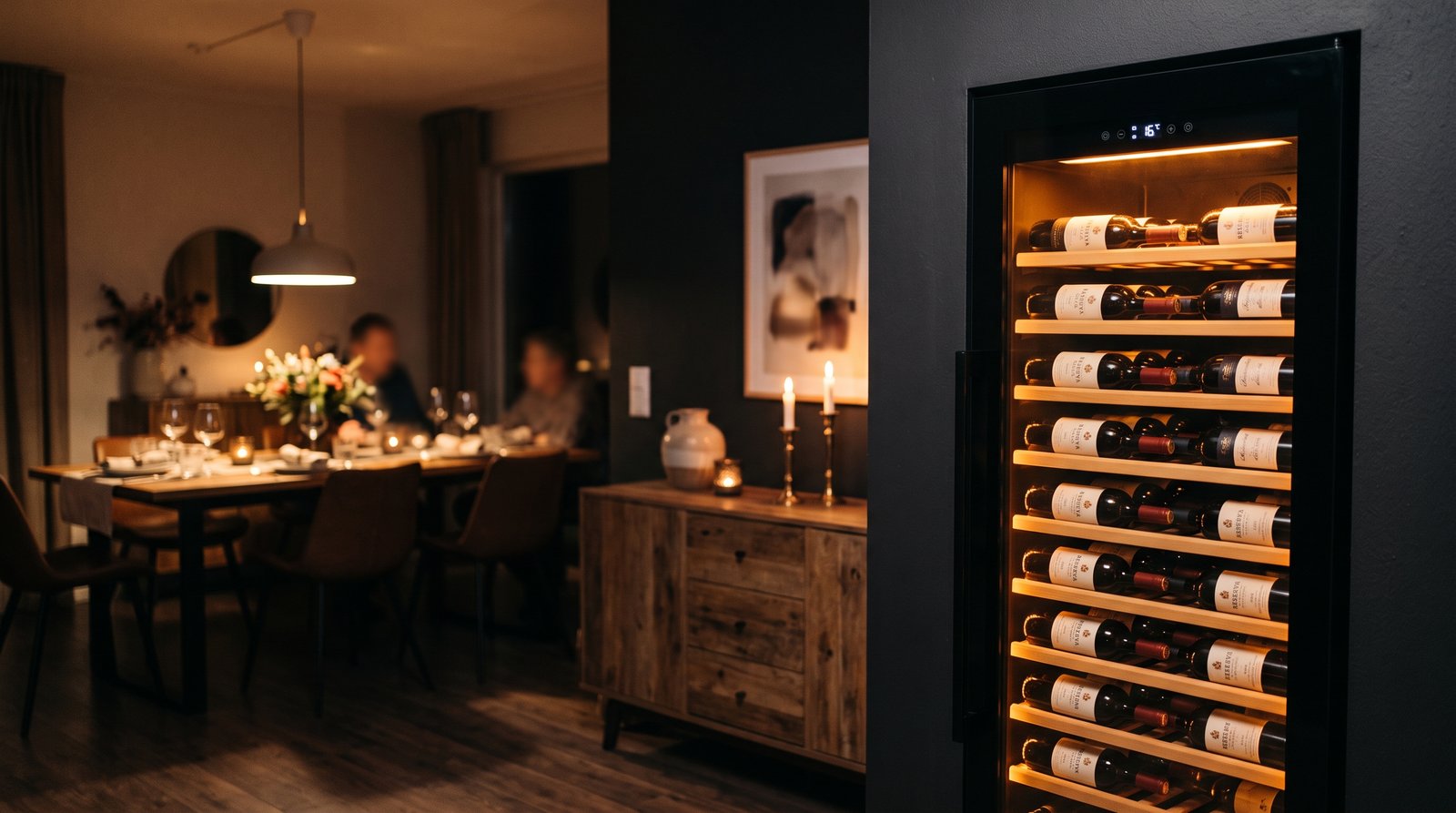
The ceviche is ready, the house is full and the phone says thirty-four degrees. Someone opens the wine cooler, takes out the bottle of white and pours it. The wine comes out lukewarm. Not spoiled, not hot, just lukewarm enough that the person who bought the appliance looks at it in silence and concludes the money was wasted. The appliance did not break. It was never capable of doing that, and the advert did not lie: it simply did not say.
What a wine cooler is, and what it is not
A wine cooler is not a small fridge. A fridge works near four degrees, with defrost cycles and strong air movement, and that is precisely what ruins a stored bottle: excessive cold and dry air dry out the cork, let air in and oxidise the wine. A wine cooler holds a high, stable range, roughly between eight and eighteen degrees, with controlled humidity, low vibration and glass treated against ultraviolet. Red and white ask for different ranges, which is why the dual-zone models exist, with two compartments regulated independently.
Beside it, in the same factory aisle and often on the same assembly line, sits the glass-door drinks fridge, which Brazilian retail calls a beer fridge. That one goes to the opposite extreme: it works between minus two and five degrees, to serve beer at the point where it forms crystals as the bottle is opened. Similar cabinet, similar door, similar audience, opposite temperature. Whoever builds the range takes both, because whoever buys one thinks about the other in the same week.
Models and variations
It is not a single product. At the fair it is a whole family, split by the cooling technology, by the number of zones and by where the cabinet is going to stand.
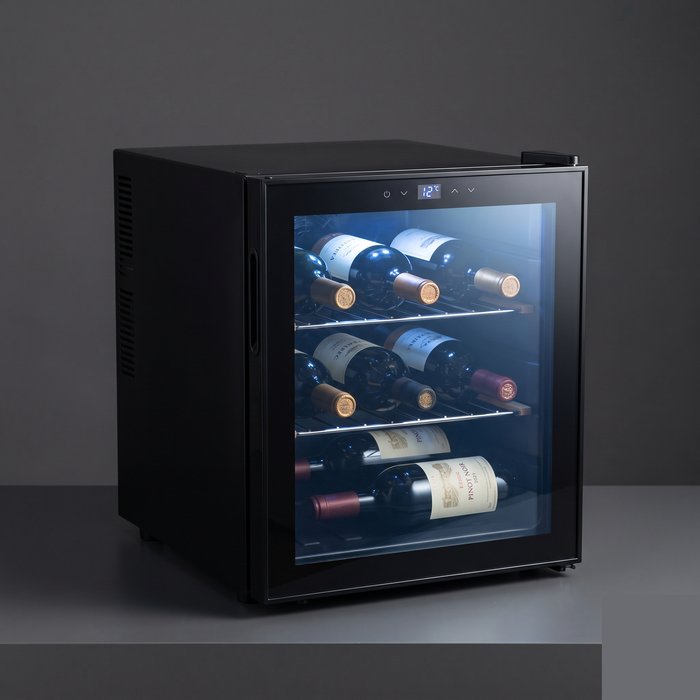
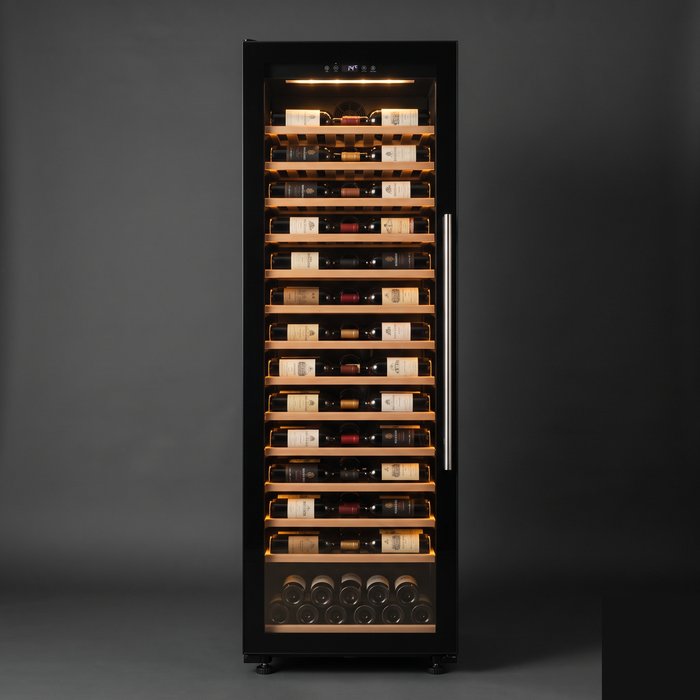
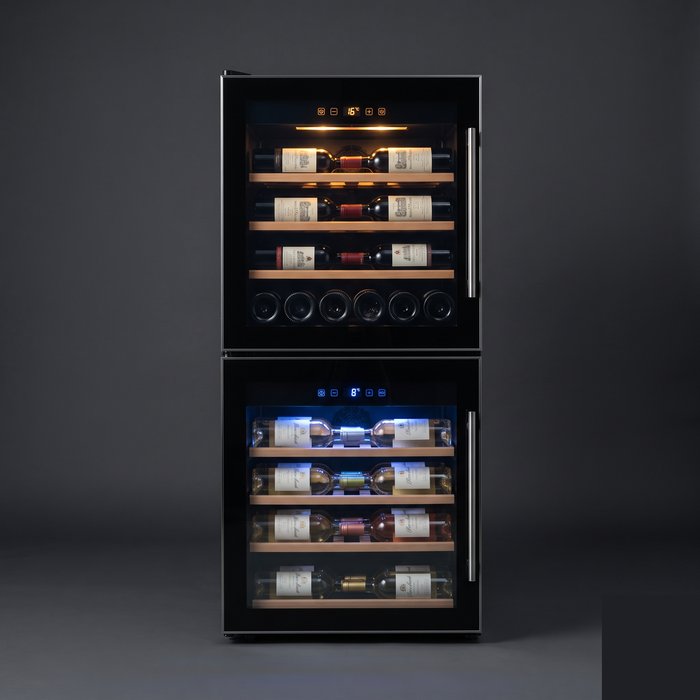
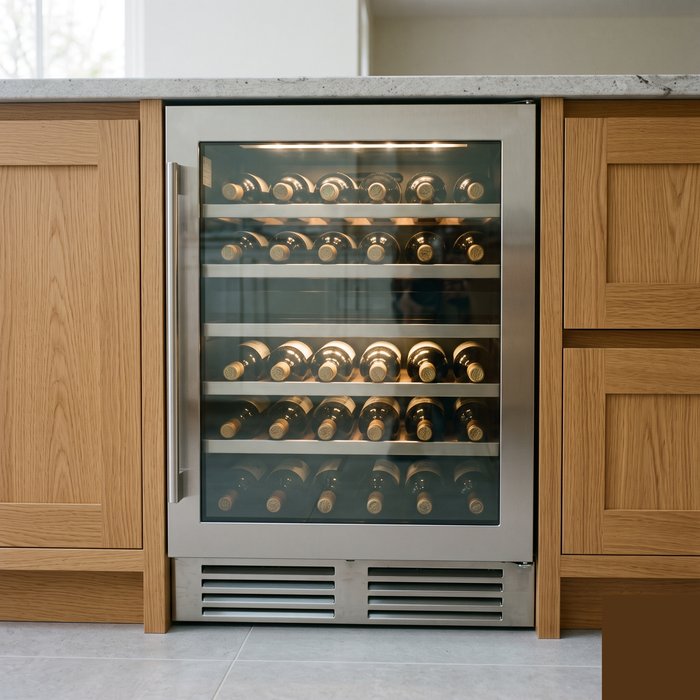
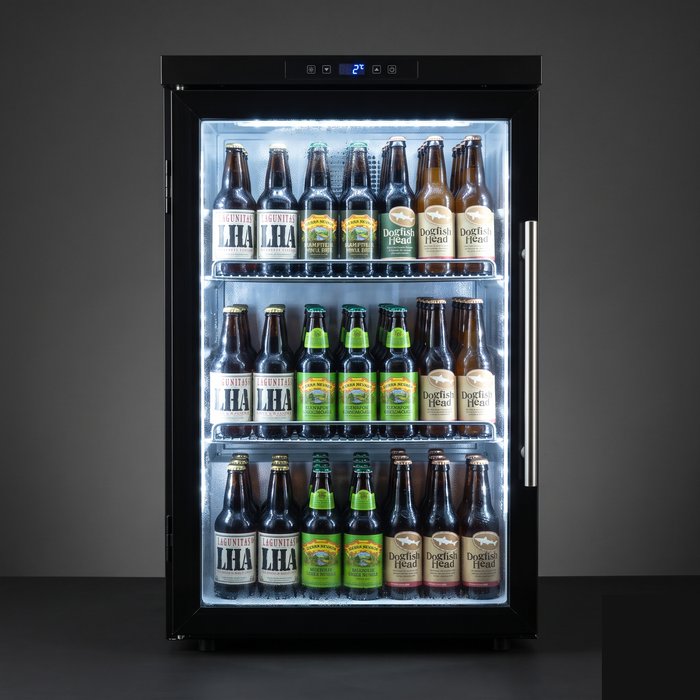
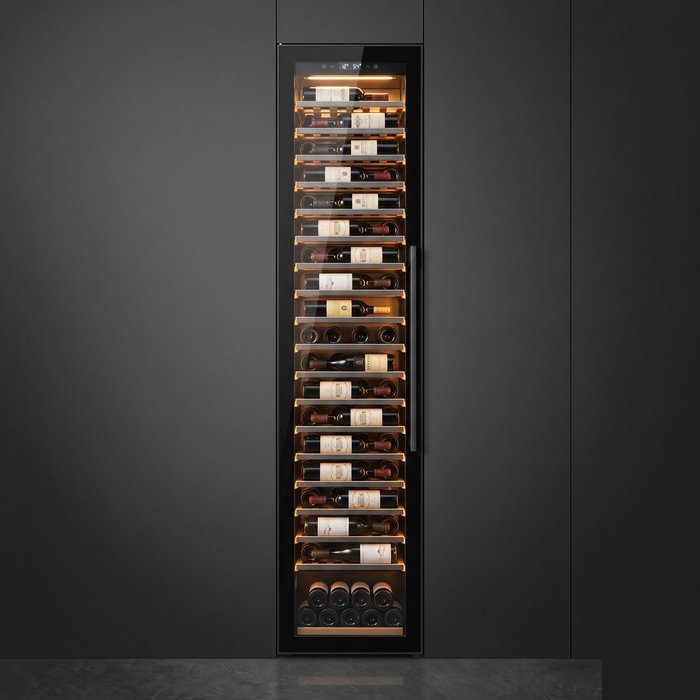
Choosing the right combination across those bands, and finding the factory that keeps the whole batch identical to the approved sample, is where BCVN comes in.
The part that never appears in the photograph
There are two ways of cooling the inside of a wine cooler, and the advert almost never says which one is in there. The thermoelectric one uses a plate that moves heat from one side to the other when current runs through it. It does not manufacture cold, it only pushes the heat outwards, and what it achieves is therefore keeping the interior a few degrees below the room, in practice somewhere between ten and fifteen. In a room at thirty-four degrees, the best it delivers sits near twenty. For a red, fine. For white and sparkling, which is what gets opened in the heat, it will not do.
The compressor one works like a fridge, with a sealed refrigerant circuit, and reaches the temperature it was set to without depending on how hot it is outside, within the range it was designed for. It costs more, makes a low noise and produces vibration, which good factories solve with damped feet and wooden shelves. It is the appliance that survives January.
None of this makes the thermoelectric a bad product. It means it occupies a specific place in the range, that of the small countertop model, for air-conditioned rooms, for offices and for whoever keeps only red. The expensive mistake is building the whole batch around it because the cost at source is seductive, and discovering the limitation through a customer review in January, which is exactly when the product is being sold.
Climate class, INMETRO and the gas: what to lock into the order
There is a small label on the back of every refrigerating appliance stating which climate it was designed for, and it is the second trap in this category. The temperate classes cover rooms up to around thirty-two degrees, the subtropical one goes close to thirty-eight, and the tropical one reaches forty-three. Outside the stated range the appliance does not break: it simply starts running almost without stopping, fails to hold the set temperature and consumes more. Since the factory builds by default the configuration of whichever market buys most from it, and that market is rarely a tropical one, the class needs to go into the purchase order in writing. It is one line in the order, and it is the difference between an appliance that serves Manaus and one that struggles in Curitiba.
On the Brazilian side, domestic refrigeration is territory of compulsory certification and of energy efficiency labelling, that band of letters the customer compares in the shop aisle. The rule applies to the product, not to whoever brings it in, and the exact scope is checked by the tax code of each item before closing, with the customs broker, and not after the cargo is on its way. It is also worth settling the voltage batch by batch, because Brazil lives with 127 and 220 volts in the same city, and a wine cooler returned over a plug is a loss nobody shares.
The third line is the gas. Modern domestic refrigeration uses R600a, which is isobutane: it performs better, does less damage to the ozone layer and is flammable. The charge inside each appliance is small and comes sealed from the factory, so sea freight usually runs without dangerous-goods treatment, but the safety data sheet and the refrigerant identification travel with the batch, the insurer asks about it and air freight is a good deal more restrictive. This gets settled with the freight forwarder before booking the space.
Three lines that decide the batch, and they fit in one e-mail: tropical climate class stated on the label, compressor cooling on every model above countertop size, and voltage defined batch by batch. None of them costs money in the order. All of them cost the container when they are left out.
Why this is an opportunity for Brazil
Brazilians started buying wine in volumes they were not buying ten years ago, and started buying bottled craft beer that asks for the right temperature. The cabinet that holds both is still expensive in national retail, and the shelf is split between the imported brand with a high price and the generic with no information at all, the one whose listing says neither whether it is thermoelectric nor what its climate class is. Whoever walks in able to answer those two questions has the middle to themselves.
- Timing, and this is the point: with a lead time of sixty to a hundred and twenty days between China and Brazil, an order closed now arrives for December. Closed in October, it arrives in February, when summer is already leaving. It is the shortest window on the list, and it is closing.
- Two peaks in the same purchase: the wine cooler is a Christmas present and the beer fridge is a summer buy. The same container serves both dates, with audiences that overlap but decide for different reasons.
- Profit logic: this is a mid-to-high value product that the customer researches before buying and does not decide on impulse. That lengthens the sales cycle and, in exchange, protects the margin, because the contest stops being only about price and becomes about information.
- A wider audience than it looks: beyond the home, the same range serves the small restaurant, the bar, the guest house, the street hotel, the office and the estate agent kitting out a show flat.
- Ready-made content: it is one of the most photogenic products there is. Glass door, internal light, bottle lying on its side and a room at night. The image sells itself and the customer even reproduces it at home.
Before importing: ask the factory for the data sheet with the climate class stated and the cooling technology made explicit, because the commercial description usually says only "wine cooler" and leaves both out. Confirm the voltage of the batch, the refrigerant and the safety data sheet that travels with it, and settle the tax classification of each item with the customs broker before shipment, because wine cooler, beer fridge and plain minibar do not necessarily fall under the same code. It is also worth understanding what the Brazilian rule asks of products with INMETRO requirements and scheduling the pre-shipment inspection to measure the real temperature of the batch after hours running, and not merely to see whether the light comes on.
Put your own brand on it
Importing wine coolers is not just reselling a generic under another name. In this category customisation is cheap and highly visible, because nearly everything the customer sees on the product is surface: the glass, the handle, the light and the shelf.
- Your brand on the product and on the packaging, with the logo applied to the door glass, engraved on the handle or printed on the box, under a private label arrangement.
- Cabinet colour, handle finish and interior light colour of your choosing, including the matt black version and the brushed steel one, which are the ones that show up most in room photographs.
- Wooden shelves to your own design, in beech or bamboo, which is the detail that separates an appliance that looks cheap from one that looks like furniture.
- Packaging and manual in Portuguese, with the serving temperature table printed on them, ready for Brazilian retail.
Customisation usually calls for a slightly larger minimum order, and BCVN finds the right factory, negotiates the customisation, validates the sample and makes sure the product arrives exactly as you asked for it.
It is worth understanding how this works in practice before requesting the first sample: the guide on own brand in China: private label, OEM and ODM explains the difference between the three models and what each one changes in the minimum order and the lead time.
Where to buy wine coolers in China
The category sits between the appliance and the piece of furniture, and that is why it shows up in two different aisles of the same season:
- Canton Fair, Phase 1 (home appliances): from 15 to 19 October, in Guangzhou. It is where the refrigeration factories are, and where compressor, climate class and consumption get compared across dozens of suppliers in a single day.
- Canton Fair, Phase 2 (home and decoration): from 23 to 27 October, in the same city. It is the aisle for the furniture side of the category, useful for the built-in models and for settling finish, handle and shelving with whoever makes the cabinet.
- Guide to importing home appliances: what needs to be settled before closing an order for white goods, from certification to packaging that survives the journey.
The two phases do not overlap, and here that is an advantage: Phase 1 (15 to 19 October) closes before Phase 2 opens (23 to 27 October), in the same complex in Guangzhou. You can see the engineering at one and the finishing at the other without changing city, with Yiwu (21 to 24 October) slotting in between for the accessories. See the complete calendar of 2026 trade fairs.
Read the complete guide to the Canton Fair 2026
It is also worth looking at commercial refrigeration, which is the same engineering at the scale of a shop, and the portable barbecue and grill, which the same customer buys in the same week of December.
A wine cooler is one of those products the customer only understands months later, and then tells everybody about. When the discovery is a good one, they become the best advert a reseller could have. When it is a bad one, they become the worst. What decides which way it goes is not the cost at source: it is three lines in the order.
Frequently asked questions about importing wine coolers
Thermoelectric or compressor wine cooler: which one to import into Brazil?
Compressor, across most of the country. The thermoelectric unit does not produce cold, it only carries heat from the inside out through a small plate, and what it achieves is therefore keeping the interior a few degrees below the room, typically between ten and fifteen. In a room at thirty-four degrees in January, that leaves the interior near twenty, and no white wine reaches serving range. The compressor unit works like a fridge and reaches the temperature it was set to regardless of the heat outside, within the range it was designed for. The thermoelectric one has its place in the range, in the small countertop version, for air-conditioned rooms and for whoever keeps only red, but it cannot be the flagship of a batch sold through a Brazilian summer.
What is the climate class of a wine cooler and why does it matter when importing?
The climate class states the range of room temperature the appliance was designed for, and it is given as letters. The temperate classes cover rooms up to around thirty-two degrees; the subtropical one goes close to thirty-eight; and the tropical one, which is what most of Brazil needs, reaches forty-three. Outside the stated range the appliance does not break, but the compressor starts running almost without stopping, fails to hold the set temperature and uses more power. Since the Chinese factory builds by default the configuration of whichever market buys most from it, the class has to go into the purchase order in writing, alongside the voltage of the batch.
Does R600a gas change anything in the shipping of an imported wine cooler?
It changes the paperwork and the conversation with the freight forwarder. R600a is isobutane, a flammable hydrocarbon used today in most domestic refrigeration because it performs better and has less environmental impact than the older gases. The charge inside each appliance is small and sealed, so sea freight usually runs without dangerous-goods treatment, but the safety data sheet and the refrigerant identification have to travel with the batch, the insurer asks about it and air freight is a good deal more restrictive. This gets confirmed with the forwarder before booking the space, not once the cargo is ready.