
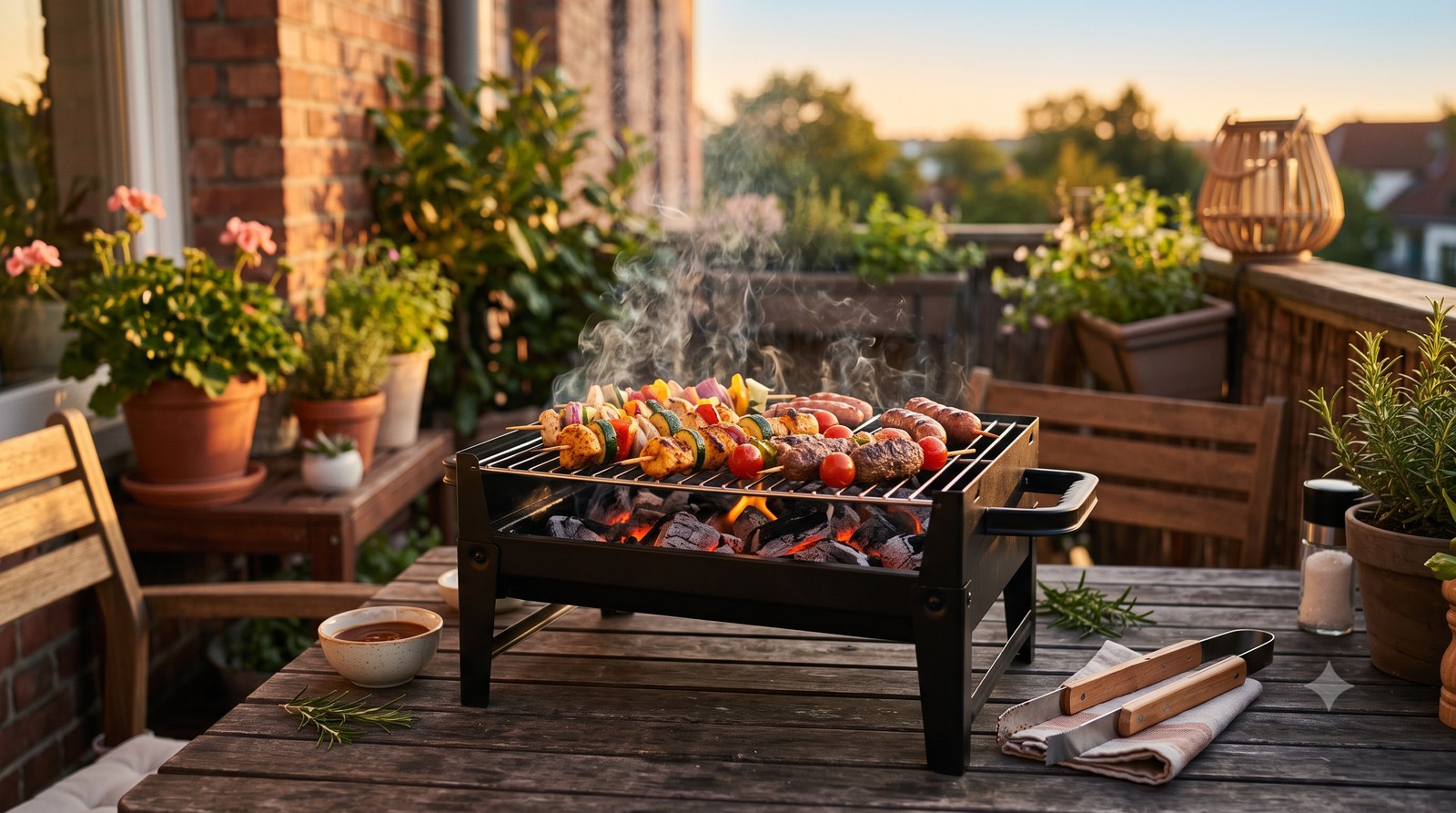
The Brazilian summer has one ritual that never fails: the urge to gather people around the grill. Except not everyone has a garden, and the built-in masonry barbecue does not go to the beach or to a campsite. That is the gap the portable barbecue fills, and the one who profits from it is not the person cooking: it is the importer who spotted a category with a low cost at source, high value in the heat and an audience that only grows.
What the portable barbecue is
It is the family of compact barbecues and grills made to be carried and used anywhere. They fold, slot together or turn into a case, and they cover everything from classic charcoal to the electric models for flats. What they all have in common is that they answer the same wish, a barbecue where one did not fit before, with a visual appeal that sells itself in photos and video.
It is neither an expensive nor a complex product. That is exactly why it turns over: an affordable price, universal use in the heat and a range of models that serves everyone from the camper to the flat dweller.
Models and variations
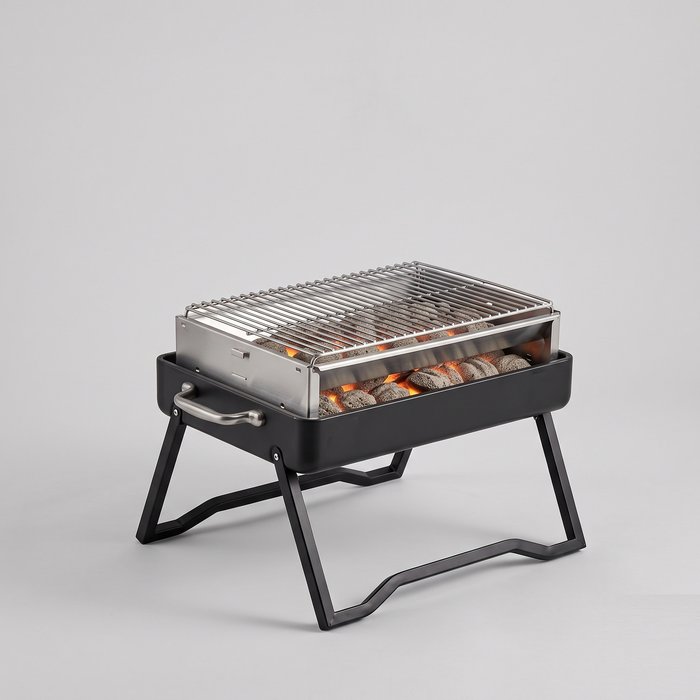
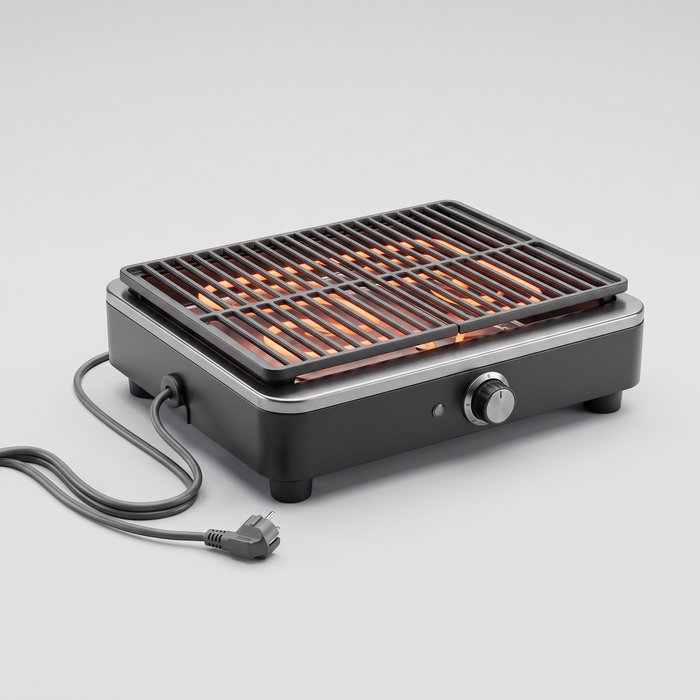
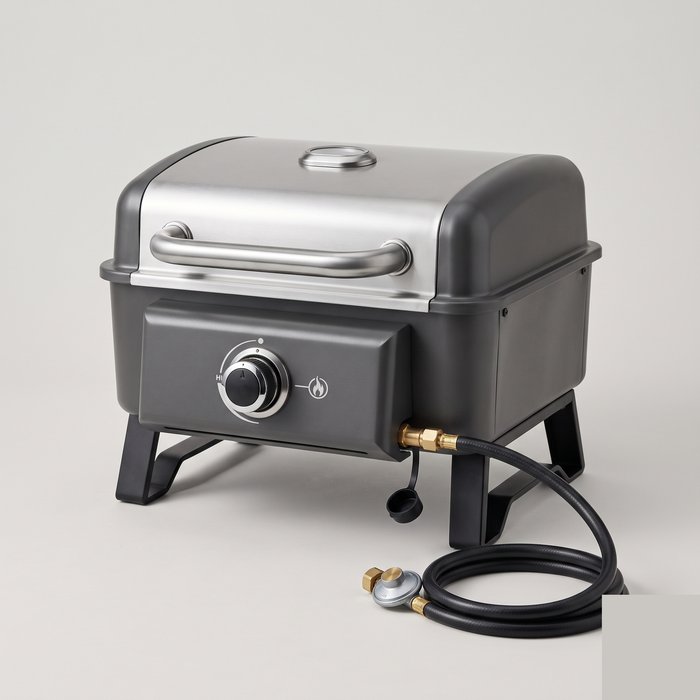
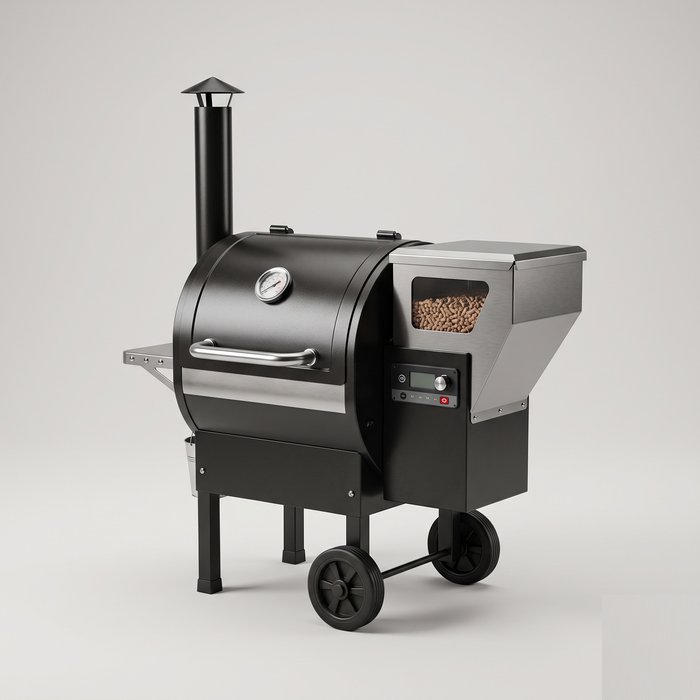
"Portable barbecue" is not one product. At the Chinese fairs it is a whole aisle of types, and each one opens a different audience and a different price bracket in your business:
Why this is an opportunity for Brazil
The barbecue is almost an institution in Brazil, and the country is living through a wave of outdoor activity and of flat living, both pulling the portable version along. The desire concentrates between November and February, and anyone who understands importing knows that window is not served in December; it is served now.
- Perfect timing: with the manufacturing and sea freight lead time (60 to 120 days), placing the order in July or August is what guarantees stock at the height of summer and of the end-of-year festivities.
- Good margin: it is a product with a low cost at source and a high perceived value in the heat, with lifestyle appeal. Well negotiated in China, it resells in Brazil with room to spare.
- Wide audience: the camper, the flat dweller, the beach family, whoever is tailgating in the car park. Each model opens a different customer.
- Repeat purchase on accessories: an extra grill, a cover, skewers, charcoal and utensils are the second sale that goes with the barbecue.
Before importing: the charcoal barbecue, having no electrical part, carries little regulatory friction. The electric and gas models normally require INMETRO certification and attention to the safety rules. The quality of the steel, the grill and the hinges varies a great deal between factories, and this is a product where inspecting before shipment separates the barbecue that lasts from the one that rusts in its first season.
Put your own brand on it
Importing from China is not just reselling a generic product. The factory can put your brand on the barbecue and on the packaging, and put the kit together in the way that makes sense for your customer. That is what separates one more item on the shelf from a product that is yours alone, with more margin and less fighting over price.
- Your brand on the product and on the box (private label / OEM): logo engraved or printed.
- Colour, size and kit to your choice: the grills, cover and utensils that come with it, so you can build price brackets.
- Packaging and manual designed for Brazilian retail, in Portuguese.
Customisation usually calls for a slightly larger minimum order, and that is where having a partner in China makes the difference: BCVN finds the right factory, negotiates the customisation and the kit, validates the sample and makes sure the product arrives exactly as you asked for it.
It is worth understanding how this works in practice before requesting the first sample: the guide on own brand in China: private label, OEM and ODM explains the difference between the three models and what each one changes in the minimum order and the lead time.
Where to buy portable barbecues in China
Barbecues and kitchen goods are a strong sector in China, and the portable version turns up in force at the main fairs:
- Yiwu Trade Fair: strong in household goods and barbecue items, ideal for variety, volume and price at the largest small-commodities wholesale market in the world.
- Canton Fair, Phase 1 (Household Appliances): where the electric grills and the models with an electrical component are, with manufacturers ready for private label.
Next edition, Canton Fair 2026 (140th): Phase 1, with the household appliances, runs from 15 to 19 October 2026, at the Pazhou complex in Guangzhou. The Yiwu Trade Fair runs almost all year, which allows the two to be combined in a single trip.
Read the complete guide to the Canton Fair 2026
The portable barbecue is not a bold bet. It is one of those summer-desire, Brazilian-culture products that pay off for whoever builds the stock in the right month and lock up for whoever remembers them too close to the holiday. If you want your shelf full when the heat arrives, the decision belongs to July.
Frequently asked questions about importing portable barbecues
Do I need certification to import portable barbecues?
It depends on the type. The charcoal barbecue, having no electrical component, carries little regulatory friction. The electric and gas models, on the other hand, normally require INMETRO certification and attention to the safety rules. Confirm the type before placing the order. BCVN helps put the documentation together.
What is the difference between charcoal, electric, gas and pellet barbecues?
Charcoal gives the classic flavour and is the cheapest, ideal for camping and the beach. The electric one is the favourite for flats, because it produces no flame and little smoke. Gas lights quickly and controls the temperature. The pellet one, or compact smoker, serves the gourmet audience that wants to smoke food. Many importers work with more than one to cover different audiences.
Can I put my own brand on the barbecue?
Yes. The factory in China applies your brand to the barbecue, the packaging and the accessories, and adjusts colour, size and kit. It is a natural private label route, with a good margin in summer retail. BCVN negotiates the customisation and validates the sample.
Where can I find portable barbecue suppliers in China?
At the Canton Fair (Phase 1, household appliances, for the electric models) and, above all, at the Yiwu Trade Fair, strong in household goods and barbecue items. BCVN validates the suppliers and can accompany your visit to the fairs.