
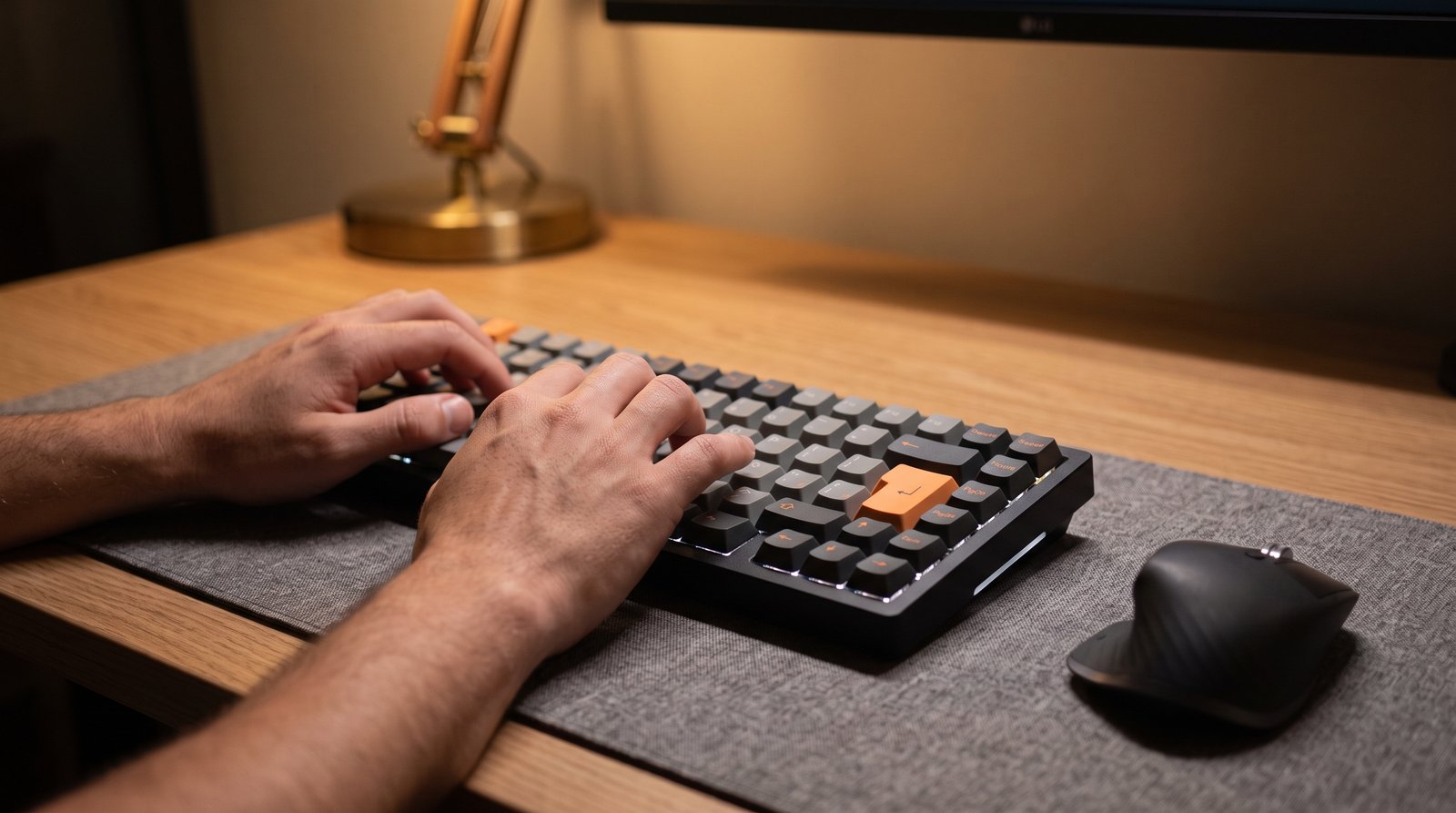
There is a consumer category in which the customer buys the product already knowing they will take it apart. Nobody buys a kettle planning to change the element, nor a pair of headphones thinking about replacing the foam next month. With mechanical keyboards it is different: a good share of buyers walk into the shop already working out which switch they will fit later and what colour the keycaps will be. That behaviour is extremely rare, it is worth money, and hardly anyone reselling in Brazil is set up to serve it. Before any of that, though, there is a key to sort out.
What a mechanical keyboard and the rest of the setup are
On an ordinary keyboard, every key rests on a single rubber membrane, and it is that sheet which pushes the finger back up. On a mechanical one, each key has its own switch, with an independent spring and stem. That changes the feel, changes the sound and, above all, changes what happens when a key fails: instead of condemning the unit, you replace the switch. Switches fall into three families, the linear, which travels smoothly, the tactile, which gives a small step halfway down, and the clicky, which snaps. This is not niche preference: it is the first question an informed buyer asks, and the shop that cannot answer loses the sale.
Around the keyboard there is an ecosystem that sells alongside it and that tends to be left out of a beginner's order. Double-shot PBT keycap sets, which do not wear their legends off, unlike printed ABS. Loose switches in boxes of seventy or ninety. A light mouse, with a perforated shell and a high-resolution sensor. A large desk mat, which frames the whole set and is the most photographed item. A wrist rest in wood or foam. A coiled cable with an aviator connector. None of them is expensive at source, they all turn over and they all lift the average basket without costing fresh freight.
Models and variations
It is not one product, it is a whole shelf. At the fair that shows up as separate aisles, because the keyboard, the replacement part and the desk accessory come from different manufacturing chains.
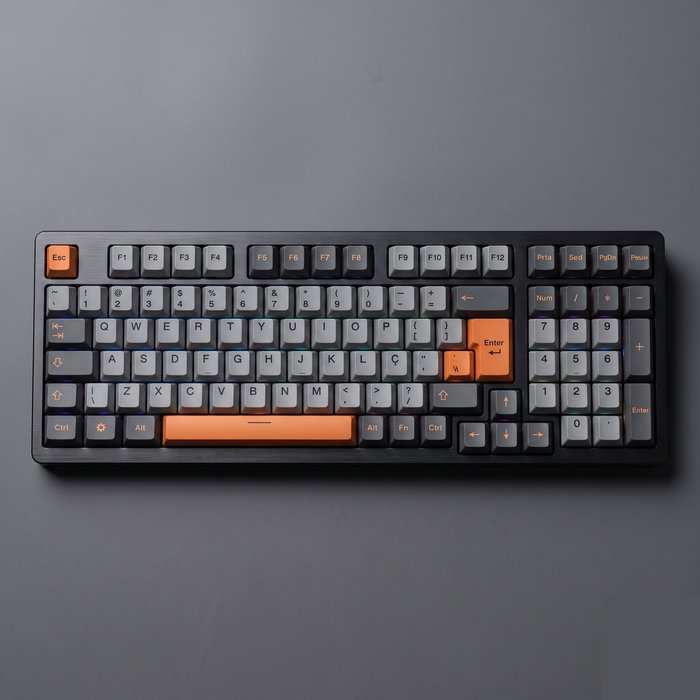
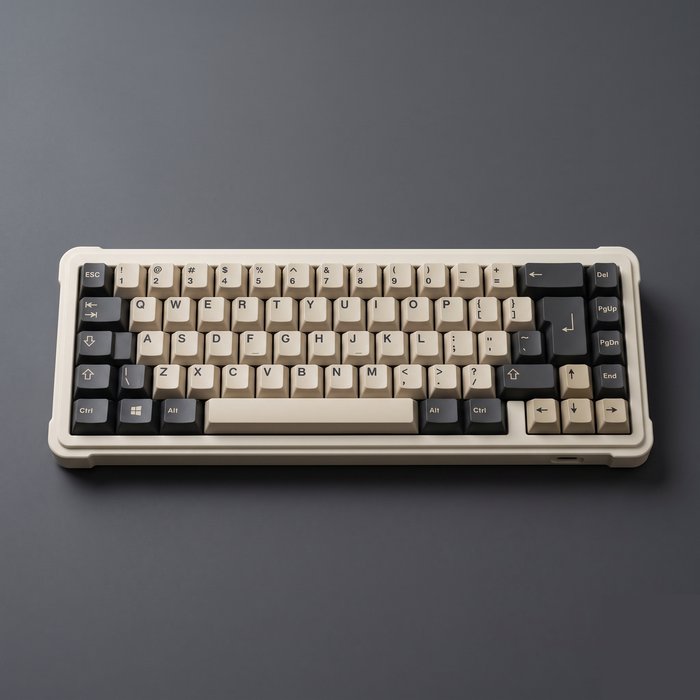
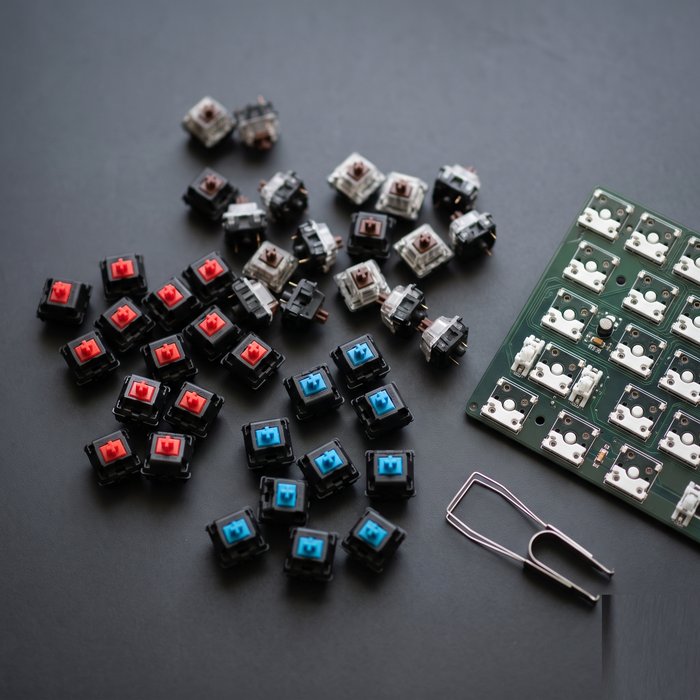
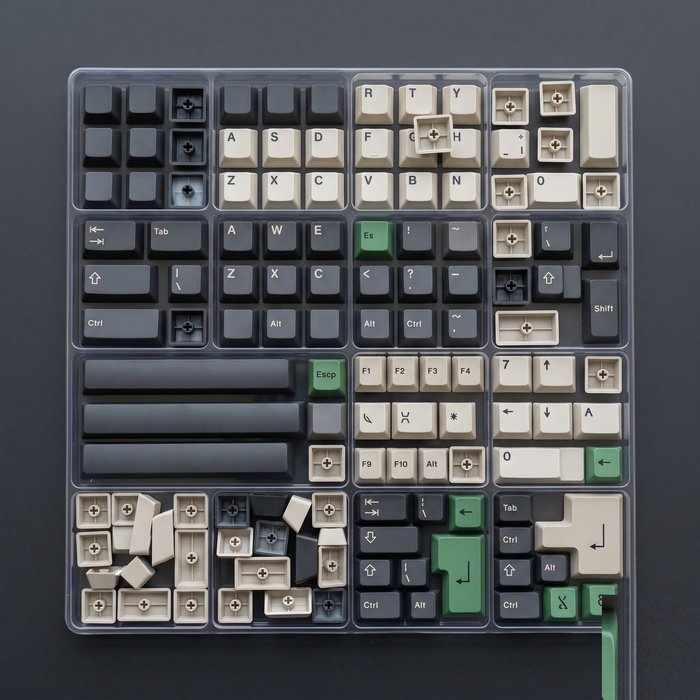
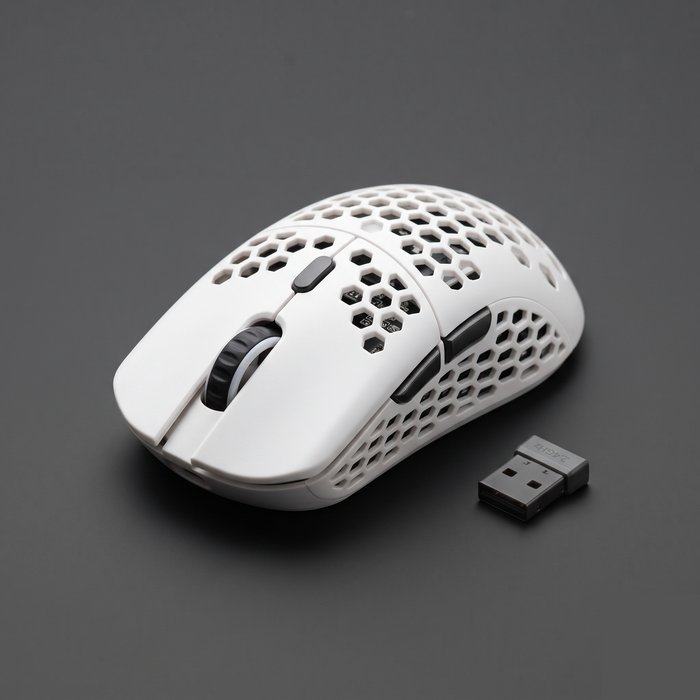
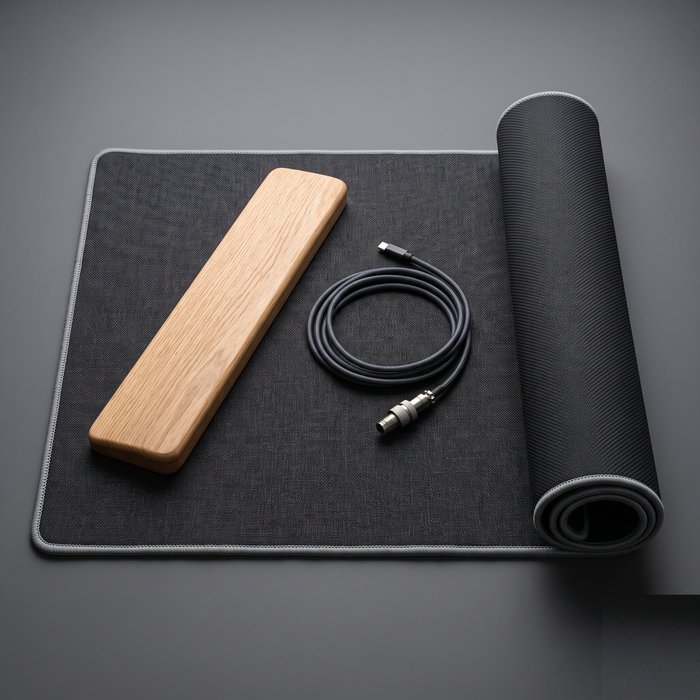
Putting together a range that holds up on the shelf, and finding the factory that delivers the whole batch identical to the approved sample, is where BCVN comes in.
The key that does not exist on the other side of the world
The standard that leaves the Chinese factory by default is the North American one, called ANSI, with 104 keys. The standard Brazil buys is ABNT2, with 107. The three keys of difference are not scattered about: they change the design of the left-hand half and of the right-hand corner of the keyboard, and that is the root of the problem.
- The cedilla has a key of its own, next to the L. On ANSI it does not exist, and the user needs a key combination to type the most ordinary word in Portuguese.
- The Enter key is L-shaped and spans two rows. On ANSI it lies flat across a single row, which changes the keycap, changes the stabiliser underneath and changes the hole pattern in the plate.
- The left Shift is short, with one extra key beside it. On ANSI it is long and that extra key has nowhere to sit.
- There is an additional slash key in the number pad, and the right Alt works as AltGr, which is what unlocks the second-layer symbols.
The practical conclusion is the one that sinks batches: this is not solved by swapping the keycaps on top. The metal plate and the circuit board have a different hole pattern, the stabiliser for the L-shaped Enter is a different size and the firmware has to send the right code for each position. There is even a halfway mistake, and it is the worst of the lot because it passes the photograph: factories that build the frame in the correct format but flash the North American firmware, so the keyboard is physically ABNT2, with the cedilla printed on the keycap, and types a different character when the customer presses it.
Locking this into the order costs nothing and is worth the whole container. The purchase order has to state, in writing, Brazilian ABNT2 layout with 107 keys, L-shaped Enter across two rows, short left Shift with the extra key, cedilla on a dedicated key, Portuguese legends and matching firmware. And it has to demand three proofs before production: a photograph of the bare plate, a photograph of the board and a short video of someone typing the word with the cedilla in it. Whoever does that at sample stage does not discover the problem at the first shop.
Why this is an opportunity for Brazil
The Brazilian peripherals market is served by two extremes. On one side, the international brand, with a good product and the import price passed straight on at retail. On the other, the generic membrane keyboard, which is not competing for the same shelf. In between there was a large gap, occupied by a handful of national brands doing exactly what this article describes: importing from China with the specification locked down and selling under an identity of their own.
- A double window, and it is open now: with a lead time of sixty to a hundred and twenty days between China and Brazil, an order closed at this moment arrives in time for Christmas and still catches the January and February back-to-school season. That is two peaks in a single purchase, which is rare in any category.
- The customer who comes back by choice, not by necessity: this is not a compulsory consumable that runs out and has to be replaced. It is a buyer who opens the wallet again because they want to change the feel and the colour of their own keyboard. It is repeat purchase out of desire, and it has no expiry date.
- Profit logic: the cost at source is a fraction of what Brazilian retail charges for a branded keyboard, and the replacement accessory carries an even better margin, because it is a small, light part that pays no meaningful freight and that the competing shop usually does not stock.
- A wide and growing audience: it is not only gamers. Developers, writers, students, home offices and content creators buy the same product for different reasons, and all of them treat the keyboard as part of how the desk looks.
- Ready-made content: this is the most photogenic category in consumer electronics. The finished desk, the sound of typing and a close-up of a keycap swap travel on their own in short video, and the buyer produces that material free of charge.
Before importing: if there is any wireless model in the order, whether over Bluetooth or through the 2.4 GHz radio receiver, it depends on ANATEL approval to be sold in Brazil, with the number visible on the product or on the packaging, and the marketplaces ask for that number when the listing is registered. The process is done model by model and takes weeks, so it is wise to start it while the cargo is in production. It is worth understanding the route in the guide to ANATEL and INMETRO approval for electronics. Rechargeable models carry a built-in lithium battery, which changes the shipping paperwork, and the external power supply, where there is one, falls inside the scope of compulsory certification. Also schedule the pre-shipment inspection to test the layout key by key on the batch, and not only on the approved sample.
Put your own brand on it
Few categories take own-brand treatment as well as this one, because the product is already made of parts that swap out and the buyer reads customisation as quality rather than as cost-cutting. The same factory that assembles the generic keyboard assembles yours, with your name on it, and the difference in cost is small next to what it does to the selling price.
- Your brand on the product and on the packaging, with the logo engraved on the base, printed on the space bar or applied to the box under a private label arrangement.
- Colour, finish and keycap set of your choosing, including accent keys in a contrasting colour, which is the most photographed detail and the cheapest one to change.
- A switch and internal structure combination defined by you, so the range has a recognisable feel instead of repeating the factory default.
- Packaging and manual in Portuguese, with the map of the ABNT2 layout printed on the box, ready for Brazilian retail.
Customisation usually calls for a slightly larger minimum order, and BCVN finds the right factory, negotiates the customisation, validates the sample and makes sure the product arrives exactly as you asked for it.
It is worth understanding how this works in practice before requesting the first sample: the guide on own brand in China: private label, OEM and ODM explains the difference between the three models and what each one changes in the minimum order and the lead time.
Where to buy mechanical keyboards in China
The category is spread across three different addresses, and each one serves a part of the range:
- HK Electronics Fair, autumn edition: from 13 to 16 October, in Hong Kong. It is the address of consumer electronics with brand-grade finishing, where you find the makers used to serving a foreign buyer who is demanding about specification and packaging.
- Canton Fair, Phase 1 (electronics): from 15 to 19 October, in Guangzhou. It is the volume aisle, where you compare dozens of factories in a single day and negotiate layout, colour and own brand straight with whoever produces it.
- Yiwu Fair: from 21 to 24 October. It is where the desk accessory gets genuinely cheap, from the mat to the wrist rest, and where you close the complementary order that fills the container without weighing it down.
- Guide to importing electronics from China: what needs to be settled before closing an order for a consumer electronics product.
The season settles the whole range in ten days: the HK Electronics Fair (13 to 16 October, Hong Kong), Canton Phase 1 (15 to 19 October, Guangzhou) and Yiwu (21 to 24 October) run in sequence, across three cities. Whoever builds the itinerary in the right order closes the keyboard, the replacement part and the desk accessory on the same trip. See the complete calendar of 2026 trade fairs.
Read the complete guide to the Canton Fair 2026
It is also worth looking at the gaming and office chair, which the same customer buys in the same season, and the cable organiser and charging station, which finishes the desk and goes into the basket with no selling effort at all.
Mechanical keyboards are a category in which the buyer knows more about the product than the salesperson, and that tends to frighten newcomers. It should encourage them. An informed customer needs no persuading, chooses on their own and asks for the next item on the list, provided they find the key in the right place.
Frequently asked questions about importing mechanical keyboards
Does a mechanical keyboard imported from China come with the ABNT2 layout?
It does not, unless the order demands it. The Chinese factory's export default is the North American ANSI layout, with 104 keys, no cedilla key, an Enter key lying flat across a single row and a long left Shift. The Brazilian standard, ABNT2, has 107 keys, a cedilla on its own key, an L-shaped Enter spanning two rows, a short left Shift with an extra key beside it and one additional slash key in the number pad. This has to go into the purchase order in writing, with the matching plate and circuit board, and be checked in photographs before the batch is produced.
Does an imported wireless keyboard or mouse need ANATEL approval?
It does. Any peripheral that transmits by radio, whether over Bluetooth or through the 2.4 GHz receiver that comes with the product, counts as restricted-radiation radiocommunication equipment and depends on ANATEL approval to be sold in Brazil. The label carrying the approval number has to be on the product or on the packaging, and the marketplaces have started asking for that number when the listing is registered. The process runs through a designated laboratory and a certification body in Brazil, takes weeks and is done model by model, so it is wise to start it while the cargo is still in production. The wired version of the same keyboard goes through none of this, which explains why many people begin the range with the cabled model.
What is a hot-swap keyboard and why does it matter to a reseller?
Hot-swap means the board carries sockets instead of solder, which allows every switch to be pulled out and put back by hand, with no soldering iron. It matters to a reseller for two reasons. The first is returns: on a soldered keyboard, one faulty switch condemns the whole unit; on a hot-swap board, the customer replaces that single switch and the complaint dies there. The second is buyer behaviour, which is rare in a consumer category. They buy the product already planning to personalise it later, changing switches and keycap sets out of taste rather than wear. Whoever sells only the keyboard serves half the order; whoever holds the rest in stock sells again to the same customer without spending on advertising.