
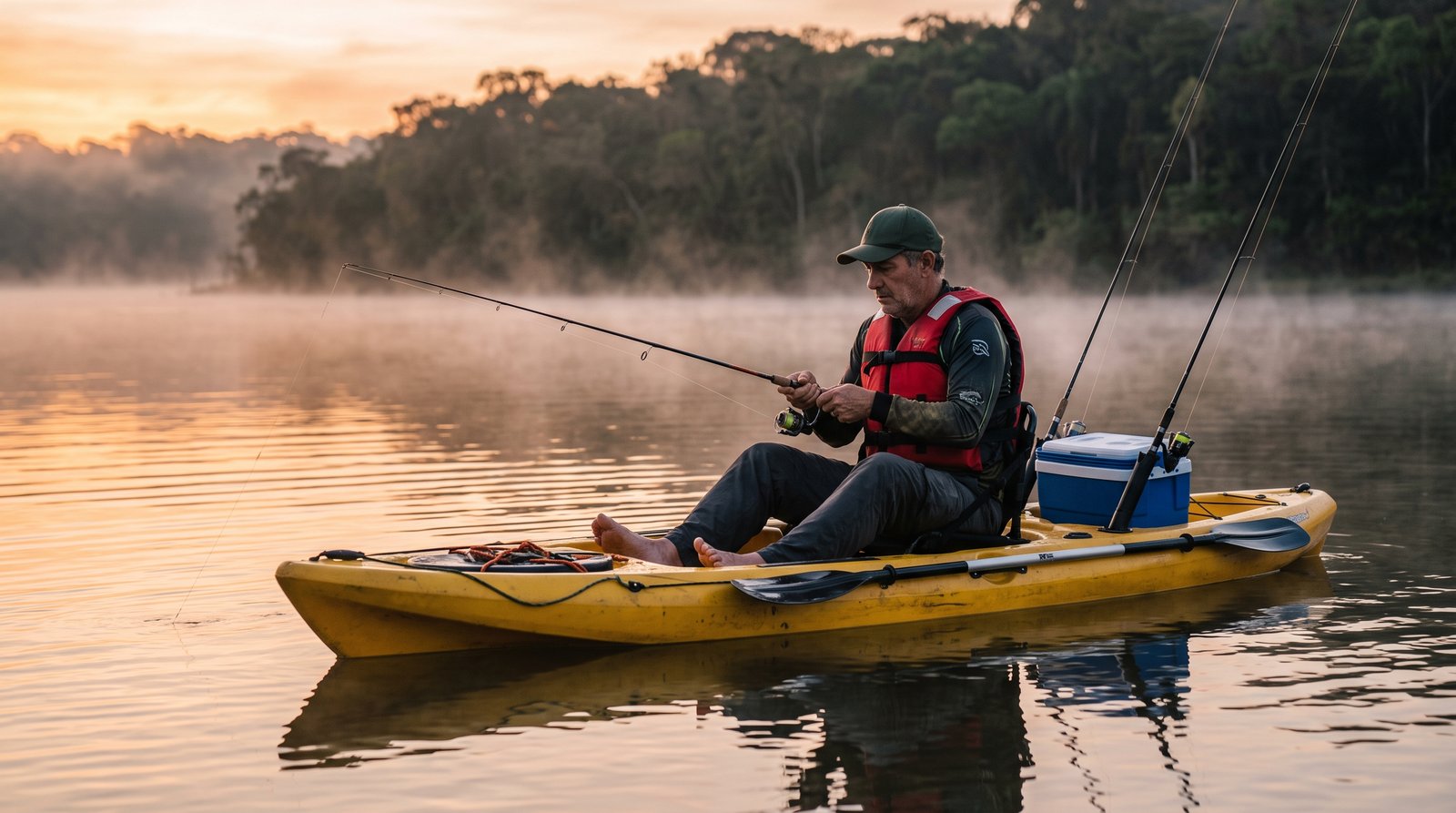
There is an obsession at the middle of all this, and it is not about catching more. It is about getting closer. Whoever fishes buys, in this order, whatever increases the time the line spends in the water and whatever increases the chance of being in the right place, and does it without the brake he would apply to any other purchase for the house. It is one of the rare consumer audiences with no declared spending ceiling, one that reads forums before buying and that replaces gear for a marginal improvement. For the reseller, that is good news and a trap at the same time, because a buyer like that recognises instantly who knows the subject and who is merely pushing boxes.
What light fishing boating is
It is not a boat. It is the band that sits between the bank and a real boat, and it has four pieces that get bought in sequence, nearly always in this order. The first is the small vessel, kayak or inflatable, which solves the access problem. The second is the propulsion, usually an electric outboard motor, quiet enough not to scare the shoal and simple enough to need no workshop. The third is the fish finder, which turns opaque water into a map and is the item that most changes the outcome of a day. The fourth is the energy that sustains the previous two, that is, the battery.
The fishing kayak deserves a line of its own because it is the most misunderstood item in the category. It is not the touring kayak painted a different colour. The touring one is closed, with the body inside the hull, made to travel fast in a straight line. The fishing one is open, of the sit-on-top kind, wider and flatter-bottomed, because it was designed to stay still with stability and to hold someone standing up to cast. It brings rod holders, side rails for mounting a fish finder and a camera, hatches, a well for the cool box and a far greater load capacity. There is also the pedal-driven version, which frees both hands and is, for whoever fishes, the difference between paddling and fishing.
Models and variations
It is not a single product. At the fair these are distinct factory chains, one for the rotomoulded hull, another for the inflatable, another for the motor and another for the electronics.
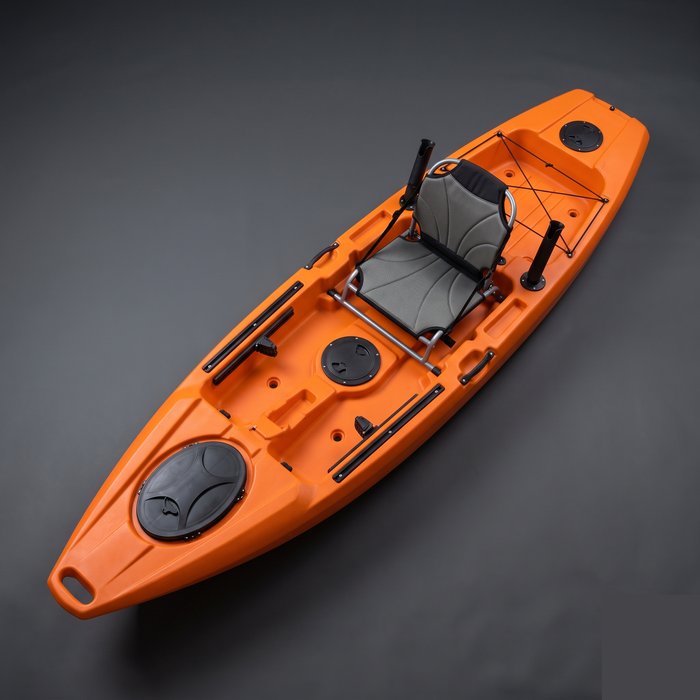
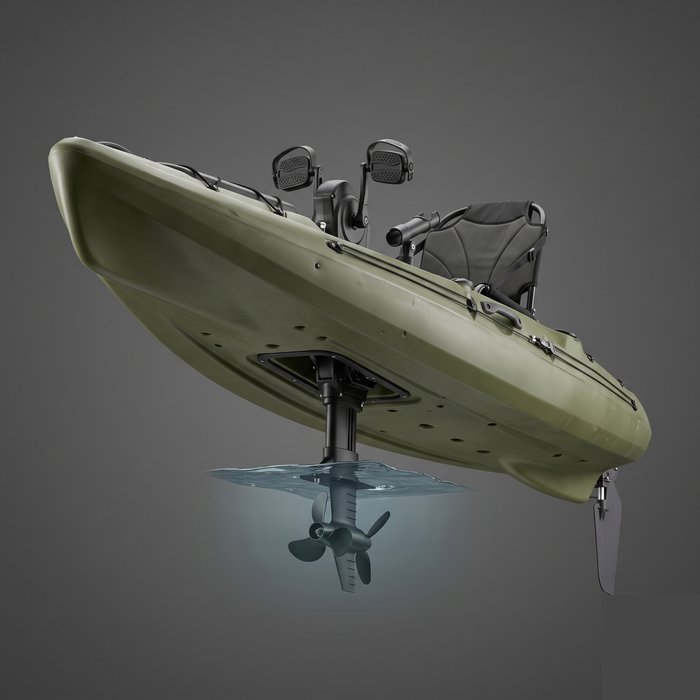
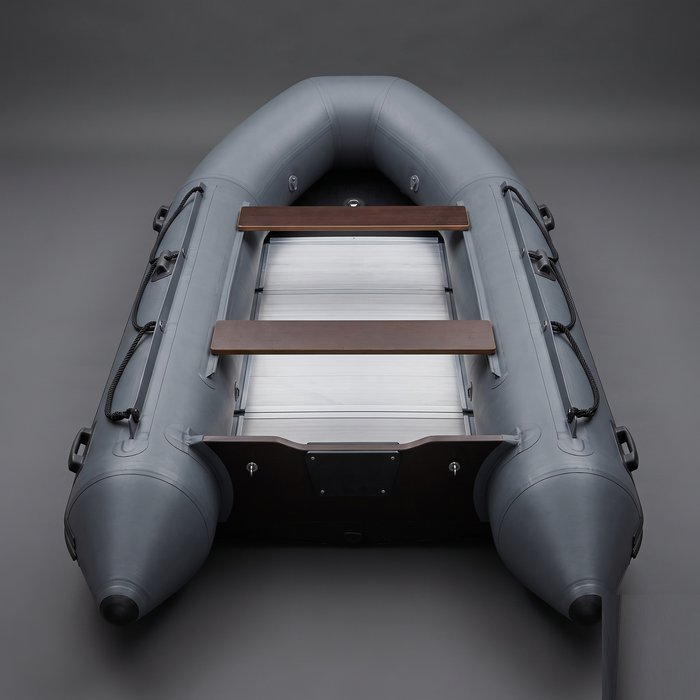
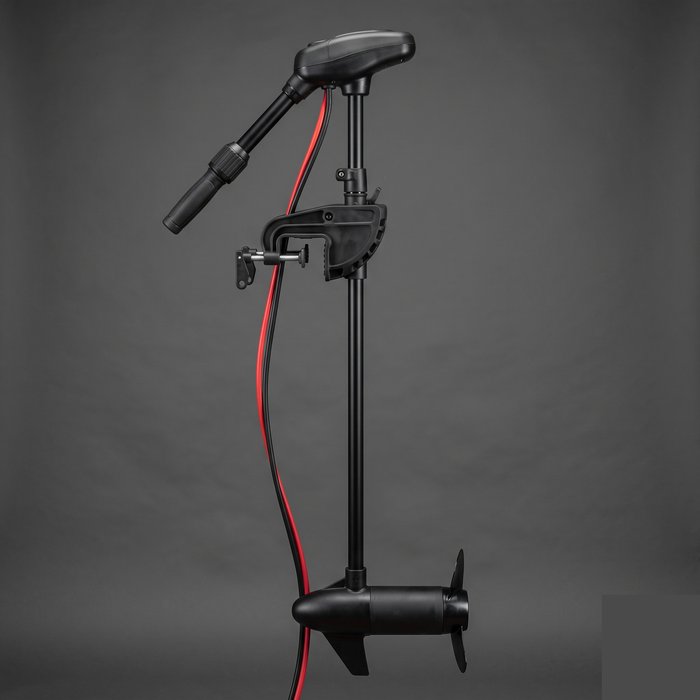
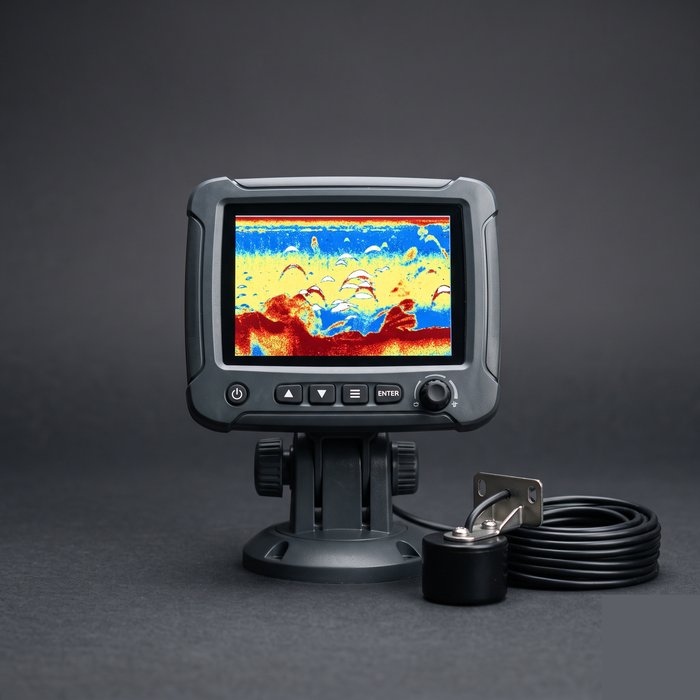
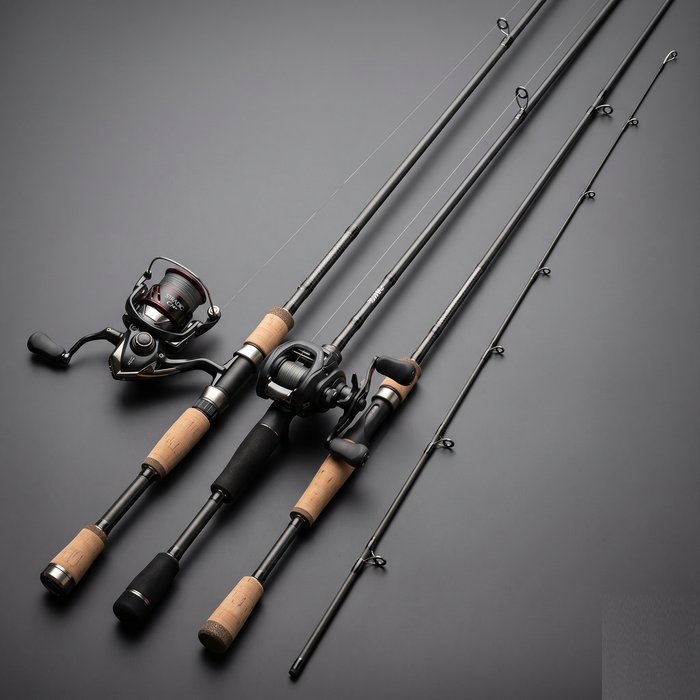
Choosing which of those four chains to tackle first, and finding the factory that keeps the whole batch identical to the approved sample, is where BCVN comes in.
The two numbers this buyer checks first
The first is the thrust of the motor, and it is not measured in horsepower. An electric outboard is measured in pounds of thrust, which is the force with which it pushes the vessel. The rule of thumb in the trade is to count around two pounds for every forty-five kilograms of total loaded weight, adding up vessel, occupants, battery and gear, and to round up whenever there is current or wind. An undersized motor is treacherous because it works perfectly during the test, on the still water of the first outing, and fails exactly on the windy day, which is when the customer rings up to complain. Alongside the thrust comes the length of the shaft, which has to be long enough for the propeller to sit well submerged in the hull it will be mounted on, and the system voltage, because the larger motors run at twenty-four or thirty-six volts and start calling for more than one battery.
The second number is in the inflatable, and it is the material. PVC boats dominate the entry band: cheaper, light, weldable and perfectly adequate in fresh water and weekend use. The band above uses fabrics more resistant to sun and salt, made to survive years of exposure, and charges accordingly. The detail that separates a good boat from a bad one, however, is not only the fabric: it is the seam. A hull with hand-glued seams ages worse than one with welded joints, and it is precisely at the joints that the slow leaks appear, the ones that generate returns months after the sale. That gets checked at the factory, looking at the production line, and not in the catalogue.
There is also a third item, simpler to settle and equally decisive in the customer's judgement: the fish finder's transducer and how it is mounted. An excellent unit fitted on an improvised bracket gives a poor reading, the customer blames the device, and the complaint lands on whoever sold it. Closing the order with the bracket that suits the hull, and not only with the box the finder came in, costs little and settles most of those conversations.
The Navy, ANATEL and the battery: what the reseller needs to be able to explain
None of this blocks the import at customs, and that is why hardly anyone in retail bothers to learn it. Precisely for that reason, knowing how to explain it becomes a commercial advantage, because it is the number one doubt of somebody about to buy the first vessel of their life.
The Navy requirement falls on the use, not on the product. A recreational vessel driven by a motor enters the registration regime with the Port Captaincy, and whoever is at the helm needs the corresponding amateur licence. A vessel driven only by paddle or pedal usually stays outside that requirement. In other words, the same kayak changes category on the day the customer hangs a motor on it, and that is exactly what he wants to know before closing. Since the classification varies with size and propulsion, the way to go is to confirm with the regional Captaincy before building the range, and not to repeat what was read on a forum.
ANATEL applies to the fish finder, to GPS and to any accessory with Bluetooth or Wi-Fi: these are radiocommunication devices and depend on approval to be sold in Brazil, with the number visible on the product or on the packaging, and the marketplaces ask for that number when the listing is registered. The process is done model by model and takes weeks, which argues for starting it while the cargo is still in production. Finally, the battery: lithium ones ship as class 9 dangerous goods, with a UN 38.3 test report, a safety data sheet and their own packaging, and there are carriers that refuse them or charge more. A lot of people entering this category start by importing everything except the battery, and buy the battery in Brazil, precisely so as not to hold up the first container.
Why this is an opportunity for Brazil
The country is made of fresh water. There are reservoirs, rivers and lakes in nearly every state, with an enormous number of people who fish and a small number who manage to get off the bank. The equipment that solves this is, today, either an imported brand at a prohibitive price or a domestic one with little variety, and the shelf in between barely exists.
- Timing: with a lead time of sixty to a hundred and twenty days between China and Brazil, an order closed now arrives for the summer, which is the season of the category, and still catches Christmas, when a lot of fishing gear is bought as a present.
- A buyer with no ceiling and natural repeat purchase: whoever enters this category does not buy once. They buy the vessel, then the motor, then the fish finder, then a better battery, then the mount. Each purchase opens the next, and the list does not end.
- Profit logic: the cost at source is a fraction of what Brazilian retail charges for branded gear, and the sale rests on technical knowledge, not on discount. Whoever can answer about thrust and hulls is not fighting over price with somebody who only posts photographs.
- A wider audience than it looks: beyond the angler, the same range serves the fishing lodge, the tour operator, the guide, the boating club, the housing estate on a reservoir and the leisure equipment rental business.
- Ready-made content, and the best there is: fishing is the category with the most video per buyer in existence. Dawn on the water, the fish finder screen, the catch coming up. The reseller does not need to produce that material, they only need to be in the caption.
Before importing: start with volume, because this is the bulkiest find on the list and an empty hull fills a container while weighing almost nothing, which makes the freight per unit explode if the range is badly assembled. Favour the inflatable and the modular in the first load, or negotiate the nesting of the rigid hulls at the factory itself. Ask for the fabric specification and the seam method of the inflatables in writing, plus photographs of the production line, not of the catalogue. Confirm the ANATEL approval of everything that transmits by radio, settle the tax classification of each item with the customs broker, because hull, motor and electronics do not fall under the same code, and schedule the pre-shipment inspection to test the air-tightness of the inflatables and the motor running under load on the batch, and not only on the sample.
Put your own brand on it
This is a community category, in which the buyer displays the gear and gets asked about it. Own branding here is not cost saving, it is reputation building, and it circulates on its own in the photographs the customer publishes.
- Your brand on the product and on the packaging, with the logo moulded into the hull, applied to the side of the inflatable or engraved on the motor head, under a private label arrangement.
- Hull colour and graphics of your choosing, including the high-visibility shades that photograph better on the water and that also happen to be the safest.
- Deck layout defined by you, with the position of the rod holders, the rails and the hatches adjusted to the way Brazilian customers fish.
- Packaging and manual in Portuguese, with the thrust-by-weight table printed on them, ready for Brazilian retail.
Customisation usually calls for a slightly larger minimum order, and BCVN finds the right factory, negotiates the customisation, validates the sample and makes sure the product arrives exactly as you asked for it.
It is worth understanding how this works in practice before requesting the first sample: the guide on own brand in China: private label, OEM and ODM explains the difference between the three models and what each one changes in the minimum order and the lead time.
Where to buy fishing and light boating gear in China
The four pieces of the category come from different chains, and that is why it takes more than one address to settle:
- Canton Fair, Phase 3 (sport and leisure): from 31 October to 4 November, in Guangzhou. It is where the hulls, the inflatables and the outdoor sports gear are, and where you can inspect the finish of the seams with whoever produces them.
- Canton Fair, Phase 1 (electronics and motors): from 15 to 19 October, in the same city. It is the aisle for the electric outboard, the fish finder and the battery, which are the three pieces Phase 3 does not cover.
- Yiwu Fair: from 21 to 24 October. It is the address for the accessory and the fast-turnover item, from hooks and lures to buoyancy aids, paddles and mounts, which fill the empty space in the container without weighing on it.
- Guide to ANATEL and INMETRO approval: the route for the fish finder, the GPS and everything that transmits by radio.
This category asks for the whole season, not for one fair: Phase 1 opens on 15 October, Yiwu comes in on 21 October and Phase 3 only happens from 31 October to 4 November. That is three weeks between the first and the last, so either you plan a long trip or you choose which half of the category to tackle first. See the complete calendar of 2026 trade fairs.
Read the complete guide to the Canton Fair 2026
It is also worth looking at the inflatable stand-up paddleboard, which uses the same hull technology for a buyer after exercise rather than fish, and the camping kit, which goes into the same weekend bag.
Two hundred metres is nothing in any other context. In this category it is the entire distance of the business, and whoever sells it is not selling rotomoulded plastic or a propeller: they are selling the morning the customer is going to spend exactly where he always wanted to be. That buyer pays for it, and pays well, provided he finds somebody who speaks his language.
Frequently asked questions about importing sport fishing gear
What is the difference between a fishing kayak and a touring kayak?
The touring one is closed on top, with the angler seated inside the hull, and it was designed to travel fast in a straight line. The fishing one is open, of the type you sit on top of, and it was designed to stay still with stability: it is wider, it has a flatter bottom and it holds the weight of someone standing up to cast. It also brings what the other does not, namely rod holders, side rails for mounting a fish finder and a camera bracket, hatches giving access to the inside, a well for the cool box and greater load capacity. Buying the touring one with fishing in mind is the most common mistake made by newcomers to the category, and the reseller who explains this beforehand avoids a return that is expensive to transport.
How do you choose the power of an electric outboard motor?
An electric motor is not measured in horsepower but in pounds of thrust, which is the force with which it pushes the vessel. The rule of thumb used in the trade is to count around two pounds of thrust for every forty-five kilograms of total loaded weight, adding up boat, people, battery and gear, and to round up whenever there is current or wind. The length of the shaft also matters, because it has to be long enough for the propeller to sit well submerged on the boat it is going to be fitted to, as does the system voltage, because the larger motors run at twenty-four or thirty-six volts and call for more than one battery. Selling an undersized motor is the quickest route to a complaint, because it works fine during the test and fails precisely in the current.
Do imported kayaks, inflatable boats and fish finders need registration with the Navy or with ANATEL?
These are two different requirements and neither of them falls on the product at customs. The Navy one falls on the use: a recreational vessel driven by a motor enters the registration regime with the Port Captaincy and the person at the helm needs an amateur licence, whereas a vessel driven only by paddle or pedal usually stays outside that requirement. Since the classification changes with size and propulsion, the way to go is to confirm with the regional Captaincy before building the range. ANATEL, on the other hand, applies to the fish finder, to GPS and to any accessory with Bluetooth or Wi-Fi, all of which depend on approval to be sold in Brazil, with the number visible on the product or on the packaging. For a reseller, being able to explain both is a selling point, because the buyer has exactly that question and almost nobody answers it.