
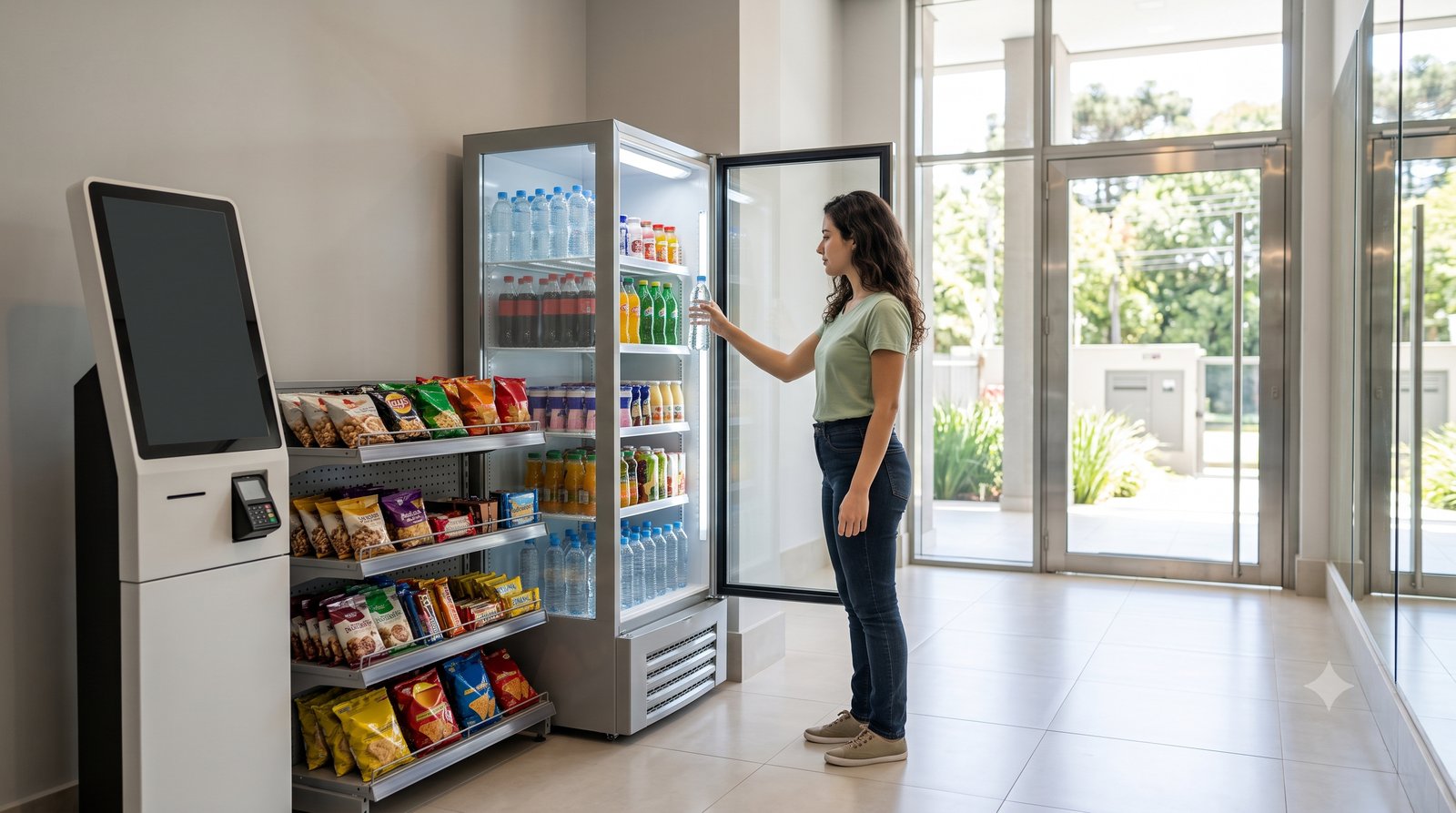
The model stopped being a novelty and became part of the Brazilian retail landscape. The explanation is simple and holds on both sides of the counter that does not exist: for the shopper, it settles an immediate craving without leaving the building; for the operator, it removes the fixed cost that was always the heaviest in small retail, that of keeping someone on site during every hour the shop is open. With no attendant, a site survives on turnover that would never sustain a conventional shop, and that is what makes it possible to open where no shop would previously fit.
For an equipment supplier in Brazil, this is an unusual buyer and a very comfortable one to serve: they run the numbers before buying, they know exactly the return they expect, and if the first site adds up, they come back. Not for restocking, but for replication.
What a micro market is
It is a shop without an attendant, installed inside a place that already has people: a residential building, a company, a hospital, a university, a gym, a hotel. The set has four parts. The refrigerated display cabinet holds drinks, dairy and ready-to-eat items, and it is the heart of the turnover. The gondola covers dry goods, snacks and convenience lines. The payment point can be a self-service kiosk with a scanner and a screen or the shopper's own phone. And the security layer, with a camera and a sensor, is what makes the model viable with nobody watching.
There is also the variant with a smart lock, where the cabinet door only opens after the shopper has identified themselves, and the classic spiral machine, which remains the best solution for packaged goods in a setting with no supervision at all. What changes from one site to another is the size and the mix, not the logic. That is why the model replicates so well, and it is exactly there that the opportunity lies for whoever sells the equipment.
Models and variations
Setting up a site is not buying a product, it is assembling a set. And every piece of that set has its own manufacturer in China:
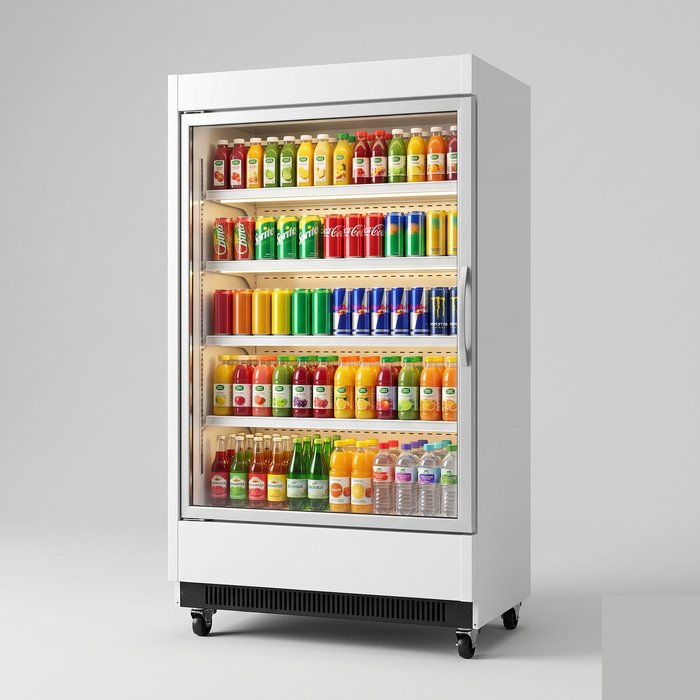
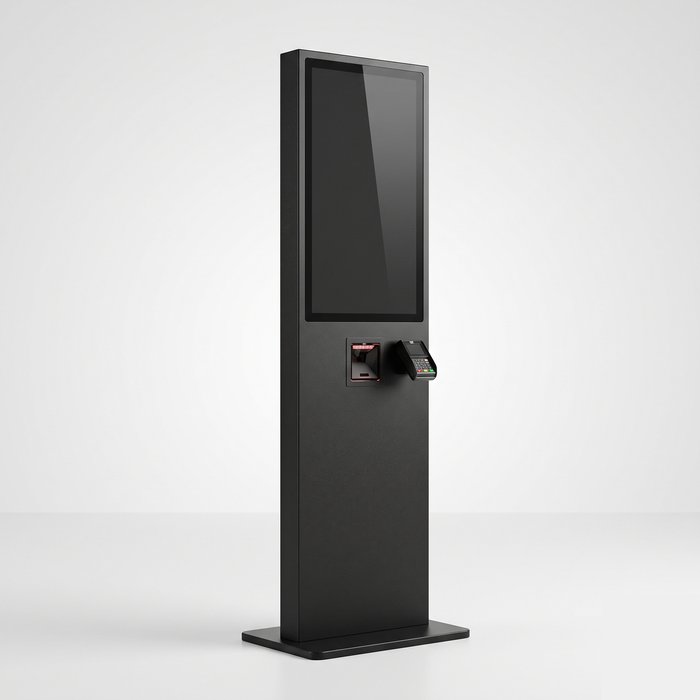
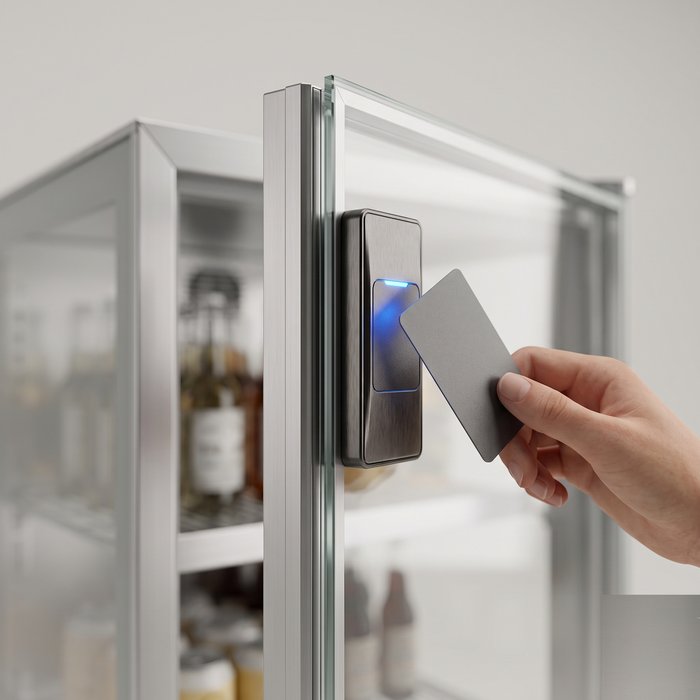
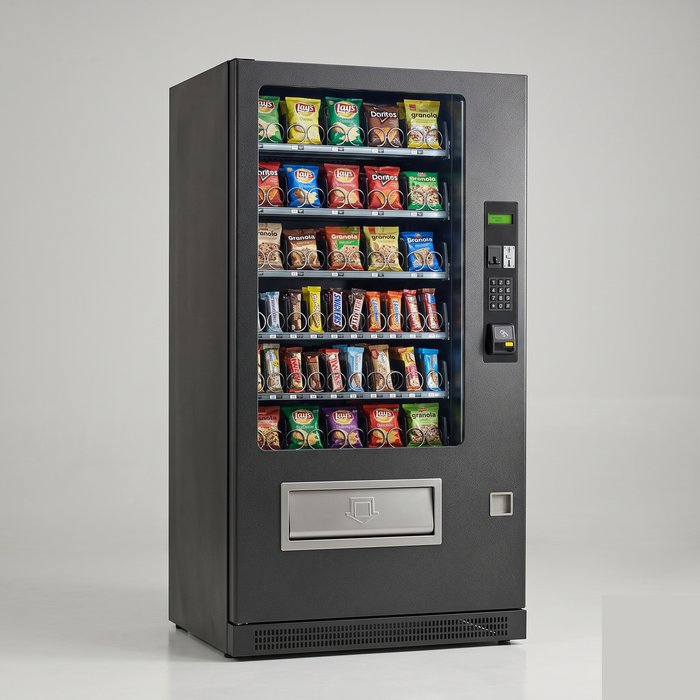
The refrigerated cabinet is always the first purchase and the one that weighs most on the site's energy bill, which makes efficiency a selling point rather than a technical detail. The kiosk is what gives the space the look of a shop and serves anyone who does not want to install an app. The smart lock is the answer for open-circulation settings, where shrinkage is a concern. And the spiral machine remains unbeatable in a hospital corridor and on a factory floor, where there is nobody nearby at any hour. Whoever supplies the whole set serves the customer from the first site to the tenth; whoever supplies a single piece serves them once.
Why this is an opportunity for Brazil
This is a category in genuine expansion in the country, not a bet on a trend: the model left the residential building where it was born and spread to companies, hospitals and other high-footfall settings. Whoever supplies the equipment is stepping onto a wave that is already moving.
- The sale multiplies through expansion, not restocking: the customer who validates the first site buys the second, the fifth and the tenth, and wants the same equipment in all of them to standardise operations and maintenance.
- The buyer decides on the numbers, not on taste: they calculate the return per site before closing. That shortens the negotiation and filters out the customer who only wanted to check prices.
- Today they buy dear and piecemeal: most assemble a site by buying the cabinet from one reseller, the kiosk from another and the camera from a third, all with retail margin built in. Whoever brings the set from source changes the whole calculation.
- A ticket that grows with the customer: it starts with one small site and evolves into a closed order for several sets, which turns a buyer into recurring business.
- Timing: the typical lead time is 60 to 120 days. Whoever closes during the October trade fair season receives in time to serve the wave of openings in the first half of the year.
Before importing: the electrical part and the refrigeration fall into the regulated families depending on the case, and the classification of the exact model needs to be confirmed before the order: it is worth seeing the list of products that require INMETRO. The cabinet also has energy efficiency as a commercial argument, because it stays on 24 hours a day and the bill is the operator's. Connected kiosks and cameras require ANATEL homologation for the radio part, as the guide on ANATEL and INMETRO homologation explains. And there is one point that does not come from China and must be settled by the end customer: payment integration and tax receipt issuance follow Brazilian rules, and the reseller had better know that so as not to promise what the equipment cannot deliver on its own.
Customise the specification (OEM)
Self-service equipment is one of the cases where customisation is worth more, because the customer will install the same set in dozens of places and wants them all to look like the same network:
- The customer's brand on the equipment: vinyl wrap, colour and front panel of the cabinet and the kiosk following their network's identity, which is what turns scattered sites into a recognisable brand.
- Voltage and plug: 127V or 220V according to the region of installation, at 60 Hz, defined per batch and not discovered on delivery.
- Capacity and internal layout: number of shelves, single or double glazing and door type according to the mix, because drinks, dairy and frozen goods call for different solutions.
- Energy efficiency: compressor and insulation define the operator's monthly bill, and it is the argument that justifies the better piece of equipment.
- Software and integration: confirm with the factory what is open to integrate with the customer's system, because this is where the promise usually slips.
- Parts and support: compressor, lock, scanner and power supply negotiated within the order, since a site that is down sells nothing.
This calls for direct negotiation with the manufacturer and validation before production. BCVN finds the right factory, assembles a set whose parts work together, handles compliance and validates technical support.
Where to buy micro market equipment in China
The set is split between two addresses, because refrigeration and self-service live in different sectors:
- Canton Fair, Phase 1 (Electronics and Home Appliances): from 15 to 19 October, where the refrigerated cabinet, the kiosk, the electronic lock and the camera are.
- FHC Shanghai (food, drink and retail): from 10 to 12 November, the address for anyone thinking about the whole point of sale, including the mix that goes inside it.
- Guide to industrial equipment: where equipment investment goes astray, and what has to be settled before shipment.
The itinerary the season sets out: Canton Phase 1 (15 to 19 October, Guangzhou) and FHC (10 to 12 November, Shanghai) are in different months and different cities, and they complement each other: Canton settles the equipment, FHC settles the retail thinking that will operate inside it. See the full 2026 trade fair calendar.
It is also worth looking at commercial refrigeration, which is the base of the site, the digital lock and the Wi-Fi security camera, which complete the access and surveillance layer.
Retail spent decades debating how to cut operating costs. The micro market answered in a radical way: it took the operation out of the shop. For the equipment supplier, what matters is not the novelty, it is the buyer's behaviour. They test one site, measure it, and when the numbers add up they come back to repeat the formula at another address. Few industrial sales have that characteristic built in. Buying at source is what makes it possible to offer the whole set at the price that makes the site's numbers work.
Frequently asked questions about importing micro market equipment
What equipment is needed to set up a micro market?
The basic set is a refrigerated display cabinet, a gondola or shelving unit for dry goods, a payment point (a self-service kiosk or the customer's own app) and the security layer, with a camera and an anti-theft sensor. From there the operation scales with a spiral machine for packaged goods, a cabinet with a smart lock and access control. What changes from one site to another is the mix and the size, not the logic, and that is why the operation is replicable.
Does micro market equipment imported from China need certification?
The electrical part and the refrigeration fall into the regulated families depending on the case, so the classification of the exact model needs to be confirmed before the order, and the refrigerated cabinet also carries the energy efficiency label as a selling point, because it stays switched on all the time. Connected cameras and kiosks require ANATEL homologation for the radio part. Whoever answers for all of this before the authorities is the CNPJ that imported, not the Chinese factory.
Is a micro market profitable for the operator?
The logic of the model is to remove the fixed cost of having an attendant on site, which drastically reduces the monthly expense of each location and speeds up payback compared with a conventional shop. In exchange, it shifts the weight onto the choice of location, the product mix and restocking. For whoever sells the equipment, that is an advantage: the customer who gets the first site right wants the second and the third, and comes back to the same supplier to replicate what already worked.
Why does importing micro market equipment from China pay off?
Because China manufactures every piece of the set, from the refrigerated cabinet to the kiosk, the smart lock and the camera, and whoever assembles the operation in Brazil today usually buys each item from a different reseller, with retail pricing on top. Bringing the set from source changes the maths of the whole site, and it allows equipment and branding to be standardised across every unit, which is exactly what an expanding operation needs.
Can I import just one fridge to set up my micro market?
BCVN is an import consultancy for companies and resellers, not a retail shop, and does not sell single units. Import maths only works on volume: freight and paperwork are diluted across the batch, and every factory works to a minimum order quantity (MOQ). Anyone setting up a single site should buy from a distributor in Brazil; anyone who is going to resell the equipment, franchise the model or open a network of sites imports at source, and that is where the savings really show up.