
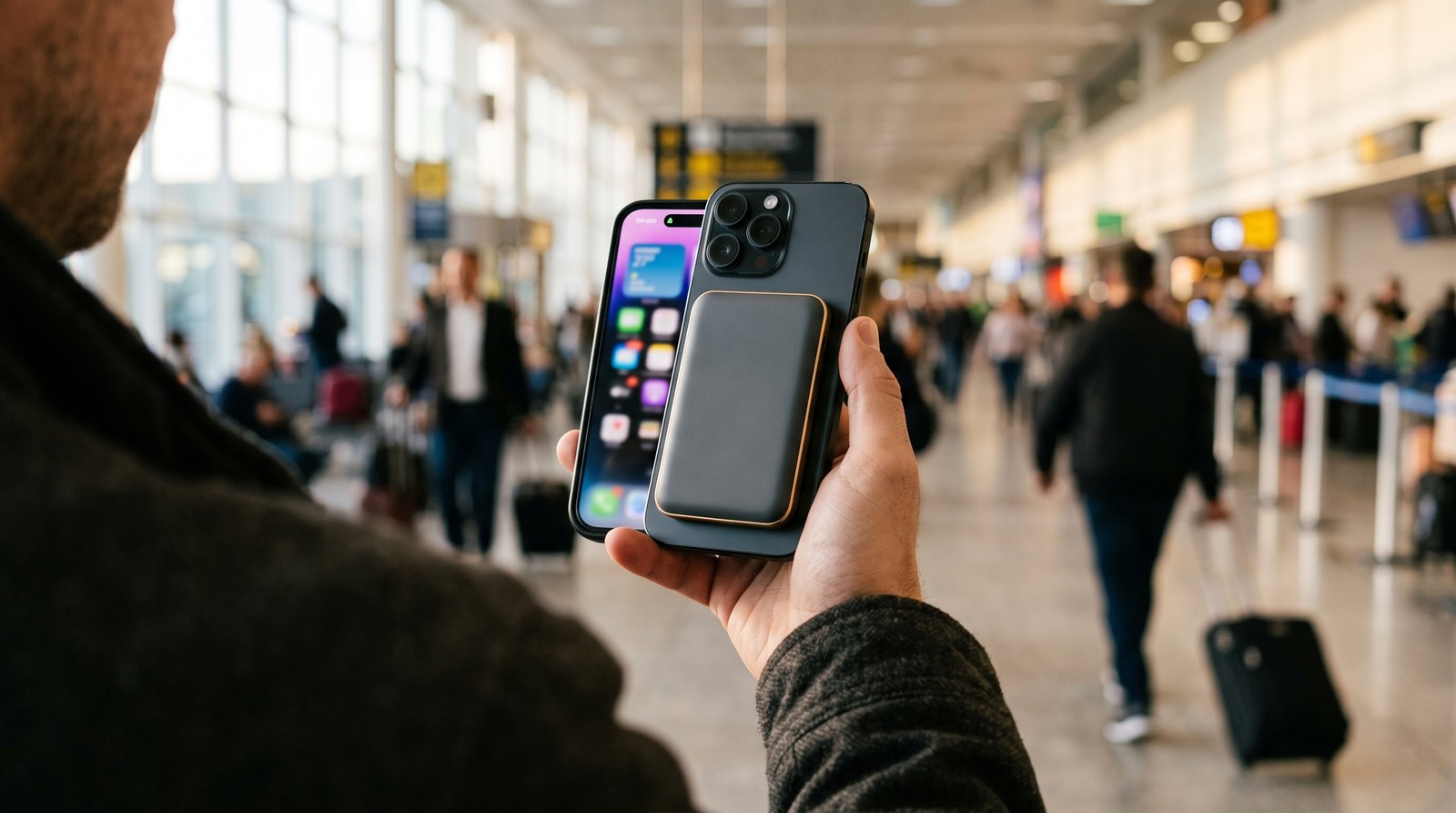
The airport scene is always the same. Someone sitting on the floor, leaning against a socket, phone tethered to a short lead, staring at nothing. The handset is charging and, while it charges, it is good for nothing else. The person walking past with a power bank in the rucksack lives the milder version of the same problem: the cable between pocket and hand, the phone that cannot be lifted, the pack swinging on the end of it.
That is the ten-year-old discomfort a ring of magnets solved. And what makes this week's find interesting is not the magnet itself, which has been around since 2020. It is where it came from, and what that opened up.
What the magnetic Qi2 power bank is
Inside it is the usual thing: a pack of lithium cells, a management board and a USB-C port. The difference sits on the back, where a ring of magnets surrounds the charging coil. You bring the product up to the back of the phone and it locks by itself, centred, at the single point where the two coils line up. It does not slide, it does not need a holder and it does not ask for a cable.
The detail that changes the business is where that ring came from. For years it was the proprietary design of a single phone maker, and the accessory built around it served that shelf and no other. The consortium that looks after the Qi standard, the Wireless Power Consortium, brought the magnetic ring inside the open specification under the name Magnetic Power Profile, and in January 2026 released the Qi2 25W version, which lifts the ceiling from 15 to 25 watts. The first Android handsets with a factory magnet are the foldables and the top of the range, and the rest of the installed base reaches the same place through a case with a magnetic ring.
Translated for whoever buys by the container: the magnet stopped belonging to a brand. The mould, the coil, the ring and the certification became a commodity of the Chinese factory floor, and the same product that once only made sense for a narrow slice of the market now makes sense for the whole counter.
Except that the most valuable piece of this find is neither regulatory nor technical, it is behavioural. The cabled power bank gets used after the phone has died, and after the person has already stopped moving. It lives in the drawer and is remembered once every two months. The magnetic one gets used before: the person sees the battery at 40%, sticks the pack on the back and carries on walking, filming, following the map and paying the bill with the product glued to the handset. The hour of use changed, and everything else changed with it.
An accessory used once every two months is sold once per customer, and its price collapses, because nobody competes over an emergency purchase. An accessory that leaves the house every day gets scratched, left behind on a café counter, lent out and lost, and it gets bought again, almost always in a better version than the first. That is the difference between selling once and occupying a shelf.
Models and variations
In the aisle of the fair this is not one product, it is a whole family that splits by format before it splits by capacity, because each format serves a different way of leaving the house.
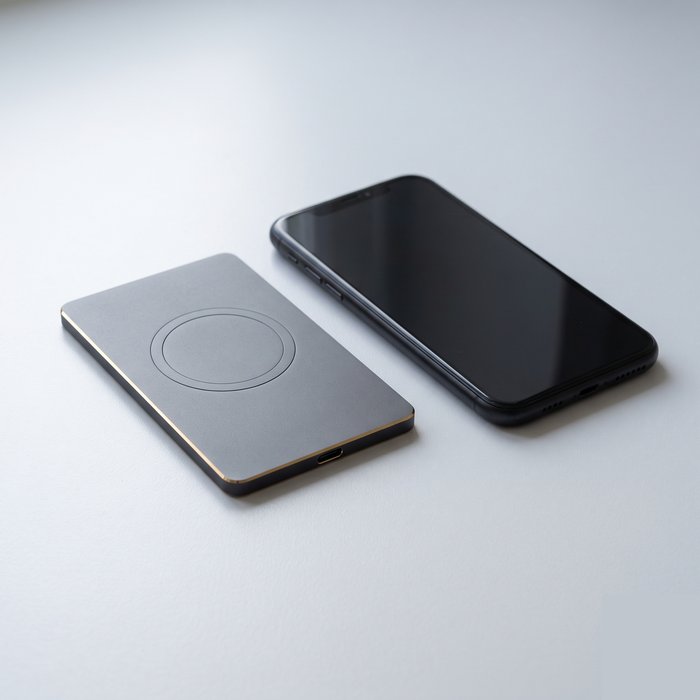
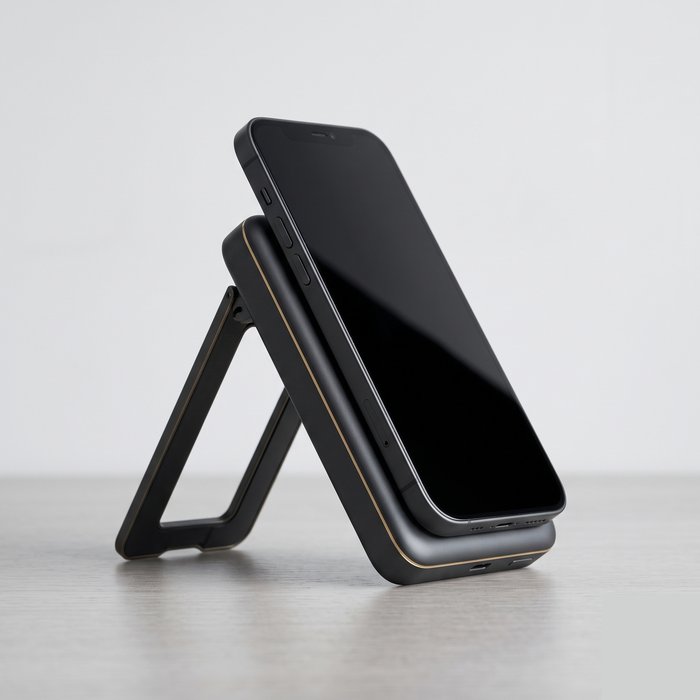
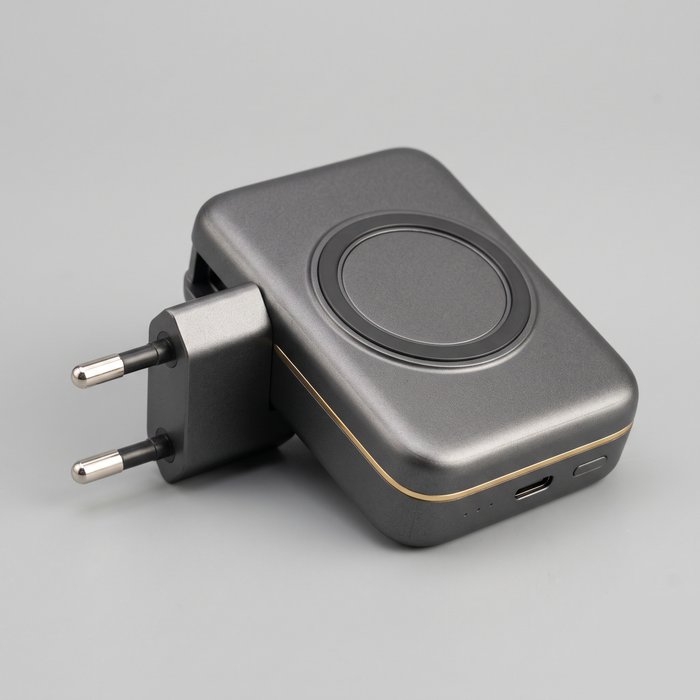
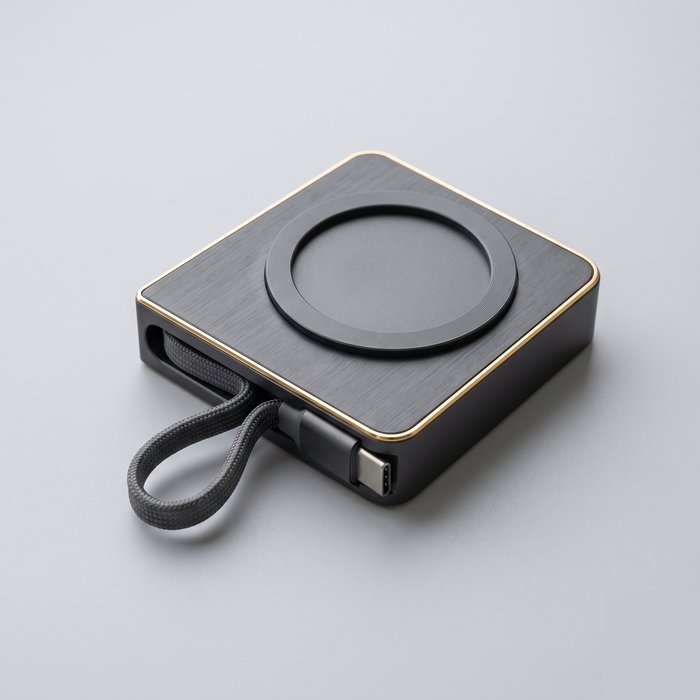
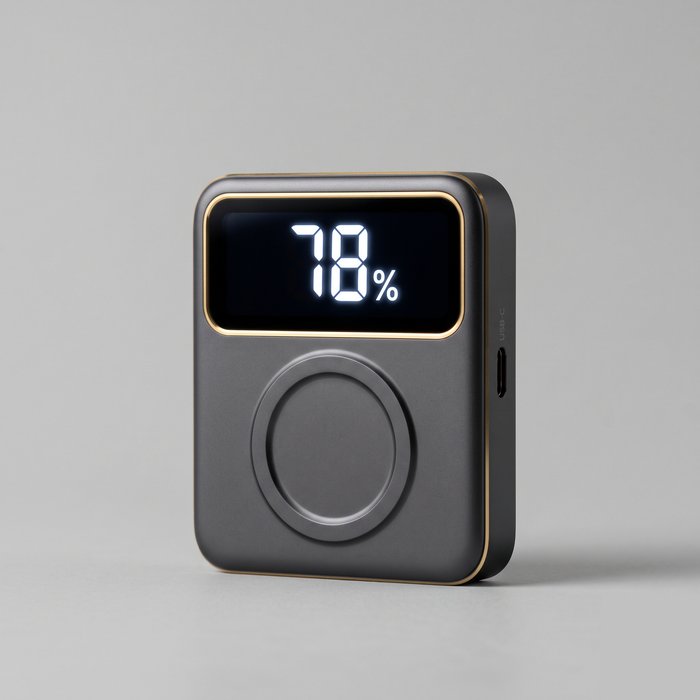
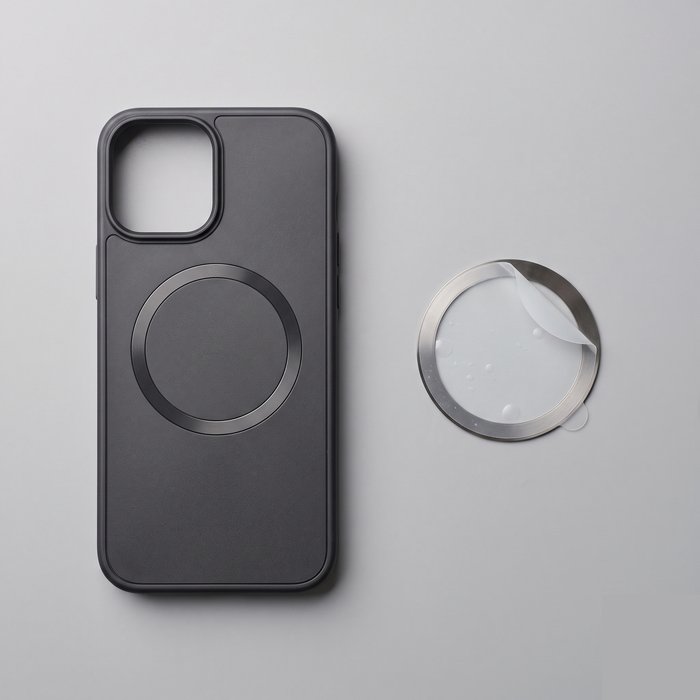
Choosing between these formats is not a matter of looks, it is a matter of audience, and it is what decides the retail price. Picking which combination goes into the first container, out of hundreds of factories that make all six, is exactly where BCVN comes in.
Why this is an opportunity for Brazil
The category already exists everywhere, which is usually a bad sign. Here it is not, and the reason is that the product is moving up a tier: it is leaving the discount bin by the till and moving to the accessory display, next to the earbuds and the watch, with packaging, a brand and the price of an electronic device. Whoever gets in during that move captures a margin the old category never had. And the chain behind it is the same one that made the lithium cell cheap for the whole world, told in the guide on solar power, batteries and electric cars.
- The product changed category without changing factory. It is the same assembly line, the same cell pack and almost the same cost. What changed is the hour at which the customer uses it, and that is what sustains a higher price and a repeat purchase the cabled version never had.
- The Brazilian shelf is not the one in the advert, and that is the play. The buyer here has, in the overwhelming majority of cases, an entry-level or mid-range Android handset, with no factory magnet and often with no wireless charging at all. Whoever imports only the pretty pack from the catalogue lands a product that sticks to almost nothing. Whoever assembles the right set, with the ring case and the built-in cable, sells to the entire installed base.
- Impulse pricing with the look of an electronic device. It is an item that sells itself at the counter, with no salesperson and no explanation, because the customer understands the product the second they see the pack snap on. The ticket of an electronic device, the turnover of an accessory and a volume that fits in a small box.
- It sells all year round, and that is why it belongs in the permanent catalogue. It does not depend on a season, on back to school or on a holiday: it depends on people leaving the house. With the lead time of 60 to 120 days between China and Brazil, the order closed today serves next year, and an evergreen category is precisely the one that survives that calendar without turning into dead stock.
- It does not cannibalise what the shop already carries. The portable solar power station is autonomy for the house, for camping and for a blackout, with weight, a handle and a mains socket. This one fits in a pocket and serves the phone out on the street. Two buyers, two prices and two shelves, and whoever carries both covers the whole range.
Before importing: the model that charges wirelessly transfers energy by radio frequency induction, and for that reason it falls under restricted radiation equipment, which ANATEL certifies. Ask for the certification number of the exact model, not of the line and not of something similar, because certification belongs to the product. The model with a built-in wall plug needs double the attention: it is a wall charger and a power bank in the same body, and battery chargers for domestic use are covered by INMETRO Ordinance 148/2022, so the classification has to come in writing from an accredited certification body, with the datasheet in hand. The cell is class 9 dangerous goods and requires a UN 38.3 test report, a safety data sheet and correct marking, with air freight far more restrictive than sea. And there is a labelling warning that tends to come back as a complaint: the advertised mAh figure is the cells', measured near 3.7 volts, while energy leaves the product at 5 volts or more, and the conversion eats part of it. With wireless charging the loss is larger still, because part of what crosses the two coils turns into heat. That is not a defect, it is physics, but packaging that promises the cell figure as if it were phone recharges generates returns at the counter.
Put your own brand on it
This is a category where own-brand pays off fast, and for a simple reason: the product sits in the customer's hand, facing up, several times a day. That is brand surface no other low-cost accessory offers.
- Your brand on the product and on the packaging (private label / OEM): logo laser-etched into the aluminium or printed on the soft-touch finish, and a box designed to hang from a counter hook.
- Colour, finish and the make-up of the set as you choose, including the bundle the factory does not sell ready-made, such as the pack paired with the ring case for the best-selling handset in your region.
- Packaging and manual in Portuguese, with the difference between the magnet and the wireless charging explained in two lines, which is what cuts the return before it happens.
Customisation usually calls for a slightly larger minimum order, and BCVN finds the right factory, negotiates the customisation, validates the sample and makes sure the product arrives exactly as you asked for it.
It is worth understanding how this works in practice before requesting the first sample: the guide on own brand in China: private label, OEM and ODM explains the difference between the three models and what each one changes in the minimum order and the lead time.
Where to buy magnetic power banks in China
Phone accessories have an address, and a fairly concentrated one: the whole chain, from the cell to the case mould, turns around Shenzhen and the Pearl River Delta. The map of the industrial clusters explains why the right city changes the price, the minimum order and the lead time before any negotiation begins.
- Canton Fair, Phase 1 (electronics and accessories): it is the main aisle, and the only place where you can hold ten competing models in one day and test what matters most, which is the strength of the magnet with the real phone inside the real case.
- Hong Kong Electronics Fair: this is where the higher-finish lines show up first, with the factories that supply international brands and already arrive with their certification in order.
- Yiwu Market: it serves everything that travels alongside the product, from cases and adhesive rings to car mounts, cables and counter displays, with low minimum orders. For the pack itself, what exists beyond the market explains where the factory price sits.
Next edition, Canton Fair 2026 (140th): Phase 1 runs from 15 to 19 October 2026, in Guangzhou, and it is the phase for this product. The Hong Kong Electronics Fair opens earlier, from 13 to 16 October, and the Yiwu Market later, from 21 to 24 October, so all three fit into the same trip.
Read the complete guide to the Canton Fair 2026
The decision worth money here is not choosing the pack, because the good ones look a great deal like one another and the catalogue is a sea of identical photographs. It is assembling the set that sticks to the phone Brazilians actually hold, and that means knowing which handset dominates the region the shop serves, which case the factory can mould in volume and which pack model solves both cases, the phone with wireless charging and the phone without it. Get that combination right and you sell to the entire shelf. Buy from the catalogue photograph and you land a product that does not stick.
Frequently asked questions about importing magnetic power banks
Does a magnetic power bank work with any phone?
It depends on which of the two functions you mean, and mixing them up is exactly what drives returns. The magnet and the wireless charging are separate things. The ring of magnets holds the pack against the back of the phone, and for that the phone only needs a factory magnet, which today only the top models carry, or a case with a magnetic ring, which is what the overwhelming majority of the Brazilian shelf uses. Wireless charging, on the other hand, requires the phone to have a Qi receiver coil inside, and a good share of the entry-level and mid-range handsets sold in Brazil simply do not. On those handsets the product is still useful, because the magnet keeps the pack stuck to the back and the charge runs through the short cable the product itself carries, with nothing dangling. The practical consequence for the importer is a single one: the model with a built-in cable is the one that serves the whole of Brazil, and the purely wireless model serves a narrow slice of it.
Does a magnetic power bank need ANATEL certification?
The model that charges wirelessly transfers energy by radio frequency induction, and for that reason it falls into the restricted radiation equipment category that ANATEL certifies. Ask the supplier for the certification number of the exact model, not of the product line and not of something similar, because certification belongs to the product and not to the manufacturer. If the model carries Bluetooth or an app, which already shows up in the versions with a display, the same requirement applies through the radio. Add INMETRO to that, which covers battery chargers for domestic use under Ordinance 148/2022, and that is where the model with a built-in wall plug lands, since it is a wall charger and a power bank in the same body. Ask an accredited certification body for the classification in writing before you place the order, because compliance rules change by ordinance.
How many mAh does the customer actually get from a magnetic power bank?
Less than the box says, and that is not fraud, it is conversion. The advertised number is the capacity of the lithium cells, measured at their own voltage, which sits close to 3.7 volts. What leaves the product's port leaves at 5 volts or more, and converting from one voltage to the other eats part of the energy. With wireless charging the loss is larger still, because crossing two coils with air in between generates heat, and heat is energy that never reached the phone's battery. An honest product declares both figures, the nominal cell capacity and the usable output energy. What the importer has to watch is packaging that promises the cell number as if it were the number of phone recharges, because that promise comes back as a complaint at the counter.