
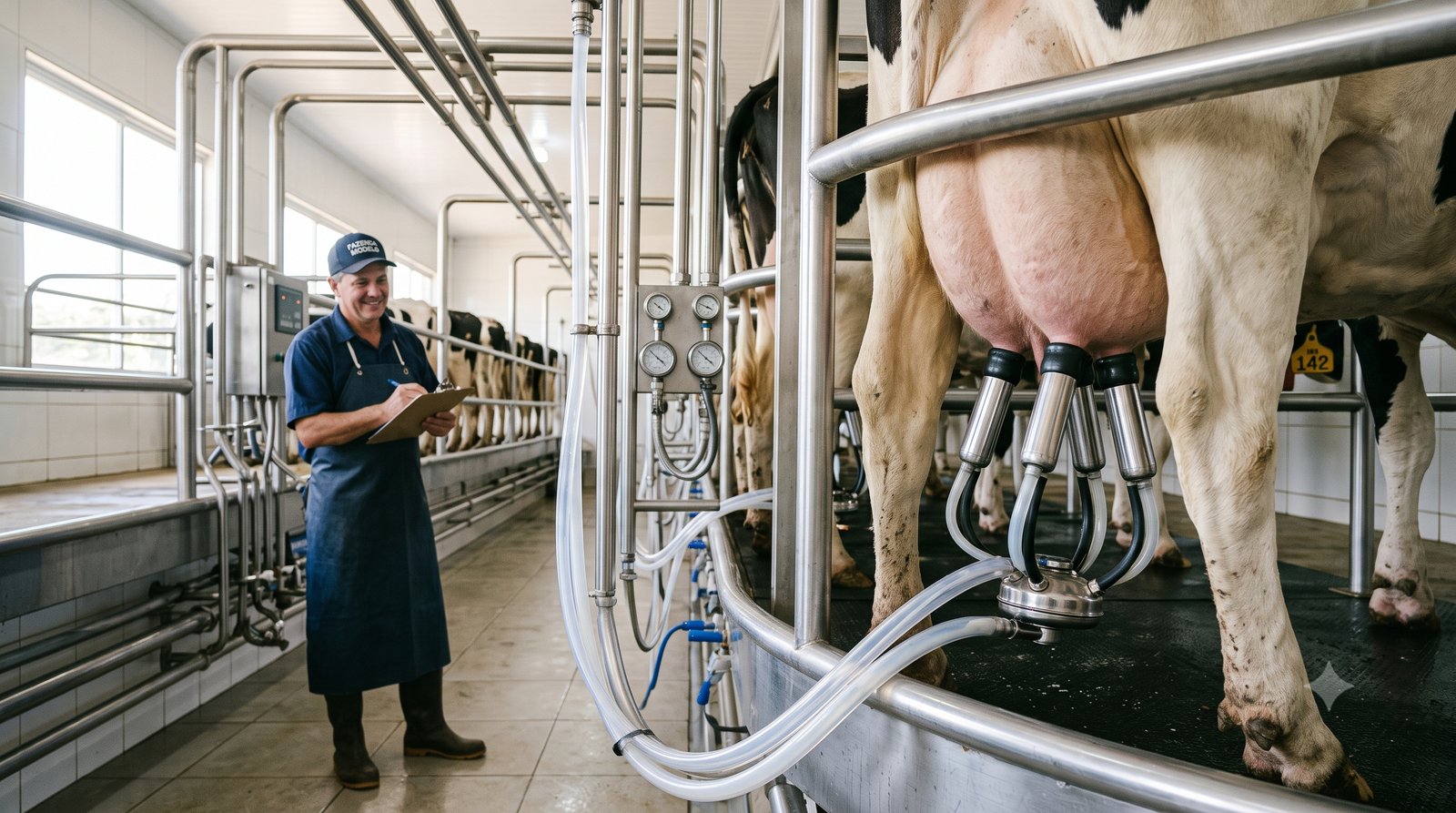
Brazilian dairy farming is at a turning point: bigger herds, higher milk quality requirements and rural labour that is ever harder to find. Milking into a bucket, by hand, no longer copes. The mechanical milking machine solves all three problems at once, and the farmer mechanising the operation is not the only one who sees the opportunity. It is the agricultural equipment reseller and the cooperative who worked out that China makes this entire line, from the small bucket unit to the complete milking parlour, at a price that opens up the market in Brazil.
What milking machines and milking parlours are
The milking machine is the machine that milks with pulsed vacuum instead of by hand. It goes from the bucket model, which collects the milk beside the cow, to the pipeline system in the milking parlour, which carries the milk through tubing straight to the cooling tank, with no handling. It is a set: milking unit, vacuum pump, liners, tank and consumables. China is today one of the largest manufacturers of this equipment, and that is what makes it possible to mechanise a dairy operation without the cost of ready-made imported equipment.
Models and variations
"Milking machine" is not one single product. In the aisles of the agricultural fair it is a whole universe, and it is that variety that makes the trip worthwhile, because each item suits a herd size and a stage:
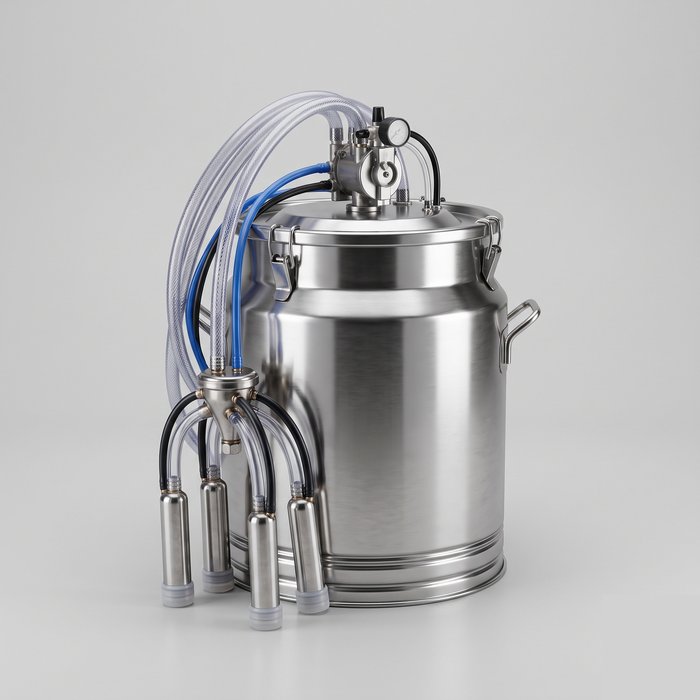
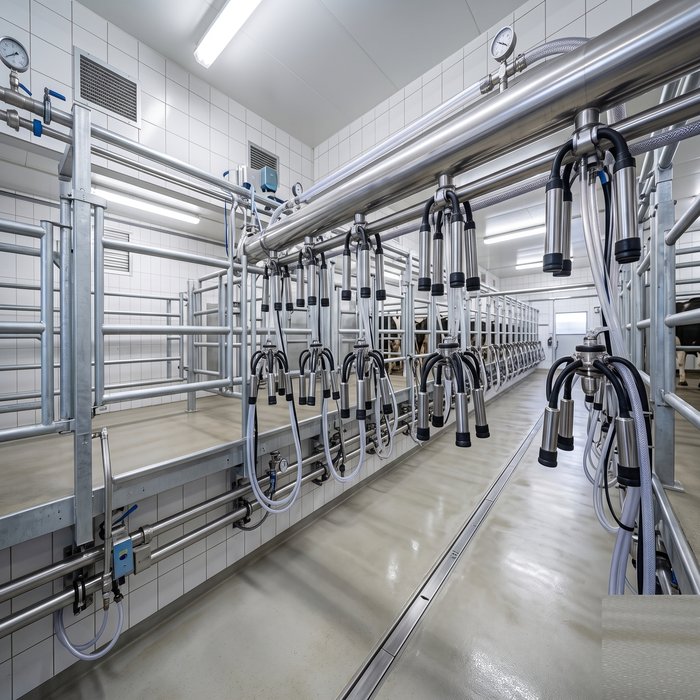
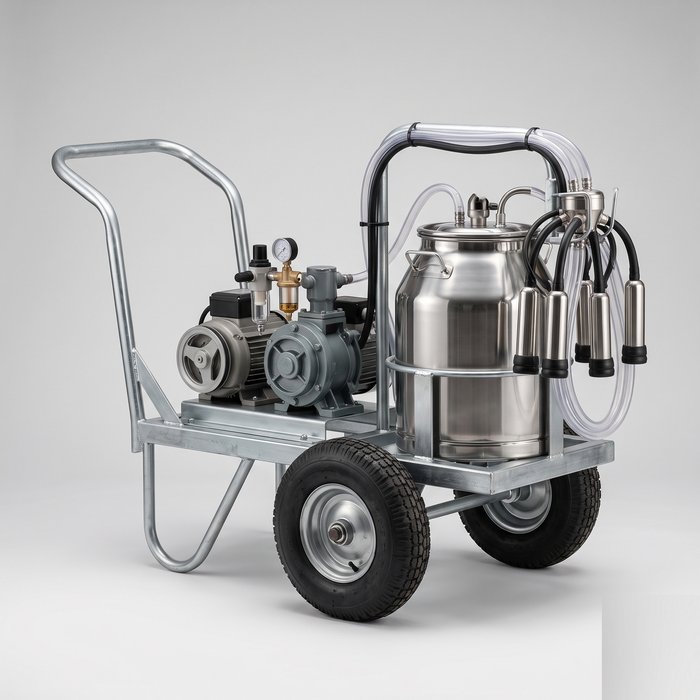
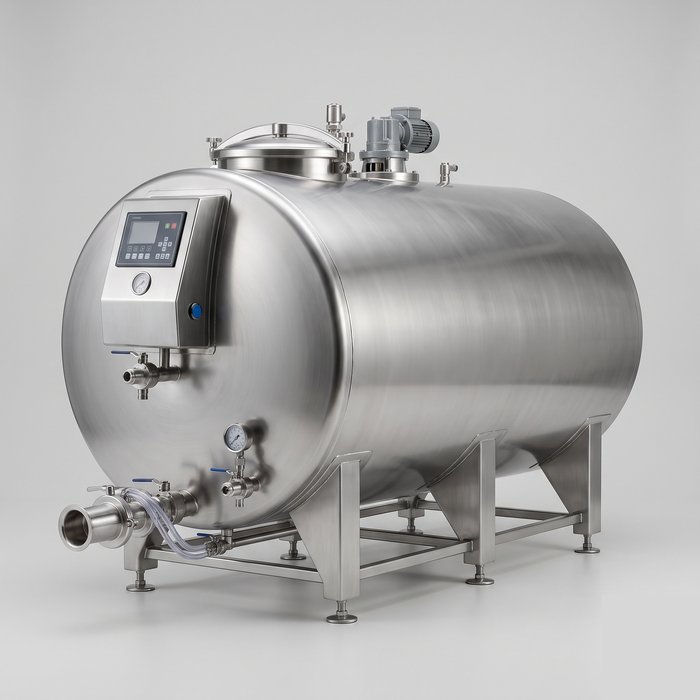
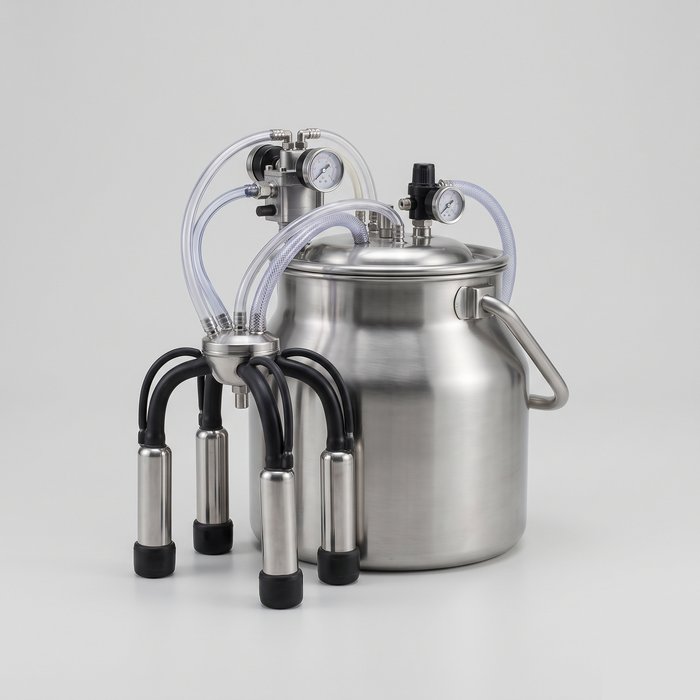
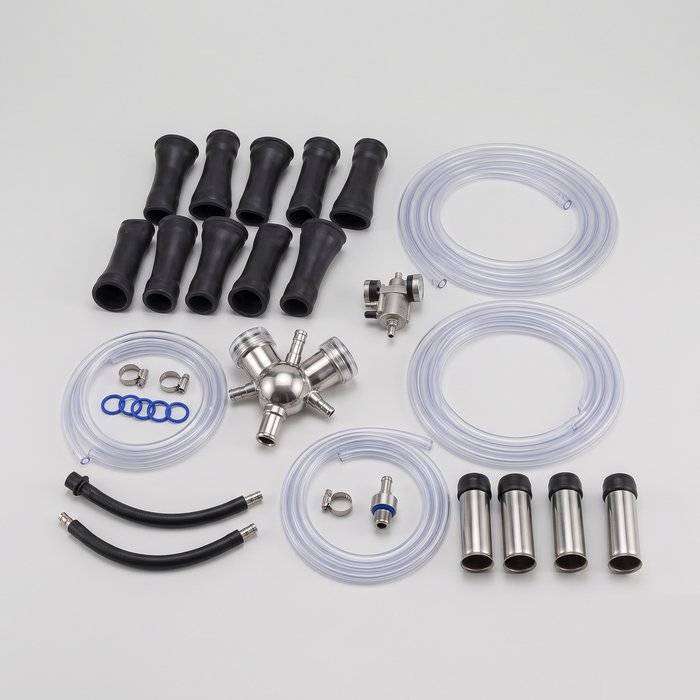
It is this set that decides the result. The bucket unit opens mechanisation up to the smallholder; the pipeline is the leap in scale and hygiene; the mobile unit serves the pasture and the improvised milking shed; the tank preserves the quality the dairy pays for; and the liner is the consumable that wears out and comes back. Seeing the equipment running, at source, is what shows which combination suits your herd.
Why this is an opportunity for Brazil
Brazil is one of the world's biggest milk producers, with an enormous base of small and medium farmers still milking by hand or with old equipment. At the same time, the labour shortage and the milk quality requirements are pushing towards mechanisation. Chinese equipment reopens that door.
- ROI you can calculate: this is not an impulse product. The farmer knows how many extra cows are milked per hour, the labour saved and the quality preserved. It is the most rational purchase there is, decided on numbers.
- The price gap mechanises more farms: the saving between branded equipment and direct imports is what puts a milking machine within reach of the small and medium farmer, a huge and poorly served market.
- Repeat business built in: rubber liners, vacuum parts and line detergent wear out and come back. Whoever imports the machine keeps the consumables that repeat, month after month.
- Qualified, loyal leads: the buyers are agricultural equipment resellers, cooperatives and medium-sized farmers, a high value customer with a long relationship built on machine, parts and servicing.
- Timing: the typical lead time for machinery is 60 to 120 days. Whoever closes at the October fair has the equipment ready for the season.
Before importing: it is electrical and mechanical equipment and may require INMETRO; the part with a motor and moving parts has to meet NR-12 (guards and emergency stop). As it sits inside the milk chain, the contact surfaces and the cooling follow the sanitary rules under MAPA, which oversees production. Confirm the voltage (220V or 380V three-phase) and the vacuum standard. This is a case where inspecting before shipment confirms the vacuum pump and the liners. See also how to import industrial equipment from China.
Customise the specification (OEM)
Importing dairy equipment from China is not a matter of picking the catalogue model and switching it on. The machinery has to be specified, and that is how you guarantee it suits the herd and the standard:
- Size and vacuum: the number of clusters, the capacity of the vacuum pump and the volume of the tank have to match the size of the herd and the growth plan. Getting the sizing wrong means a bottleneck or money standing idle.
- Voltage and standards: 220V or 380V three-phase, Brazilian plug, NR-12 and the manual in Portuguese, all settled before the batch.
- Liners and servicing: the supply agreement for liners, vacuum parts and technical support, which is what keeps the machine running on the farm for years.
- Own brand: where it fits, the distributor can put their own brand (private label/OEM) on the equipment, with BCVN negotiating the customisation and validating the sample.
That calls for direct negotiation with the factory and a sample validated before production. BCVN finds the right manufacturer, specifies the line, guarantees compliance and validates the support.
Where to buy milking machines in China
Dairy farming equipment is concentrated at the dedicated agricultural fair and in the machinery hall of the universal fair:
- CIAME (agricultural machinery fair): China's sector fair dedicated to agriculture, where the manufacturers show complete ranges of milking equipment, tanks and livestock implements. It is where you go deeper into the segment.
- Canton Fair, Phase 1 (Machinery and Equipment): from 15 to 19 October, a good starting point, with agricultural machinery in the industrial section and the chance to see the equipment running. The livestock fairs, such as VIV China, go deeper into the dairy side.
- Guide to industrial equipment: the step by step of importing machinery from China, from the project to customs clearance.
Next edition, Canton Fair 2026 (140th): Phase 1, with machinery and equipment, runs from 15 to 19 October 2026, at the Pazhou Complex in Guangzhou. BCVN combines the Canton schedule with visits to the agricultural fairs and to the right factories. See the full 2026 trade fair calendar.
It is also worth looking at the compact tractor and two-wheel tractor, which completes the mechanisation of the farm.
The milking machine is not the lightest import in the Showcase, and that is precisely why it rewards whoever goes to source. You do not buy just any machine, you buy the right size, the right voltage, the NR-12 guards and a manufacturer who will guarantee the liner next year. For anyone producing or supplying milk in Brazil, it is the difference between milking by hand and milking with scale, hygiene and margin.
Frequently asked questions about importing milking machines
Does a milking machine imported from China need certification?
Yes. It is electrical and mechanical equipment and may require INMETRO certification, and the part with a motor and moving parts has to meet NR-12, with guards and an emergency stop. As the equipment sits inside the milk chain, the contact surfaces and the cooling follow the sanitary rules under MAPA, which oversees milk production. Also confirm the voltage (220V or 380V three-phase) and the vacuum standard before importing.
What is the difference between a bucket milking machine and a pipeline system?
The bucket milking machine collects the milk in a bucket next to the cow, it is the simplest and cheapest one and it suits the small farmer and the smaller herd. The pipeline system carries the milk through tubing straight to the cooling tank, with no handling, and it is the standard in medium and large milking parlours, with more hygiene and more cows per hour. The choice depends on the size of the herd and on the growth plan.
Why does importing dairy equipment from China pay off?
China is one of the world's largest manufacturers of livestock equipment and the price at source is a fraction of what is charged in Brazil, which changes the sums for anyone wanting to mechanise milking or set up a milking parlour. Beyond the machine itself, there is recurring sales of consumables that wear out, such as rubber liners and vacuum parts, plus servicing. For the agricultural equipment reseller it is a high value line and a long-term relationship with the farmer.
Can I import just one milking machine to test?
BCVN is an import consultancy for companies and resellers, not a retail shop, and does not sell single units. Import maths only works on volume: freight for the equipment and paperwork are diluted across the batch, and every factory works to a minimum order quantity (MOQ). Anyone who wants a single unit should buy from a distributor in Brazil; anyone who is going to resell, represent the brand or supply a cooperative imports at source, and that is where the savings really show up.
Where do you buy milking machines in China?
At CIAME, China's dedicated agricultural machinery fair, and at the Canton Fair, Phase 1 (15 to 19 October), which brings the machinery together in the industrial section. The livestock fairs, such as VIV China, go deeper into the dairy segment. BCVN validates the manufacturer, the voltage, INMETRO, NR-12 and the supply of liners and parts.