
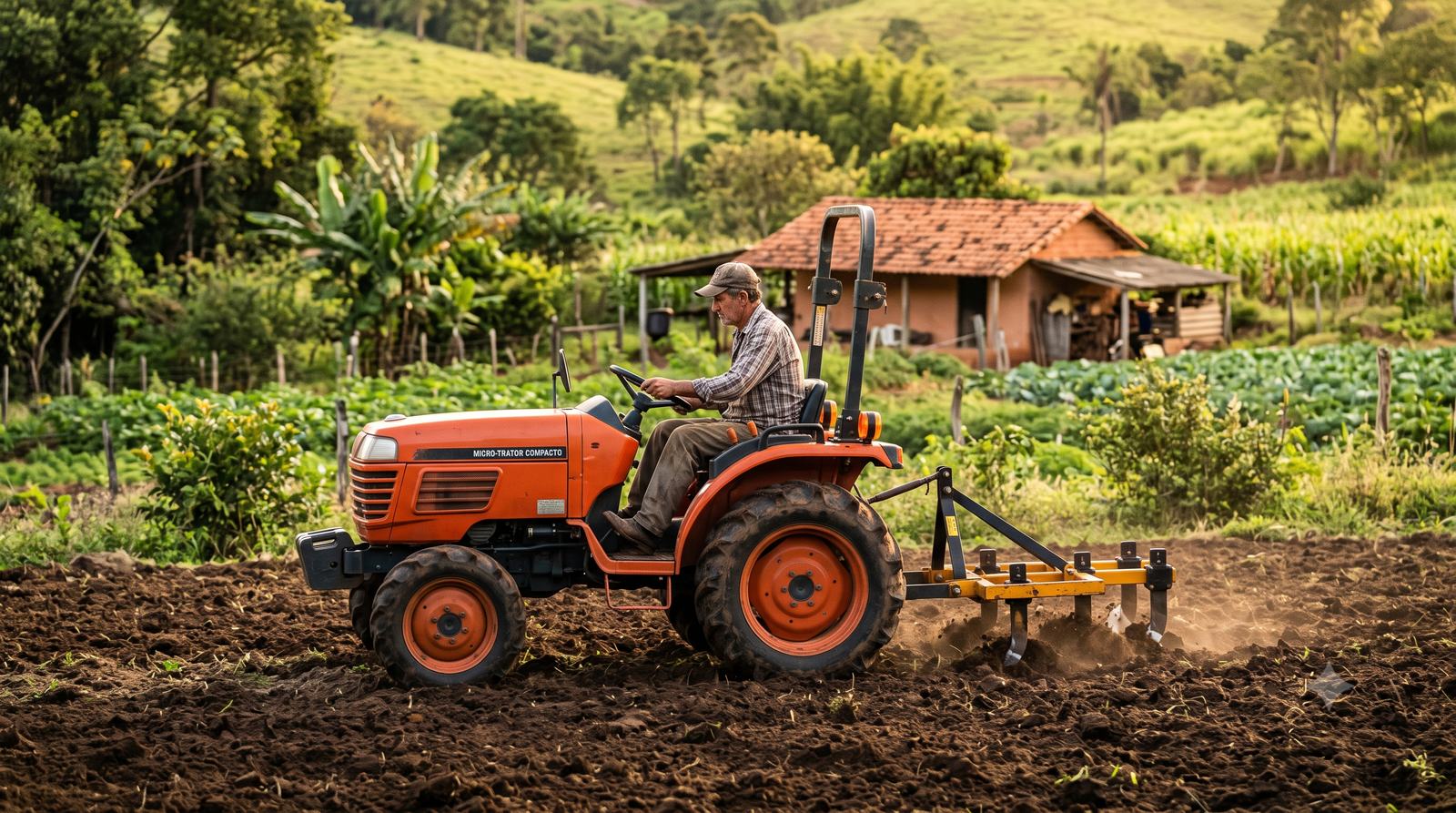
The reality of the Brazilian countryside has two extremes. On one side, agribusiness with its giant, hugely expensive machines. On the other, the small grower who still does almost everything by hand, because the big tractor neither fits nor pays for itself on their land. Between the two lies an enormous gap, and the one who profits by filling it is not only the grower: it is the importer who realised China makes exactly the machine that is missing, at a price Brazil does not yet offer.
What the compact tractor and the two-wheel tractor are
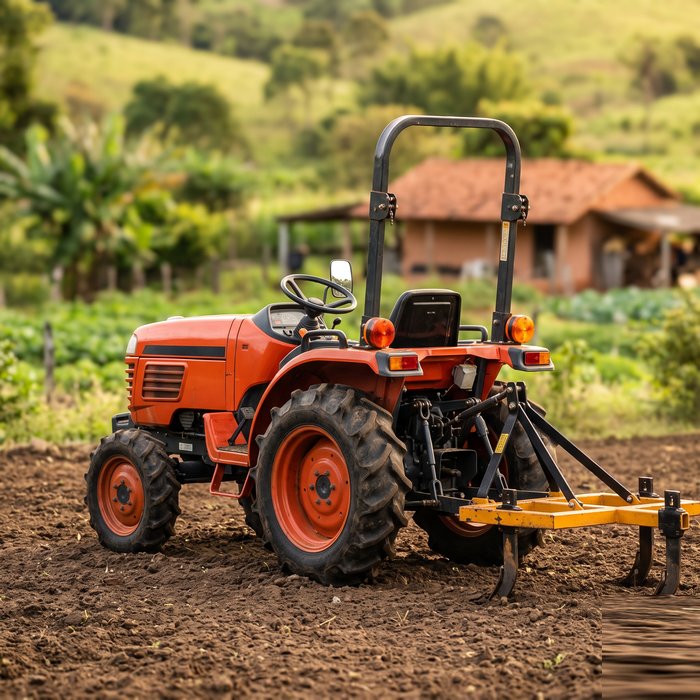
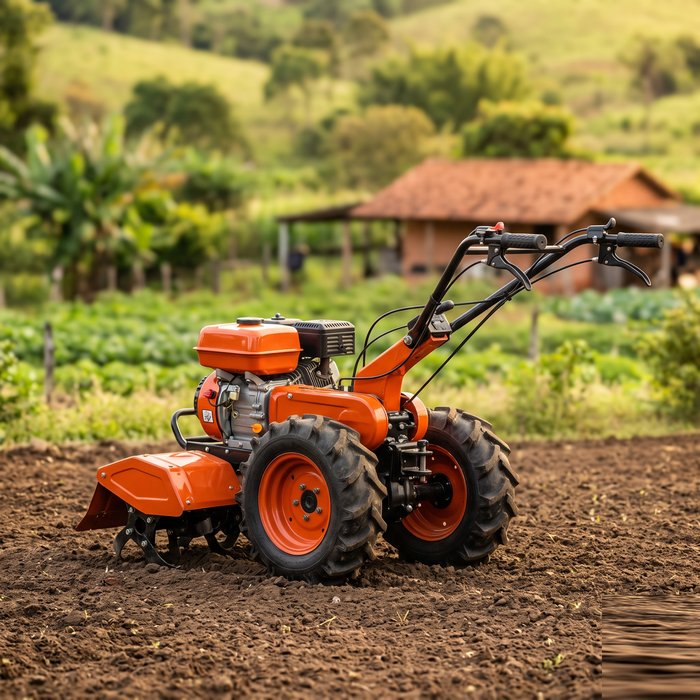
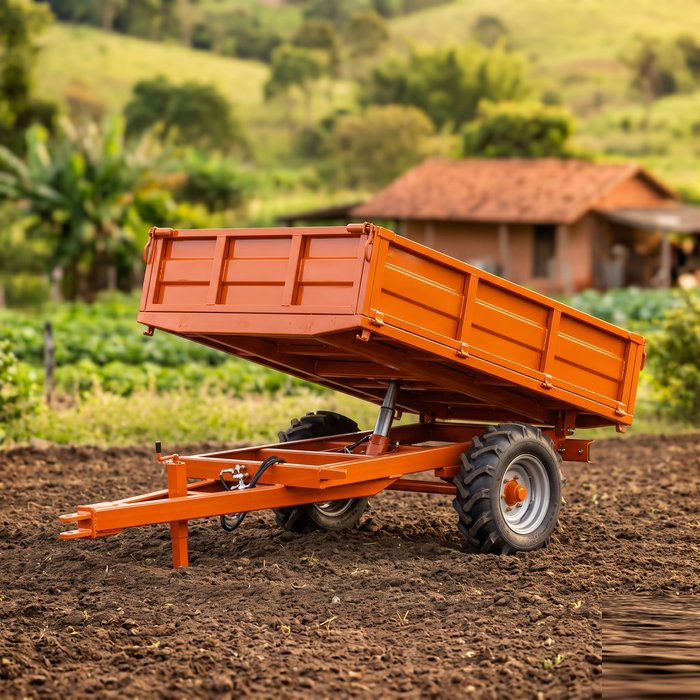
It is the family of compact agricultural machines built for the small and medium-sized property. The compact tractor has four wheels and a seat, is driven sitting down and pulls implements for soil preparation, transport and mowing. The two-wheel tractor, also called the walk-behind micro tractor, has two wheels and is steered on foot by the handlebar, cheaper and nimbler in vegetable plots, greenhouses and small pieces of land.
These are not machines of unreachable technology. That is exactly why they are growing: they solve a real productivity problem, they replace hours of manual work and they fit the budget of people who never had a way to mechanise.
Models and variations
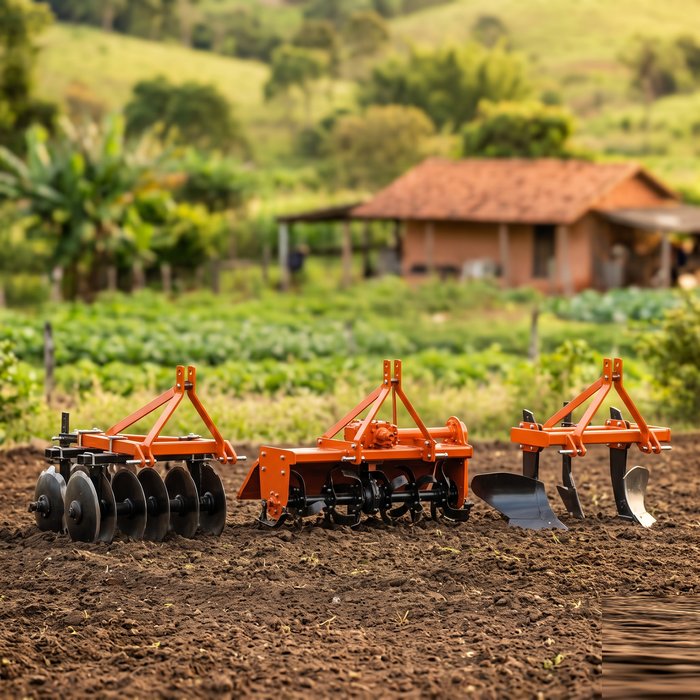
"Compact agricultural machine" is not one product. At the Chinese fairs it is a whole aisle of variations, and each one opens a different customer and price bracket in your business:
Why this is an opportunity for Brazil
Brazil has hundreds of thousands of small and medium-sized properties, smallholdings and country plots, and an enormous share of them still without any affordable mechanisation. It is a giant, underserved market, and the sums work for two importer profiles at once: whoever buys for their own land and whoever buys to resell.
- A machine that pays for itself: it replaces expensive, scarce labour, increases the area worked per day and opens the door for the small grower to do contract work for a neighbour. The return is measured in harvests, not in years.
- Cheap to buy at source, resells well: China concentrates large manufacturers of compact machines, and the cost at source is far below that of a nationalised equivalent. That opens a margin both for own use and for resale, with continuous repeat purchase of implements and parts.
- Harvest timing and lead time: a machine is not an impulse buy. Between manufacturing, sea freight and clearance, counting on 60 to 120 days means placing the order well before the soil preparation window.
- Resale with after-sales: whoever sells agricultural machinery also sells parts, implements and service for the years that follow. It is a relationship business, not a one-off sale.
Before importing: agricultural machinery has to meet Brazil's safety standards, above all NR-12, which requires guards, an emergency stop and signage, along with the certification of the electrical components where there are any and the manual in Portuguese. The quality of the engine and the transmission varies a great deal between factories, and this is a case where inspecting before shipment and securing spare parts avoids buying a problem instead of a solution.
Customise the specification (OEM)
Importing machinery from China is not picking the catalogue model and hoping it works out. The manufacturer adjusts the equipment to your market, and that is where having a partner at source separates whoever resells a commodity from whoever builds a serious operation.
- The right power, drive and implements: a diesel or petrol engine, two-wheel or four-wheel drive, and the set of implements your customer needs.
- Your brand on the equipment (private label / OEM) and a manual in Portuguese, to resell as a line of your own.
- After-sales and parts agreed at purchase: engine, transmission, belts and the technical support, which on an agricultural machine is what guarantees repeat purchase and reputation.
That calls for negotiating directly with the factory and validating a sample before the batch. BCVN finds the right manufacturer, closes the specification, tests the machine and makes sure the after-sales really exists, and not only in the proposal.
Where to buy compact tractors in China
China is one of the world's largest manufacturers of compact agricultural machinery, and it turns up both at the large general fairs and at the dedicated agricultural ones:
- Canton Fair, Phase 1 (Machinery and Equipment): the biggest starting point, with tractor and implement manufacturers side by side and the chance to see the machine running.
- CIAME (the agricultural machinery fair): the sector fair dedicated to agribusiness in China, where the manufacturers show the complete lines of tractors, two-wheel tractors and implements. It is where you go deeper into what the Canton Fair introduces.
- Yiwu Trade Fair: ideal for closing on hand tools and manual implements that round out the line, at the largest small-commodities wholesale market in the world.
Next edition, Canton Fair 2026 (140th): Phase 1, with machinery and equipment, runs from 15 to 19 October 2026, at the Pazhou complex in Guangzhou. It is the chance to see the machine running in front of you before closing the purchase, which changes everything when it comes to a production investment.
Read the complete guide to the Canton Fair 2026
The compact tractor is not a passing trend. It is the machine that lowered the barrier to mechanisation and created, in one go, a market of people who produce and a market of people who sell agricultural equipment. For the Brazilian importer, the question is not whether the countryside wants the product, but buying the right machine, within the standards, from the manufacturer that will supply the part and the service for the next harvest.
Frequently asked questions about importing compact and two-wheel tractors
Do I need certification to import compact and two-wheel tractors?
Yes. Agricultural machinery has to meet Brazil's safety standards, above all NR-12, which requires guards, an emergency stop and signage, and the certification of the electrical components where there are any. Technical documentation and a manual in Portuguese are also needed. BCVN validates the manufacturer that supplies those and guides you through the route.
What is the difference between a compact tractor and a two-wheel tractor?
The compact tractor has four wheels and a seat, is driven sitting down and pulls larger implements, ideal for smallholdings and medium-sized areas. The two-wheel tractor, or walk-behind micro tractor, has two wheels and is steered on foot by the handlebar, cheaper and nimbler in vegetable plots, greenhouses and small pieces of land. Many importers work with both to cover price brackets.
How much does it cost to import a compact tractor from China?
The cost at source is a fraction of the price of equivalent machines already nationalised, which opens a margin for whoever is going to use it on their own land or resell it. The figure varies with the engine power, the drive (two-wheel or four-wheel) and the implements that come with it. BCVN quotes the right machine and the parts support for your type of property.
Where can I find compact tractor suppliers in China?
At the Canton Fair (Phase 1, machinery and equipment) and at the dedicated agricultural fairs such as CIAME. The Yiwu Trade Fair helps with hand tools and manual implements. China concentrates large manufacturers of compact agricultural machinery. BCVN validates the manufacturer, the after-sales and the supply of parts.