
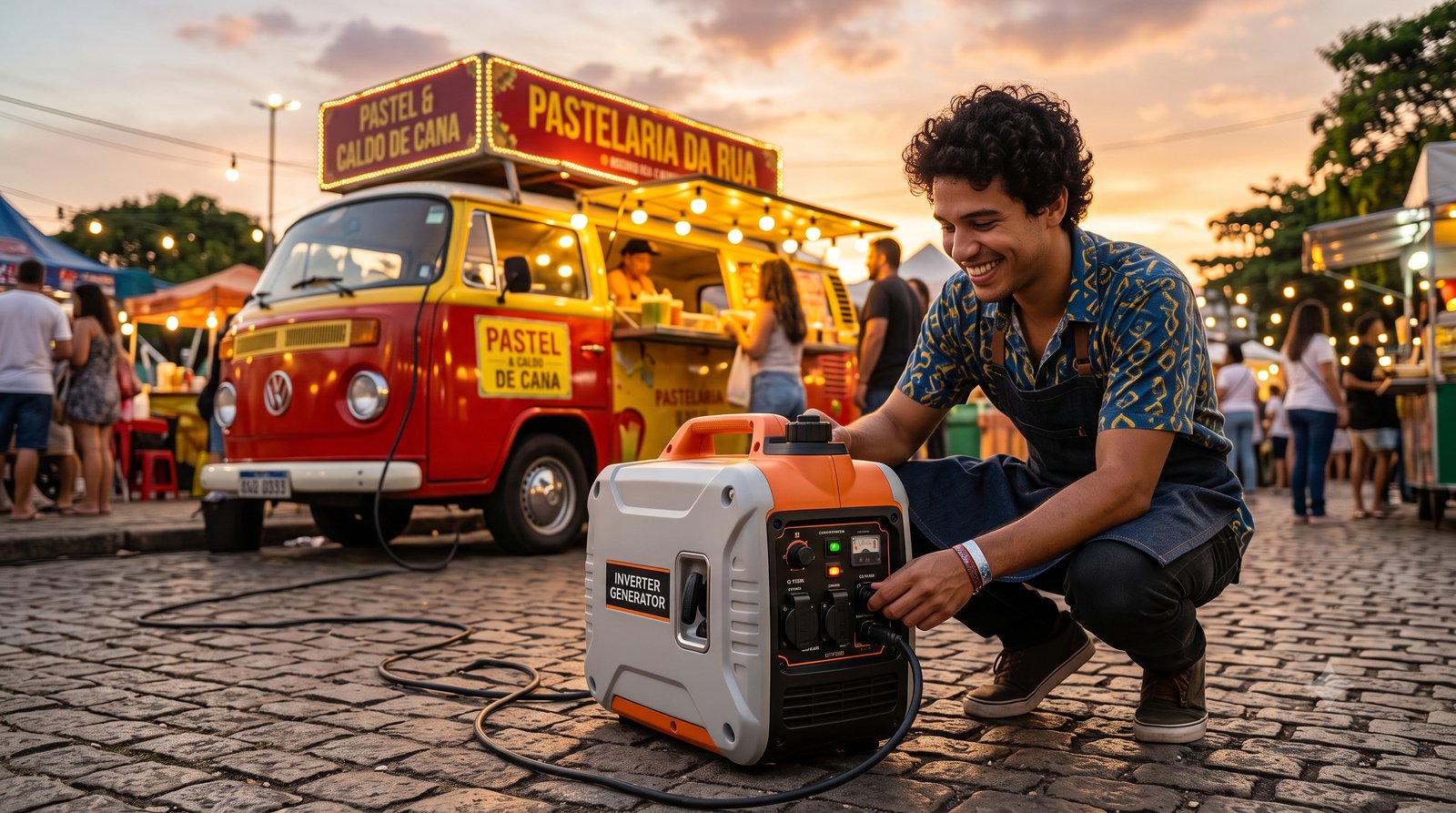
The conventional generator was always noisy, heavy and delivered dirty power, fine for a light bulb, risky for a laptop. The inverter generator changed those sums. It delivers stable, clean power, it fits in a car boot, it makes less noise than a conversation and it burns fuel only in proportion to what is switched on. That is why it stopped being a niche item and became a recurring purchase for food trucks, building sites, camping, events and homes that would rather not sit in the dark. And that is why it matters to whoever imports: a value-added product, one the customer searches for by name and compares by brand.
What the petrol inverter generator is
It is a petrol inverter generator: the engine generates electricity, but instead of sending it straight to the socket, an electronic module converts it into a pure sine wave, the same type of power as the grid. That makes it safe for sensitive electronics and allows three things the conventional one does not do well: turning the engine more slowly when the load is small (the eco mode), running at a low noise level and connecting two units in parallel to double the output when the job demands it.
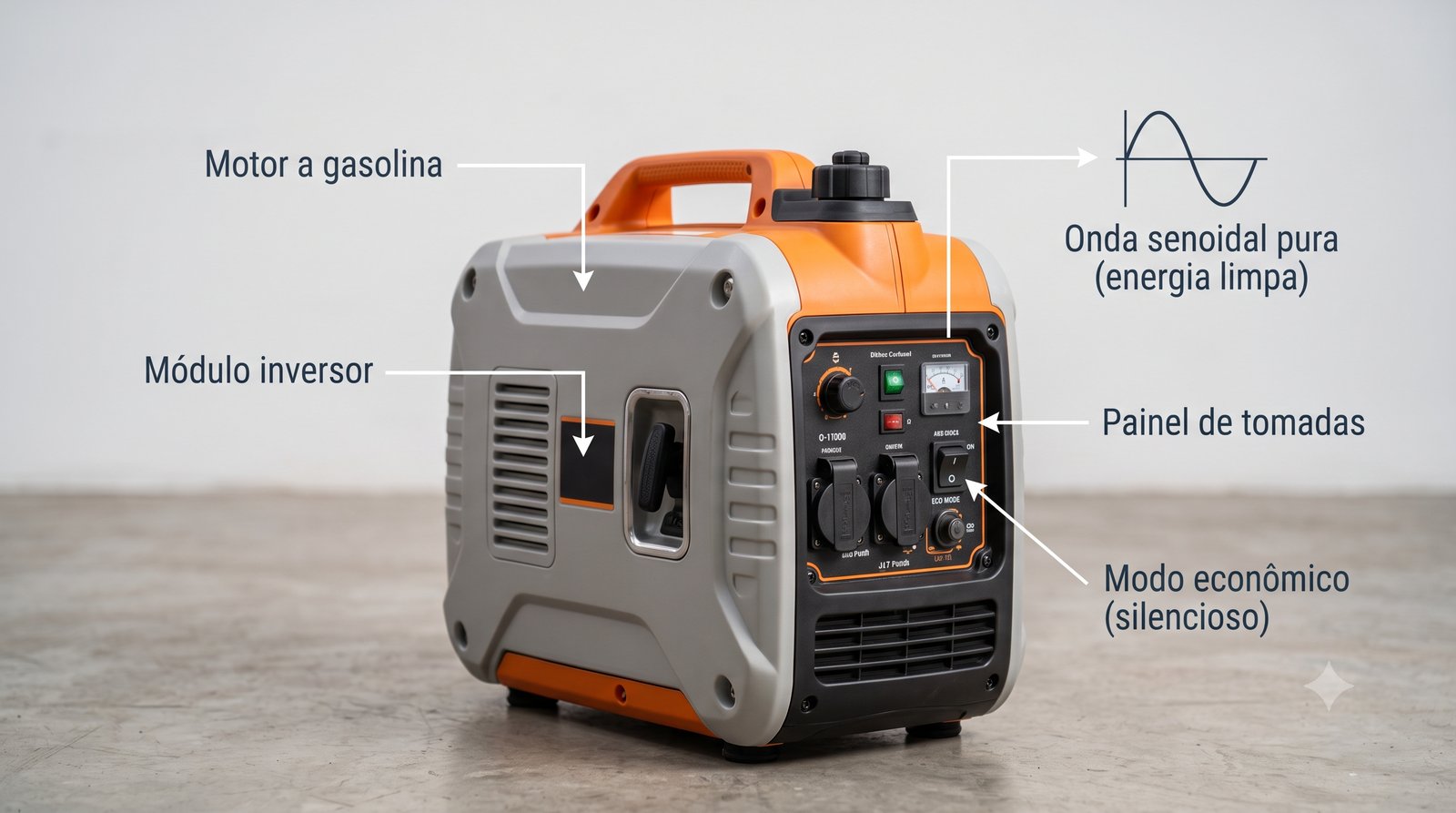
The best-selling outputs range from the pocket-sized site portable, in the region of 1 to 2 kW, to the 3 to 4 kW model that copes with a complete food truck. There are also the dual fuel versions, which run on petrol or LPG, a strong resale differentiator in Brazil.
Why this is an opportunity for Brazil
An unstable electricity grid, seasonal blackouts, growth in outdoor work and an explosion of small mobile businesses: Brazil is a market made for this product. And the sums add up for two importer profiles at the same time, the shop that wants a better margin and the entrepreneur who wants to create their own power brand.
- Demand that does not stop: building sites, food trucks, smallholdings, events and domestic emergencies sustain the sale all year round, peaking every rainy and blackout season.
- Buys cheap at source, resells well: China concentrates the world's manufacturing of engines and generator sets. The cost at source is far lower than the national distributor's, which opens up a comfortable margin for whoever imports directly.
- A brand product, not a commodity: the customer chooses a generator by trust in the brand and in the after-sales. With your logo and a well-assembled line, you escape the price war of the generic.
- Import timing: between manufacturing, sea freight and release, counting on 60 to 120 days is what guarantees a full stock for the next rainy season, when demand shoots up.
Before importing: the generator has an electrical output and normally requires INMETRO certification, as well as running at 60 Hz and at Brazil's voltage (110V, 220V or dual voltage). As it has a combustion engine, also mind the noise and the emission rules. The real output varies greatly between factories, and this is a case in which inspecting before shipment and securing spare parts protects your brand from the very first batch.
Customise the specification (OEM)
Importing a generator from China is not taking the catalogue model and hoping it works out. The manufacturer adjusts the set to your market, and that is where having a partner at source separates whoever resells a commodity from whoever builds a brand.
- The right output, voltage and frequency: the kW range your customer needs, a 110V, 220V or dual voltage output, and 60 Hz confirmed in the contract.
- Your brand on everything (private label / OEM): logo on the generator, on the casing, in the manual in Portuguese and on the packaging.
- Configuration and after-sales agreed at the purchase: electric start, dual fuel, parallel kit, and the supply of parts (spark plug, filter, carburettor) that sustains the repeat purchase.
That calls for direct negotiation with the factory and sample validation before the batch. BCVN finds the right manufacturer, closes the specification, tests the real output and guarantees the after-sales genuinely exists, and not only in the quotation.
Where to buy inverter generators in China
Portable power and site equipment are extremely strong sectors in China, and the generator appears both at the big general fairs and at those dedicated to machinery and energy:
- Canton Fair, Phase 1 (Machinery, Energy and Equipment): the biggest starting point, with engine and generator-set manufacturers side by side and the chance to test the machine.
- Bauma China (construction and heavy machinery): the biennial Shanghai fair where the generator appears as site power, alongside construction machinery. The next edition is from 24 to 27 November 2026.
- Yiwu Trade Fair: strong in entry-level portable models and in the accessories and spare parts for volume.
Next edition, Canton Fair 2026 (140th): Phase 1, with machinery, energy and equipment, takes place from 15 to 19 October 2026, at the Pazhou Complex, in Guangzhou. It is the chance to test the generator and compare manufacturers in front of you before closing the private label.
See how to import industrial equipment from China
The inverter generator is not a bold bet. It is the answer to a problem Brazil has every year, and reselling it rewards whoever buys directly and builds a brand. For the importer, the question is not whether the product sells, it is buying from the right manufacturer, within the standard, and turning a generic machine into a brand the customer asks for by name.
Frequently asked questions about importing petrol inverter generators
What is a petrol inverter generator and what is the advantage?
It is a generator that uses inverter electronics to deliver power as a pure sine wave, stable and clean, safe for laptops, TVs, sound systems and sensitive equipment. Compared with the conventional generator, it is quieter, lighter, consumes less fuel in eco mode and allows two units to be connected in parallel for more power. That is why it has become the favourite for food trucks, building sites, camping and domestic emergency use.
Does a generator imported from China need INMETRO certification?
Yes. The generator has an electrical output and normally requires INMETRO certification, as well as meeting Brazil's 60 Hz frequency and voltage (110V, 220V or dual voltage). As it has a combustion engine, there are also emission and noise rules to observe. BCVN validates the manufacturer that supplies the certification and the technical documentation in Portuguese.
Can I import just one unit of a generator to test it?
No. BCVN is an import consultancy for retailers and companies, and the generator has a factory MOQ (minimum order quantity), as well as a weight and volume that only dilute the freight in a closed batch. A single loose unit does not add up as an import. Anyone who wants just one piece should buy from a reseller in Brazil; anyone who wants to resell or supply their own operation at volume is a BCVN client.
Where to find inverter generator suppliers in China?
At the Canton Fair, Phase 1 (machinery, energy and equipment), at Bauma China (site equipment and site power) and at energy and tool fairs. That is where the engine and generator-set manufacturers ready for private label are. BCVN validates the manufacturer, the real output, the after-sales and the supply of spare parts.