
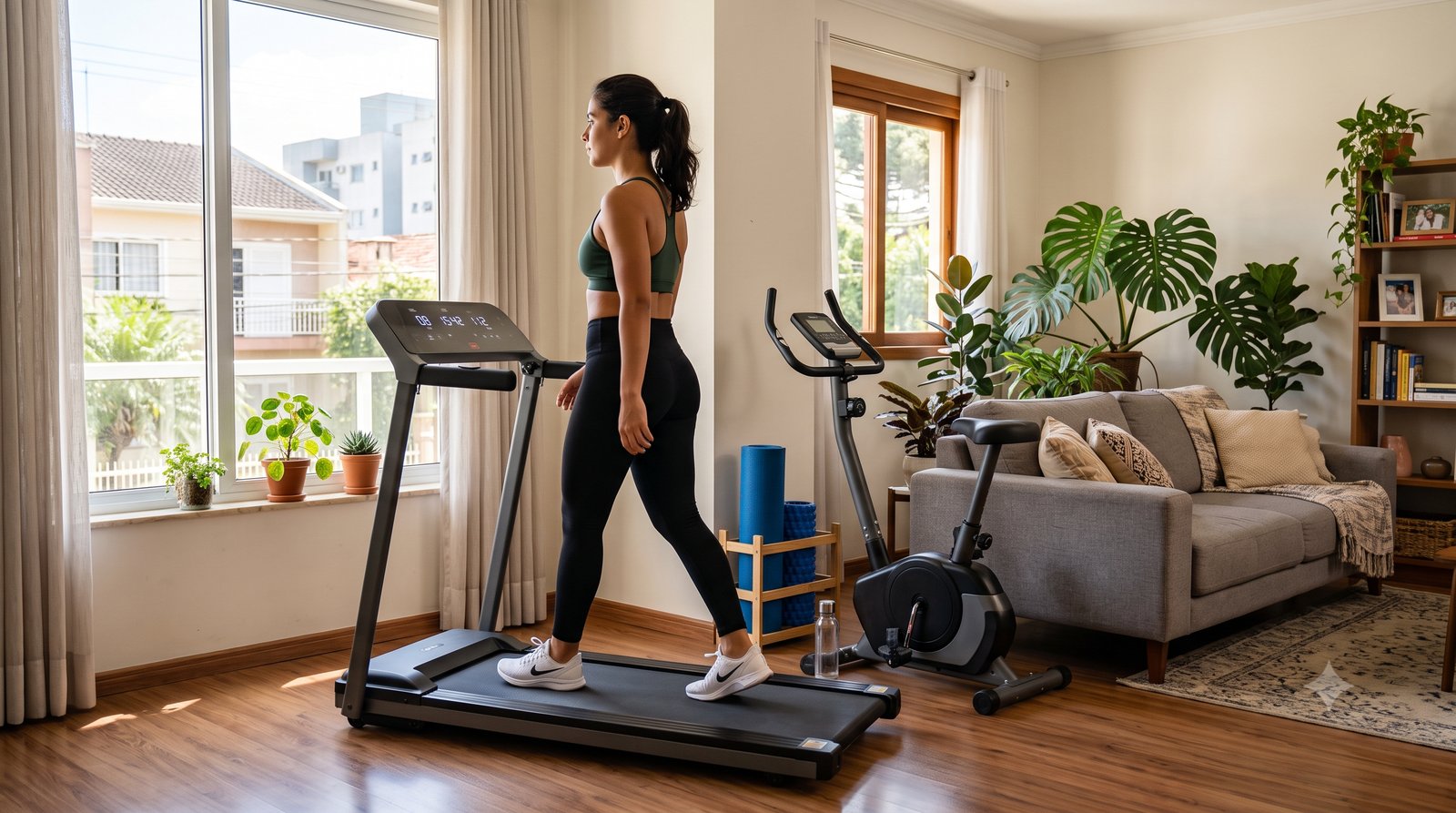
The scene repeats every year. Between Christmas and the second week of January, Brazilians decide that this time they really will train, and searches for treadmills, bikes and cross trainers shoot up. Some of those people go to the gym, some give up, and a large slice decide to set up their own training corner at home, where there is no traffic and no audience to face. Except that the treadmill sold in January has to be bought now: with a lead time of 60 to 120 days, whoever closes the order at the October fair catches the turn of the year with stock, and whoever remembers this in December arrives too late for the only window this category has.
What home training equipment is
It is the line of exercise machines sized for a flat, not for a gym: the folding treadmill, which folds away and disappears under the bed or the sofa, the exercise bike in its upright and spin versions, the compact cross trainer and the multi-gyms that handle several exercises in a single piece of furniture. The difference from professional equipment is not only size: it is a smaller motor, a lighter frame, quick folding and, increasingly, a connection to a phone app. China dominates that whole band, and it is what sustains the price at which the category reaches Brazilian retail.
Models and variations
“Home training equipment” is not a product, it is an entire shelf. In the trade fair hall each family serves a different space and a different budget:
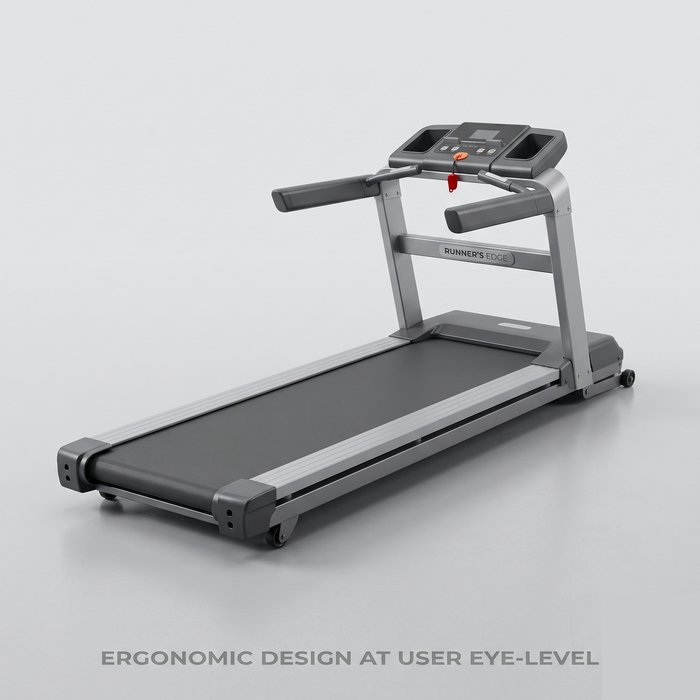
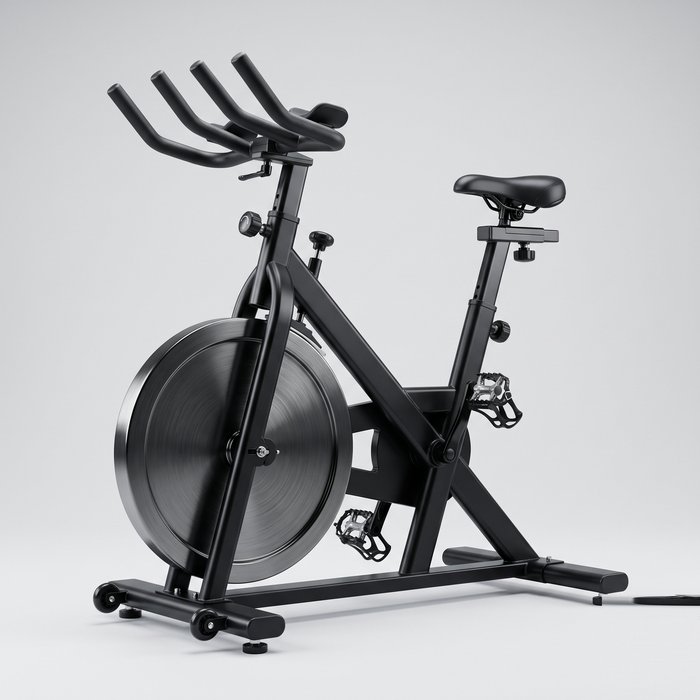
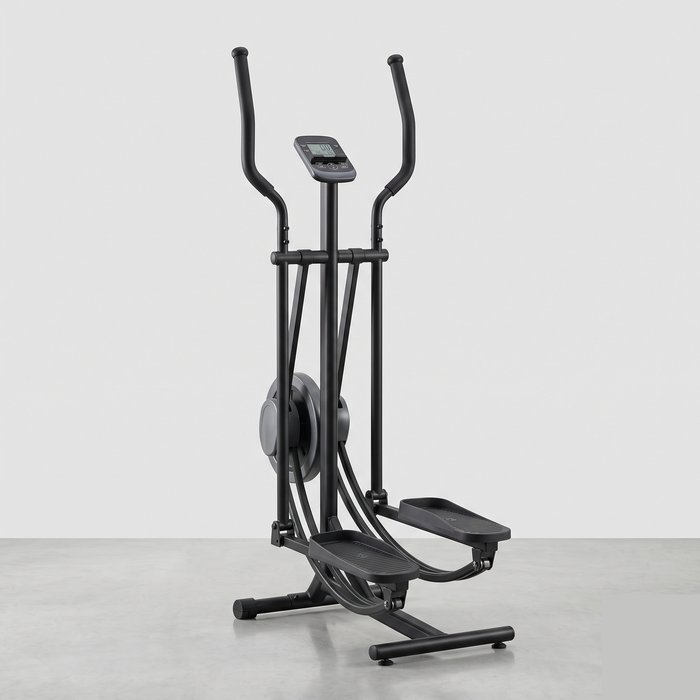
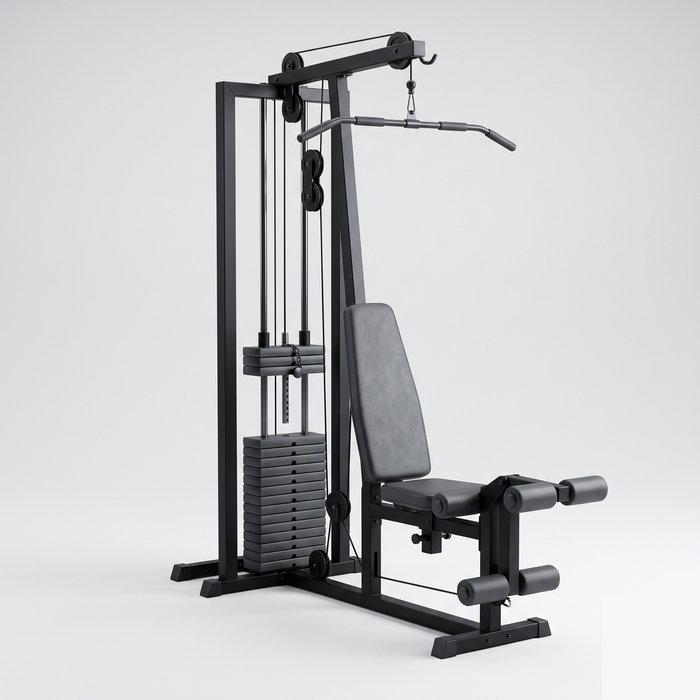
It is the variety that sustains the sale, because the end customer chooses by the space they have at home before choosing by the exercise. The treadmill is the fastest turning item and the one demanding the most technical care, because it has a motor. The bike has the best margin for anyone starting out, being simple, quiet and cheap to ship. The cross trainer opens up the low-impact audience, which is ageing and buying well. The multi-gym pushes the ticket up among those who already train. Building the right range, with a mix of those four, is what separates the shop that sells all through January from the one left with stock in February.
Why this is an opportunity for Brazil
Few categories have such a predictable buying trigger. The calendar does the marketing work and the retailer only needs to be stocked at the right moment.
- Two windows in the same purchase: the equipment goes in as a Christmas gift in December and comes back as a new year resolution in January. It is the same stock selling across two consecutive peaks.
- High ticket for retail: it is not a shelf impulse item, it is a planned purchase of meaningful value, which changes the revenue per sale of a small shop.
- An audience that only grows: training at home stopped being a plan B once the habit took hold, and the average Brazilian flat has got smaller, which pushes demand precisely towards the folding models.
- Ready-made content: it is a product that films itself. Folding the treadmill and storing it under the sofa is a video demonstration that explains itself in five seconds.
- Timing: the typical lead time is 60 to 120 days. Buying now, between July and August, is what guarantees a full shelf in November and December.
Before importing: the rules change within the line itself, and that decides your order. The treadmill has an electric motor and enters the INMETRO conversation, with attention to electrical safety and the emergency key that stops the belt; the magnetic bike and most cross trainers, on the other hand, have no motor and face much lighter requirements. Confirm the voltage (127V or 220V) before closing the batch, because equipment on the wrong voltage is unsellable, and check the declared weight capacity, which is where cheap products tend to lie. It is worth inspecting before shipment to test the frame, the welds and the folding mechanism. See also which products require INMETRO.
Put your own brand on it
Importing from China is not just reselling a generic product. The factory puts your brand on the equipment, the console and the packaging, and adjusts the product to the audience you serve. In a category where the customer compares nearly identical models, it is the brand that takes you out of the price fight:
- Your brand on the product and the box (private label / OEM): logo on the frame, on the console and on the retail packaging.
- Colour, finish and upholstery to your choice, so the line has its own identity in the shop and in the advert photo.
- Console and app: the panel language in Portuguese and, where it fits, the app under your brand, which is what gives it the look of a premium product.
- Packaging and manual in Portuguese, designed for Brazilian retail and for the assembly the customer will do alone at home.
Customisation usually calls for a slightly larger minimum order, and that is where having a partner in China makes the difference: BCVN finds the right factory, negotiates the customisation, validates the sample and makes sure the product arrives exactly as you asked.
It is worth understanding how this works in practice before requesting the first sample: the guide on own brand in China: private label, OEM and ODM explains the difference between the three models and what each one changes in the minimum order and the lead time.
Where to buy treadmills and exercise bikes in China
The home training line appears in more than one hall, because part of it is a sporting good and part is a motorised appliance:
- Canton Fair, Phase 3 (sport and recreation): from 31 October to 4 November, where the greatest concentration of sporting goods and training equipment manufacturers is.
- Canton Fair, Phase 1 (electricals and electronics): from 15 to 19 October, useful for the motorised and connected side of the line, such as the treadmill's console and app.
- Yiwu Trade Fair: from 21 to 24 October, to round out the order with fast-turnover training accessories and a low minimum order.
The itinerary the season sets out: Canton Phase 1 (15 to 19 October), Yiwu (21 to 24 October) and Canton Phase 3 (31 October to 4 November) chain together across three weeks. The heavy equipment and the accessories can be settled on the same trip, with production running in time for the turn of the year. See the full 2026 trade fair calendar.
It is also worth looking at fitness accessories and the smart scale, which round out the range of anyone building a home training shop.
Home training equipment is one of the few categories where the calendar hands over the customer ready-made: the January promise repeats every year, without fail. What decides who takes the money in that window is not who has the best price in December, it is who already had a container on the way in September. For the Brazilian retailer, buying at source now is the difference between fighting over wholesale leftovers and reaching the turn of the year with their own range on the shelf.
Frequently asked questions about importing treadmills and exercise bikes
Does a treadmill imported from China need INMETRO certification?
An electric treadmill has a motor and falls under INMETRO's electrical safety rules, with attention to earthing, the cable and the emergency key that stops the belt. Magnetic exercise bikes and most cross trainers, on the other hand, have no motor and face far lighter requirements. It is a difference worth knowing before putting the order together, because it changes the cost, the lead time and the paperwork for each item in your range. Whoever answers for compliance in Brazil is the importer, never the Chinese manufacturer.
When is the best time to import home training equipment?
Between July and August. The category has two peaks back to back, the Christmas gift in December and the new year resolution in January, and the lead time from China to Brazil is 60 to 120 days. Closing the order during the October trade fair season is the practical limit for receiving in time. Anyone who starts looking for a supplier in November misses the only big window this product has in the year.
Which of these gives the best margin for someone starting out?
The exercise bike is usually the best entry point: it has no motor, which simplifies compliance, it is cheaper to ship for the volume it takes up and it breaks down less, which reduces after-sales. The treadmill has the fastest turnover and is what pulls the customer into the shop, but it demands more technical care. The cross trainer opens up the low-impact audience and the multi-gym pushes the ticket up. A balanced range sells better than betting on a single item.
Can I import just one treadmill for my own use?
BCVN is an import consultancy for retailers and companies, not a retail shop, and does not sell single units. Import maths only works on volume: freight and paperwork are diluted across the batch, and every factory works to a minimum order quantity (MOQ). Anyone who wants a machine for the home should buy from a retailer in Brazil; anyone who is going to resell, stock a shop or create their own brand imports at source, and that is where the savings show up.
Where can I buy treadmills and exercise bikes in China?
At the Canton Fair, Phase 3 (31 October to 4 November), which concentrates sporting goods and training equipment, and at Phase 1 (15 to 19 October) for the motorised and connected side. The Yiwu Trade Fair (21 to 24 October) rounds out the order with fast-turnover accessories. BCVN validates the manufacturer, checks the frame and weight capacity, handles INMETRO and voltage, negotiates own branding and inspects before shipment.