
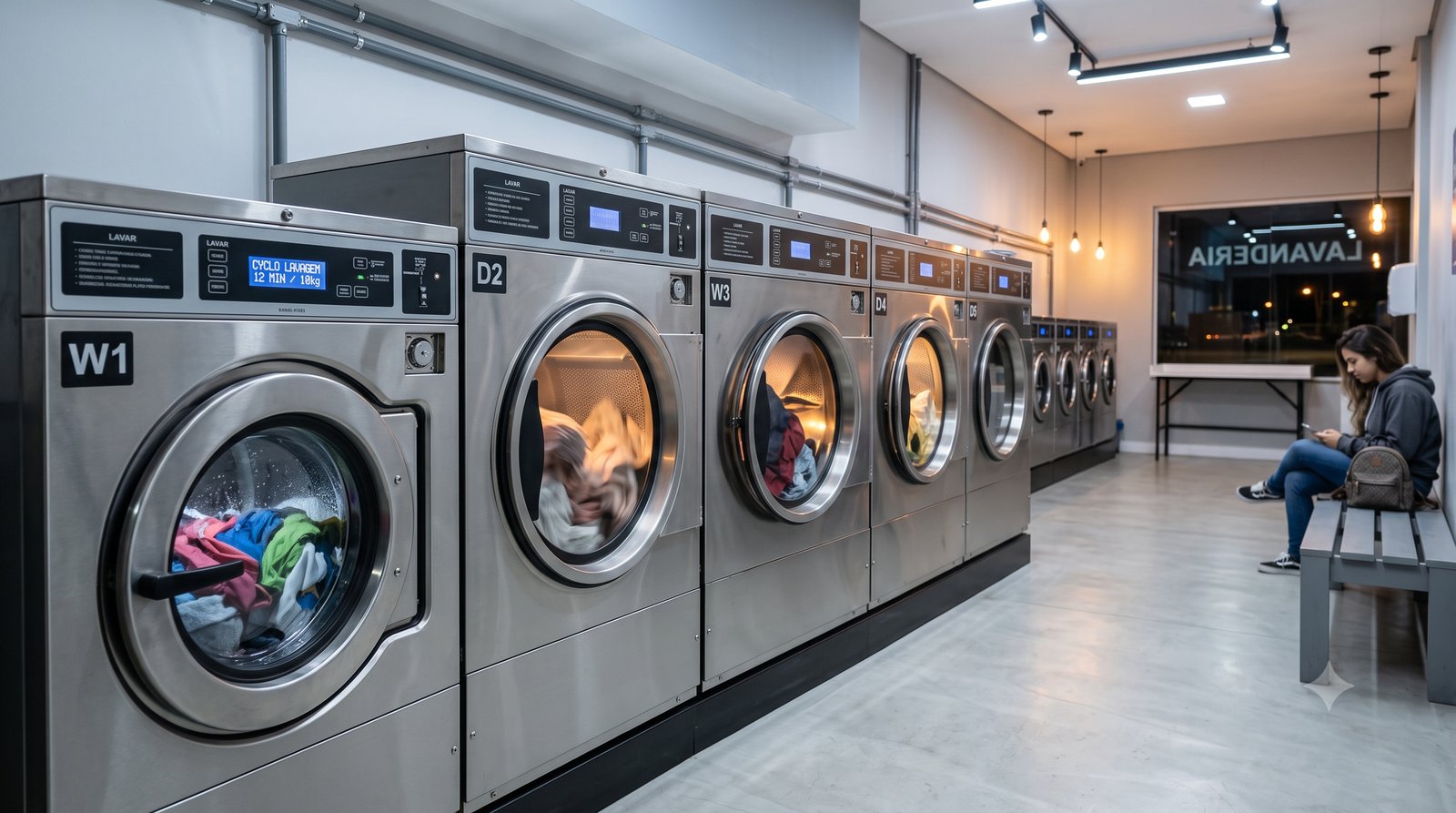
Anyone walking past a self-service laundry at night always sees the same picture: the machines turning, nobody behind the counter, the customer checking their phone while they wait. It is a business that runs with few people and earns by the cycle, and that is why it has multiplied across neighbourhoods, petrol stations and shopping arcades. Except that the bigger opportunity is not in opening one of those shops. It is in being the one who supplies the machines to the hundreds that open every year, and that is where the price at source changes the whole calculation.
What industrial laundry equipment is
It is the line of machines that washes, dries and presses at scale and in continuous operation: the high-spin industrial washer, the tumble dryer, the flatwork ironer that presses sheets and towels by the metre per minute, the self-service set with payment by token, card or app, and the dry cleaning machine of the dry cleaner's. None of this is a reinforced household appliance: it is heavy-chassis equipment, built to run all day for years. China manufactures that whole line, and that is what makes it viable to equip an operation without the cost of ready-made imported equipment from a traditional brand.
Models and variations
“Laundry equipment” is not one single machine. In the trade fair hall it is a universe, and it is that variety that makes the trip worthwhile, because each machine solves a stage of the operation:
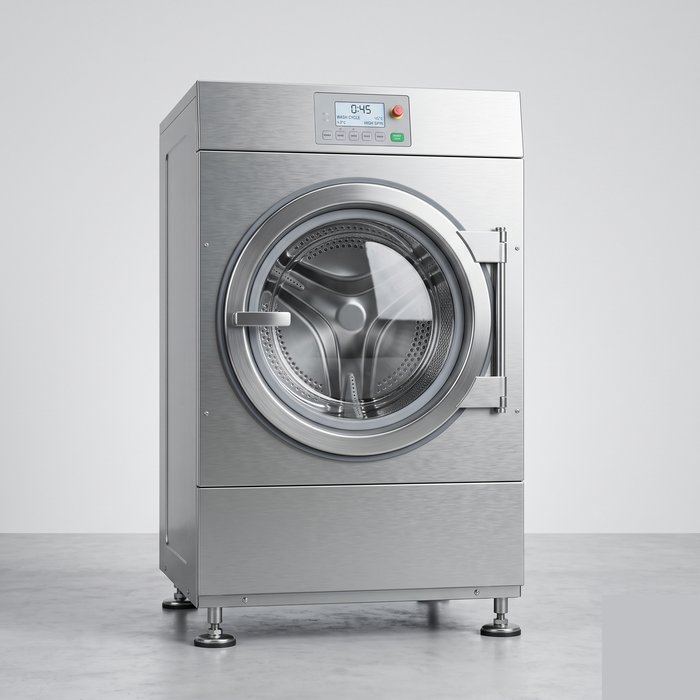
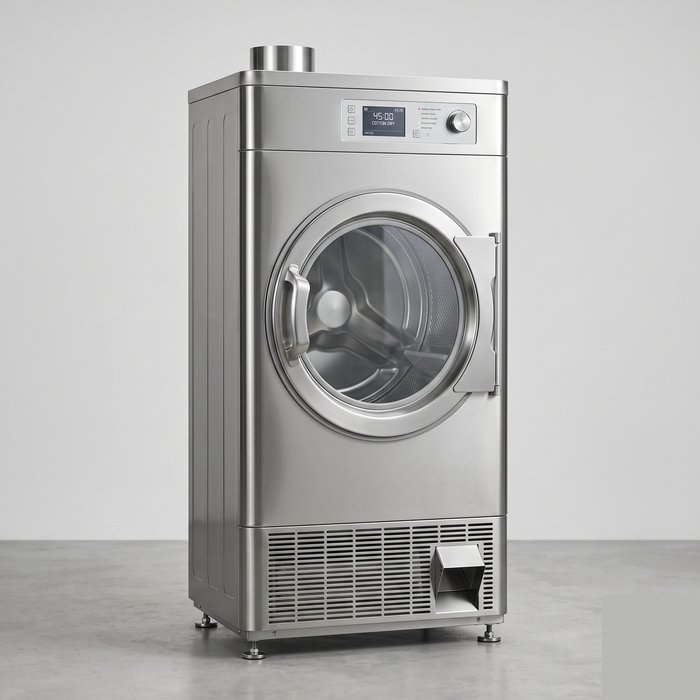
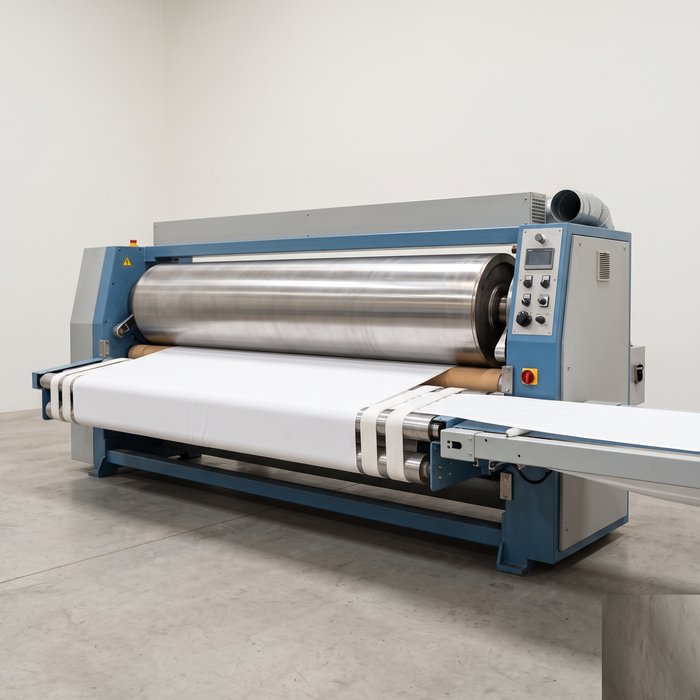
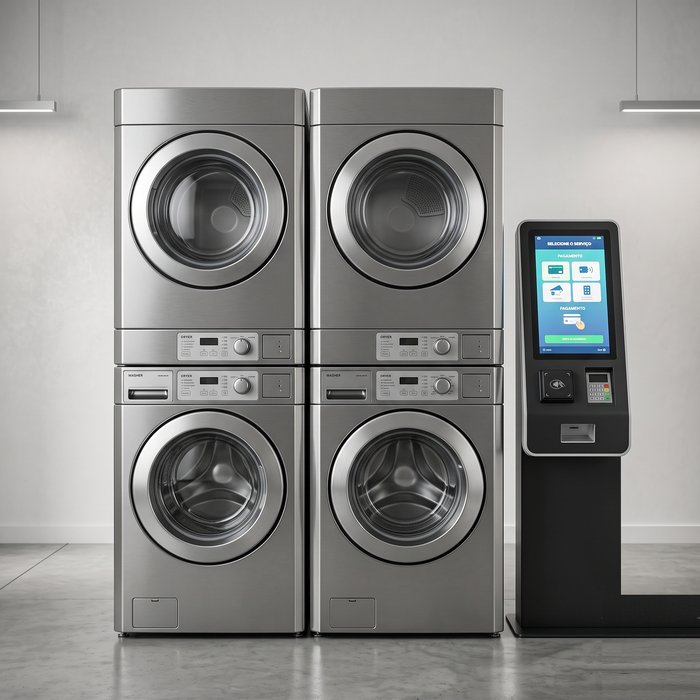
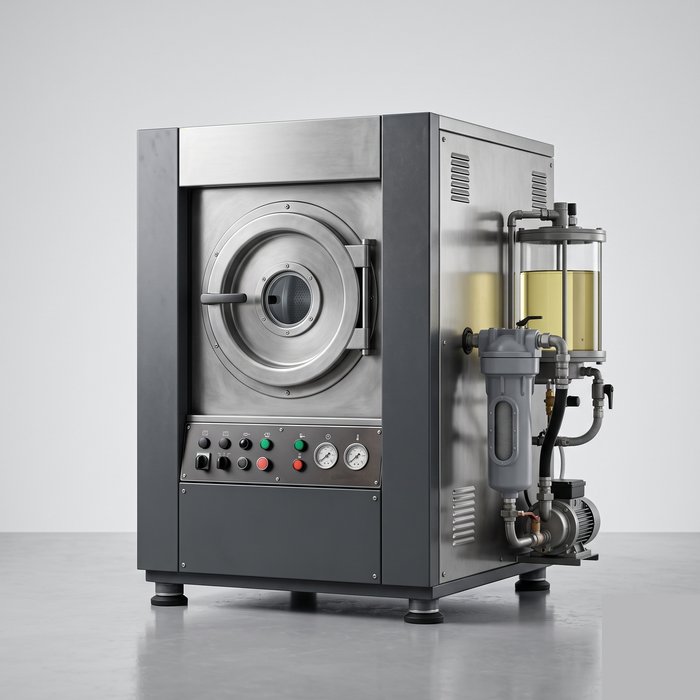
It is the set that makes the business. The washer defines the capacity; the dryer is usually the real bottleneck, because drying takes longer than washing; the flatwork ironer is what opens the door to hotel and hospital customers; self-service is the fastest growing format in retail; dry cleaning serves the high ticket of the dry cleaner's. Seeing the machines running at source, and sizing the right combination, is what no catalogue photograph delivers.
Why this is an opportunity for Brazil
Laundry has stopped being just the back room of the neighbourhood dry cleaner's. It has become a self-service franchise, an outsourced service for hotels, hospitals, restaurants and gyms. Each of those operations buys a set of machines, not a single unit.
- Demand with no seasonality: dirty laundry has no high or low season. As long as shops, hotels and clinics keep opening, demand for equipment stays firm.
- Volume per customer: a self-service laundry does not buy one washer, it buys a wall of them, plus the dryers. A franchise buys them by the dozen.
- High ticket, hard to compare: it is technical equipment, and the buyer needs guidance. Whoever sells on price alone loses to whoever explains capacity, consumption and after-sales support.
- Parts and consumables that repeat: bearings, belts, heating elements, dampers and chemical dosing are recurring supply, revenue that continues after the machine has been sold.
- Timing: the typical lead time is 60 to 120 days. Whoever closes at the October fair has the machine ready for the following year's opening season.
Before importing: it is electrical equipment and follows INMETRO rules, with attention to energy efficiency labelling, which weighs on the operator's water, electricity and gas bills. Because it has a drum, a heated roller and moving parts, it enters the NR-12 conversation (machine safety), and the flatwork ironer requires properly resolved guarding and an emergency stop. Confirm the voltage (220V or 380V three-phase on the larger machines), the type of heating (electric, steam or gas) and the available water pressure. It is worth inspecting before shipment to check chassis welds, bearings and the control panel. See also how to import equipment from China.
Customise the specification (OEM)
Importing a laundry machine is not picking the catalogue photograph and plugging it in. The equipment is specified to the operation and to the installation, and that is the point where having a partner at source separates whoever gets it right from whoever ends up with a container standing idle:
- Capacity and cycle: the load in kilos and the cycle time define how many items the shop delivers per day. An undersized machine blocks the customer's business.
- Voltage, heating and installation: 220V or 380V three-phase, electric, steam or gas heating, and the drain, base and water point requirements settled before the batch.
- Safety and standards: guarding, interlocking and emergency stop within what NR-12 demands in Brazil, defined with the factory and not improvised afterwards.
- Parts, manual and support: the supply agreement for wear parts and the manual in Portuguese, which the customer will be asking you for over the years.
- Own branding: where it fits, the distributor applies their own brand (private label/OEM) to the line, with BCVN negotiating the customisation and validating the sample.
This calls for direct negotiation with the factory and sample validation before production. BCVN finds the right manufacturer, specifies the machine for Brazilian installations, handles compliance and validates technical support.
Where to buy laundry equipment in China
The industrial laundry line appears in the machinery hall of the universal trade fair and crosses with the hospitality fair, which is where the end customer for the service is:
- Canton Fair, Phase 1 (Machinery and Equipment): from 15 to 19 October, where the manufacturers of washers, dryers and flatwork ironers are, in the same hall as the other industrial machinery.
- FHC China (hospitality and food service, Shanghai): from 10 to 12 November, useful for understanding hotel and restaurant laundry operations, which are among the sector's biggest buyers.
- Guide to industrial equipment: the route for importing machinery from China, from the order to customs clearance.
The itinerary the season sets out: Canton Phase 1 (15 to 19 October, Guangzhou) and FHC (10 to 12 November, Shanghai) fall in the same autumn season. You can see the machine among the manufacturers at Canton and its real use in hotel operations at FHC. See the full 2026 trade fair calendar.
It is also worth looking at commercial refrigeration and the industrial bakery line, which follow the same logic of equipping an entire business at source.
Laundry equipment is not the simplest import in the Showcase, and that is exactly why it rewards whoever goes to the source. You do not buy just any washer, you buy the right capacity, on the right voltage, with the guarding the Brazilian standard demands and a manufacturer who will guarantee the bearing two years from now. For anyone supplying or building laundry operations in Brazil, buying at source is the difference between reselling a catalogue and owning an entire line.
Frequently asked questions about importing laundry equipment
Does industrial laundry equipment imported from China need certification?
Yes. It is electrical equipment and follows INMETRO rules, including energy efficiency labelling, which weighs on the operator's water, electricity and gas bills. Because it has a drum, a heated roller and moving parts, it also enters the NR-12 conversation, the machine safety standard, with guarding and an emergency stop. Before importing, confirm the voltage (220V or 380V three-phase on the larger machines), the type of heating (electric, steam or gas) and the installation requirements.
What is the difference between an industrial washer, a dryer and a flatwork ironer?
The high-spin industrial washer is the heart of the operation and defines the capacity in kilos per cycle. The tumble dryer is usually the real bottleneck, because drying takes longer than washing, and it is what determines how many items come out per day. The flatwork ironer is the heated roller that presses sheets and towels at scale, the equipment that opens the door to hotel and hospital customers. The dry cleaning machine serves delicate items and suits, the high ticket of the dry cleaner's. Together they form the complete line.
Why does importing laundry equipment from China pay off?
China manufactures the entire industrial laundry line and the price at source is a fraction of what is charged in Brazil, at a moment when self-service laundries are multiplying across neighbourhoods, petrol stations and shopping centres, and when hotels, hospitals and restaurants are outsourcing the service. Each operation buys a set of machines, which generates volume, and there is the recurring supply of wear parts and consumables. For the equipment reseller it is a line with a high ticket and constant demand.
Can I import just one washer to test?
BCVN is an import consultancy for companies and resellers, not a retail shop, and does not sell single units. Import maths only works on volume: freight and paperwork are diluted across the batch, and every factory works to a minimum order quantity (MOQ). Anyone who wants a single machine should buy from a distributor in Brazil; anyone who is going to resell, build a chain of shops or represent the brand imports at source, and that is where the savings really show up.
Where can I buy laundry equipment in China?
At the Canton Fair, Phase 1 (15 to 19 October), which brings together the manufacturers of washers, dryers and flatwork ironers in the machinery hall, and at FHC China in Shanghai (10 to 12 November), where you get to understand hotel and restaurant laundry operations. BCVN validates the manufacturer, sizes the capacity, handles INMETRO and NR-12, confirms the voltage and negotiates the supply of parts.