
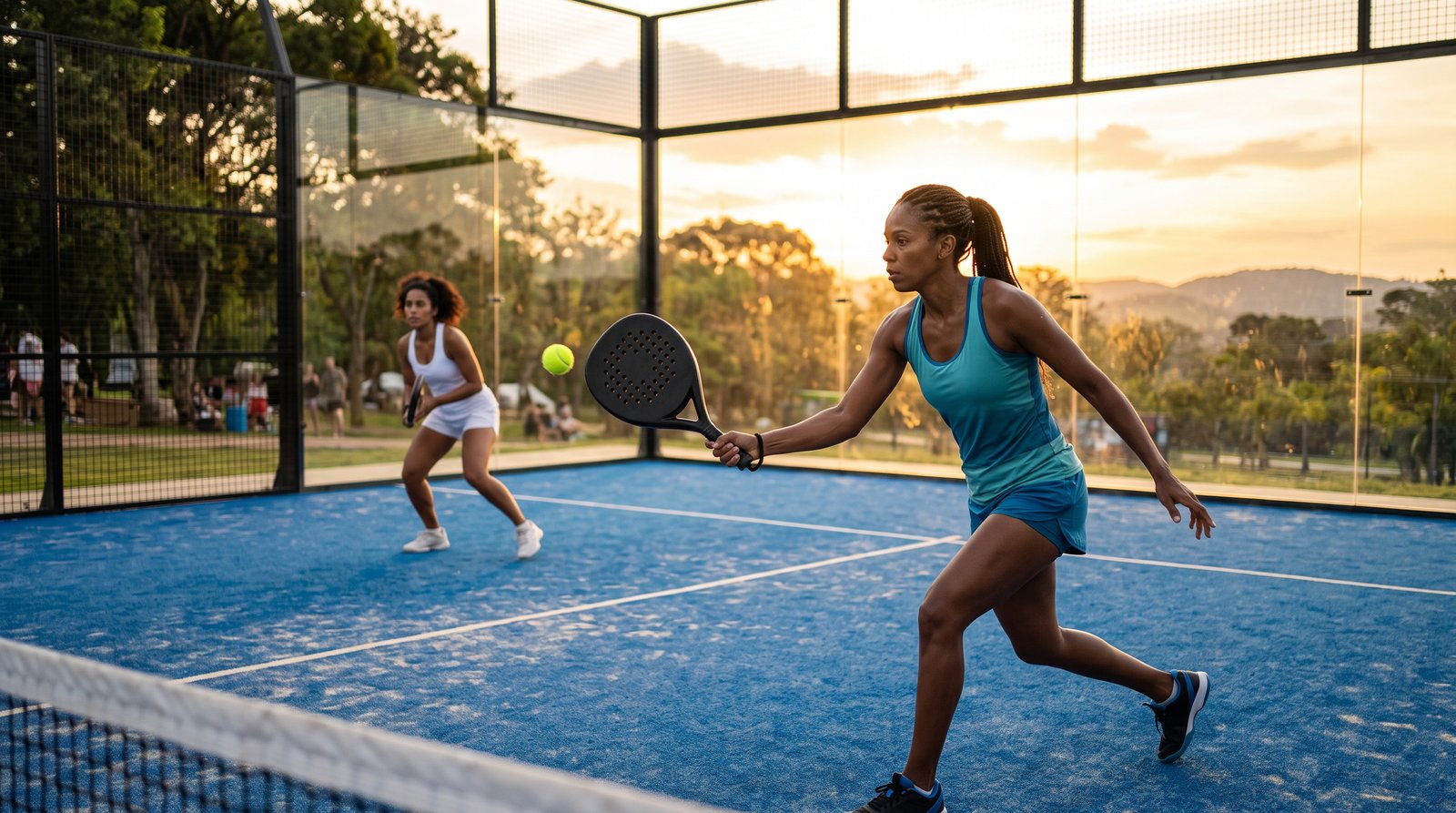
The padel racket is a curious product for an importer: it looks like a commodity, because everyone sells an entry-level carbon one, and it hides three decisions the beginner never sees: the shape, the core and the measurements. Whoever serves arenas, schools and sports shops knows that the customer comes back when they get the racket right and disappears when they do not. The difference between the two is not in the advert photo.
What a padel racket is, and its cousins
The padel racket is solid and perforated, without strings, with a face of carbon fibre or fibreglass and an EVA foam core. Under the FIP rule, the international federation, it measures at most 45.5 cm long, 26 cm wide and 38 mm thick. The first cousin is the beach tennis racket, also solid and perforated but longer: under the ITF rule, it goes up to 50 cm long, with a head 26 cm wide and the same 38 mm thickness. The second is the pickleball paddle, with a smooth face, which USA Pickleball measures by the sum of length and width, at most 60.96 cm, with up to 43.18 cm in length.
They are three rules and, at the same time, the same factory technology: hot moulding of a carbon face over a foam core. The factory that makes one serves the others, and what changes is the mould. That is what gives scale to whoever imports: one supplier, three audiences. What the factory advertises as 3K, 12K or 18K is the weave of the carbon fabric, which affects weight, stiffness and feel, and is not a quality scale. A softer EVA core gives comfort and ball exit, and a harder one gives power and control, which is what the more advanced player looks for.
Models and variations
On the fair floor the sport splits into four fronts, and a factory that shows only one of them is showing a quarter of the catalogue.
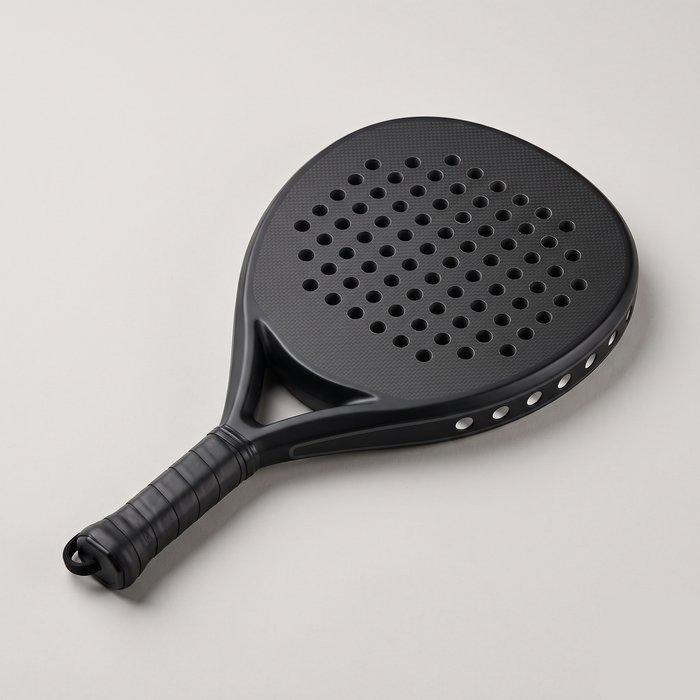
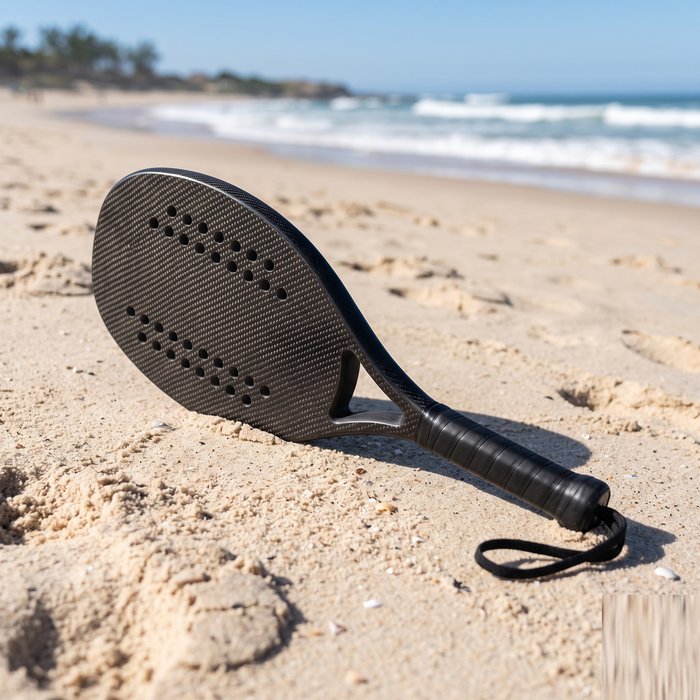
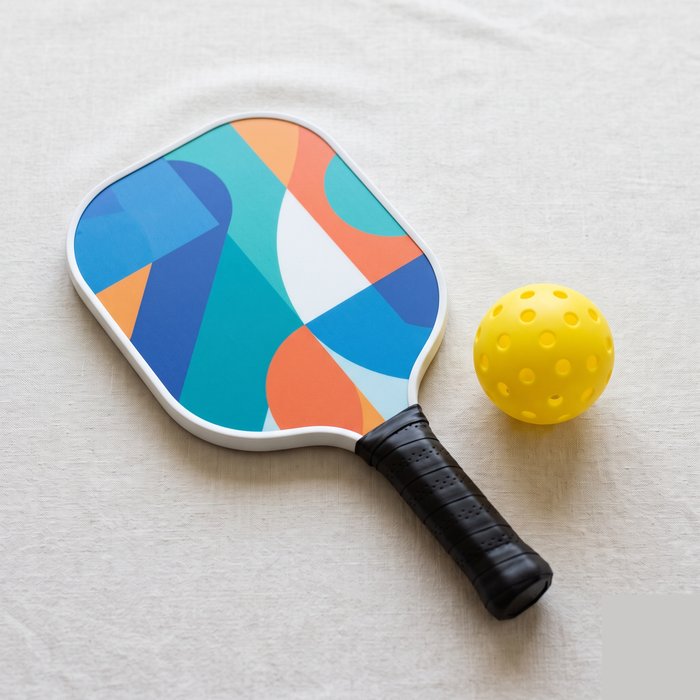
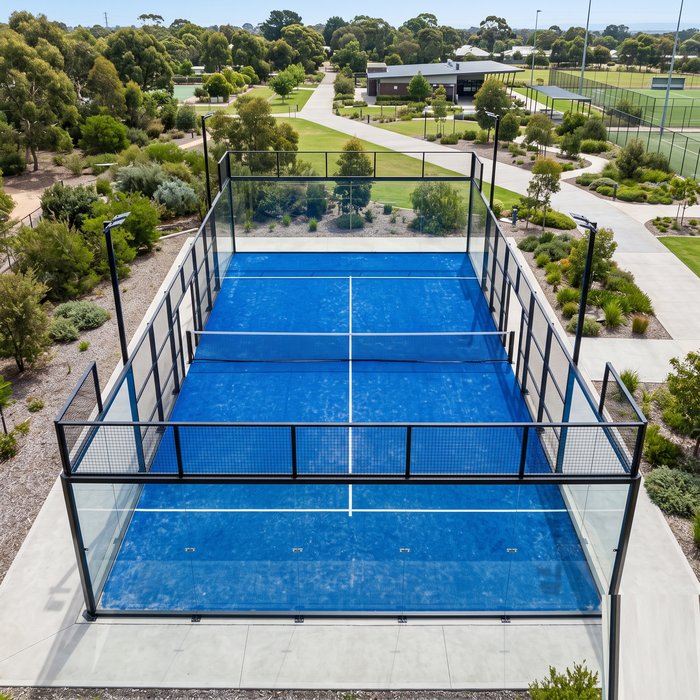
Choosing between the four fronts is not a matter of taste, it is a matter of who the product will sell to: the padel and beach tennis rackets for the player and the sports shop, the pickleball paddle for whoever bets on the next sport, and the court for the arena builder, who is a different buyer, with a different order and a different import path. Understanding that segmentation before closing the container is where BCVN comes in.
Why this is an opportunity for Brazil
The growth has a number. The Brazilian Padel Confederation speaks of about 600,000 players, and the Brazilian Tennis Confederation records an increase of more than 30% in the number of tennis, beach tennis and padel players since 2022. The sector estimates the equipment market at about R$ 500 million a year, and the business press already points to pickleball as the craze that wants to unseat beach tennis.
- Timing: the sport grows all year, with a peak in demand when a new court opens and when summer calls people to the sand, in beach tennis. An entry-level racket does not expire on the shelf, and the 60 to 120 day lead time lets whoever closes the order now arrive in time for next summer.
- Profit logic: low cost at origin and a shelf price that the beginner accepts paying to start. It is the distance between the factory racket and the shop racket, plus the margin on cover, overgrip and kit, that sustains the resale.
- Broad audience: beginners, schools and arenas that rent and resell, coaches, sports shops, niche e-commerce and clubs.
- Ready-made content: the sport is social and films itself. Unboxing, racket comparisons and match videos make content without production.
Before importing: a racket is not a product with a regulatory wall that has been confirmed, and that is why the mistake lives elsewhere: in the measurements. A racket outside the sport's limit is barred from tournaments and rejected by an arena that runs championships, and the catalogue photo does not show that. Ask for the measurement report (length, width, thickness and weight) for each model and check it on the sample, with callipers. The specialist press reports that the FIP began controlling the 38 mm thickness and the surface and core technology more strictly in 2026, and a tournament padel ball must be FIP-approved, which makes racket and ball go together on the order of whoever sells for competition.
Two points remain open and are confirmed before the order: the NCM and the taxation, which the customs broker settles, and the court and its components (safety glass, artificial grass, lighting), which have their own rules and import path and should be treated as a second order, not as an accessory to the racket. For the batch of rackets, inspect the batch before shipment: weight, balance and carbon finish vary from factory to factory, and the photo shows none of the three.
Customise the racket with your brand
Importing from China is not just reselling a generic product. The factory can put your brand on the racket and the packaging, and customise the product your way. That is how a private brand is built, with more margin and less price competition, which is powerful in a sport where the new player does not yet have a favourite brand.
- Your brand on the face, the frame and the box (private label / OEM): logo and exclusive packaging.
- Shape, colour, weight and balance to your choice, within the sport's rules.
- Cover, grip and kit customised, with packaging and manual in Portuguese.
Customisation usually asks for a slightly larger minimum order, and that is where having a partner in China makes the difference: BCVN finds the right factory, negotiates the customisation, validates the sample and makes sure the racket arrives measured and weighed exactly as you ordered.
It is worth understanding how this works in practice before requesting the first sample: the guide on own brand in China: private label, OEM and ODM explains the difference between the three models and what each one changes in the minimum order and the lead time.
Where to buy padel rackets in China
Sporting goods have their own hall at the general fairs and their own fair in the calendar:
- Canton Fair, Phase 3 (Sporting Goods): the sport and leisure hall within the personal consumption phase, with racket and equipment factories side by side.
- China Sport Show: the largest sporting goods and fitness fair in China. The 2027 edition already has a date published by the organiser, 13 to 16 May, and has changed city: it was in Xiamen in 2026 and will be in Chengdu.
- ISPO Shanghai: sport and outdoor, in July, with the 2027 date still to be confirmed.
Autumn 2026 Canton Fair (140th): Phase 3, with the sporting goods, takes place on 31 October to 4 November 2026, at the Pazhou complex in Guangzhou. For the following year, the Canton Fair 2027 guide gives the expected dates, and the China trade fair calendar 2027 shows the China Sport Show, ISPO and the rest of the year.
Read the complete Canton Fair 2026 guide
The racket is the kind of product where the importer wins by the rule, not by fashion: the same carbon factory serves three sports, and whoever knows which measurement applies to each reaches the shelf with the racket the customer can use in a tournament and buys again when it breaks. It is an opportunity that follows the opening of each new court, and rewards whoever arrives first with the supplier validated.
Frequently asked questions about importing padel rackets
Do I need certification to import a padel racket?
No compulsory Inmetro certification has been found for the racket itself, unlike the helmet or the battery. What decides the order is the tax classification (NCM), which the customs broker confirms, and the racket's measurements within the sport's rules. Confirm both before placing the order.
What is the difference between a padel, a beach tennis and a pickleball racket?
All three are short rackets without strings, but with different rules. A padel racket is at most 45.5 cm long, 26 cm wide and 38 mm thick (FIP rule). A beach tennis racket is longer, up to 50 cm long, 26 cm wide at the head and 38 mm thick (ITF rule). A pickleball paddle has a smooth face and is measured by the sum of length and width, which cannot exceed 60.96 cm, with a maximum length of 43.18 cm (USA Pickleball).
Where can I find padel racket suppliers in China?
At the Canton Fair (Phase 3, sporting goods) and at the China Sport Show, which in 2027 is in Chengdu, from 13 to 16 May. BCVN validates the factory, checks the sample's measurements against the sport's rules and can accompany your visit to the fairs.
What do 3K, 12K and 18K mean on a racket?
They are the weave density of the carbon-fibre fabric on the face, and they affect weight, stiffness and feel in play. They are not a quality grade: what sets a racket apart is the combination of carbon, core and finish, which is why you ask for a sample before the batch.