
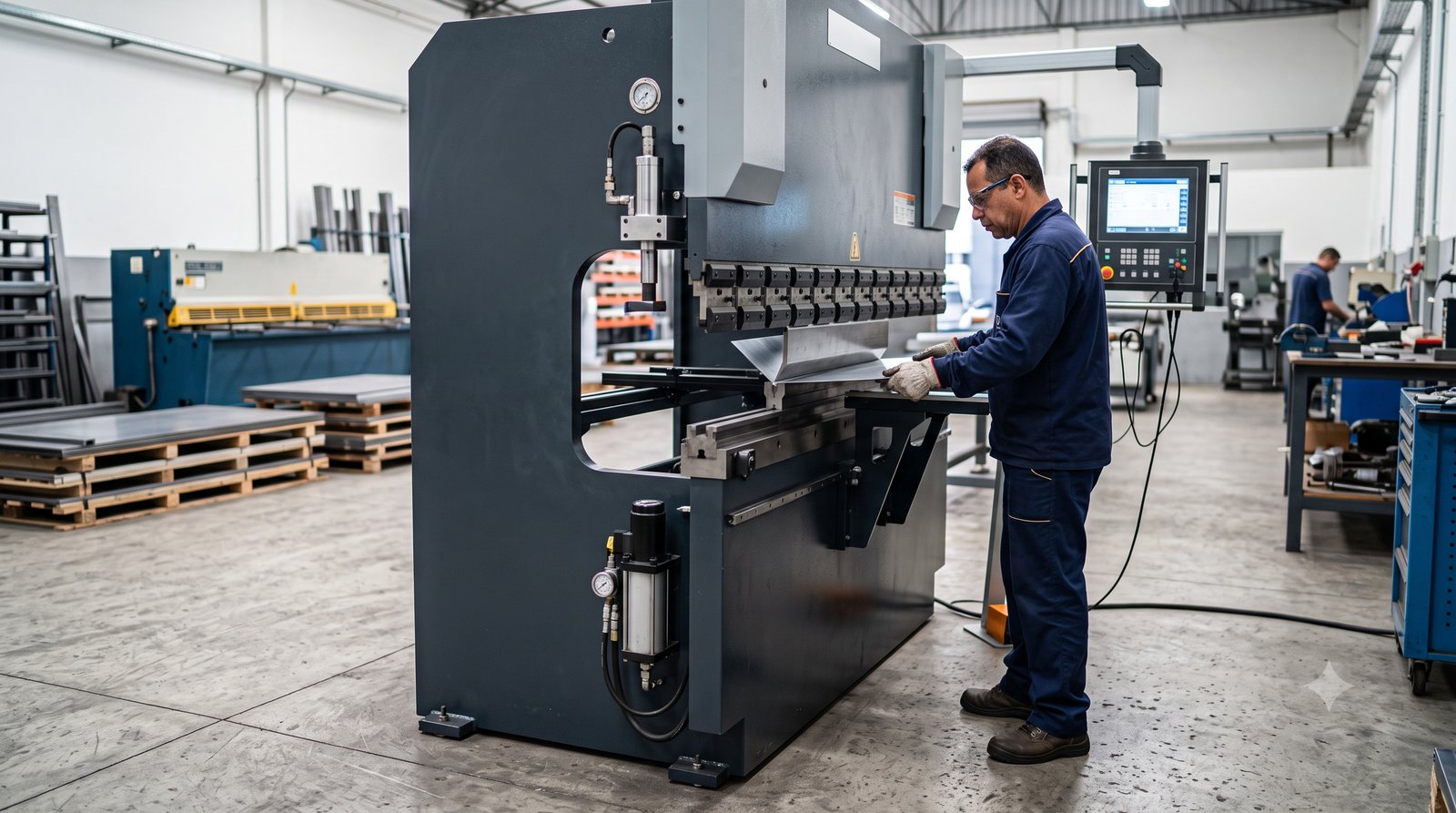
Every metalwork shop knows the scene: the good order comes in, the one for a bent part in series, and the answer has to be “let me check with my cutting supplier”. From then on the lead time is no longer yours, the price is no longer yours, and the customer who was in a hurry goes looking for someone who answers on the spot. The bottleneck is neither a shortage of work nor of people: it is not having the machine that turns flat sheet into a finished part. For anyone selling industrial equipment in Brazil, this is one of the most concrete markets there is, because the buyer is not dreaming about expansion, they are losing orders every week.
What the sheet metal forming line is
It is the set of machines that cuts, bends and curves sheet metal to turn it into a product. The guillotine shear cuts the sheet to the right size, the press brake applies bends at a controlled angle, the plate roller curves the sheet into a cylinder or a cone, and the punching machine punches and stamps in series. Steel sheet is a cheap input available anywhere: the value is not in it, it is in what these machines do with it. In the numerically controlled versions, the operator programmes the sequence of bends and the machine repeats it thousands of times with the same precision, which is what separates a one-off part from a production part.
Models and variations
A “sheet metal machine” is not one single machine. Each one solves a stage, and it is the combination of them that defines what your customer's workshop can produce without depending on anyone:
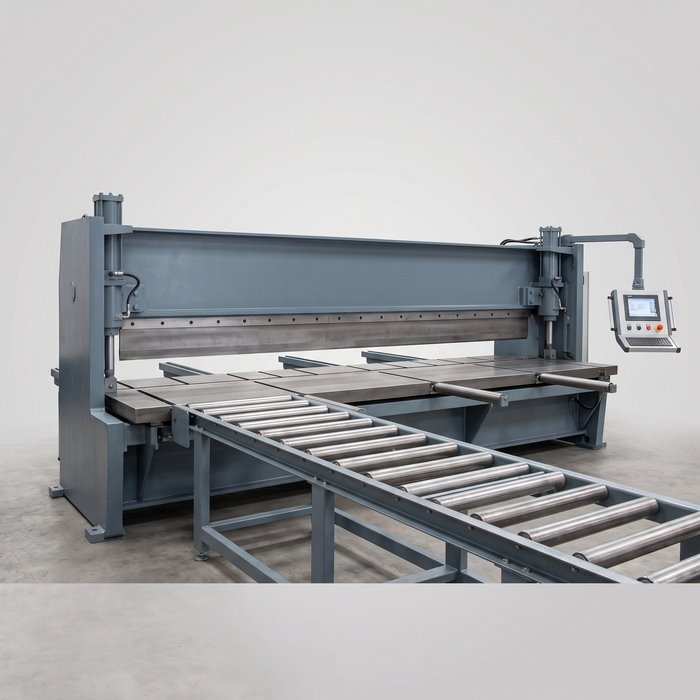
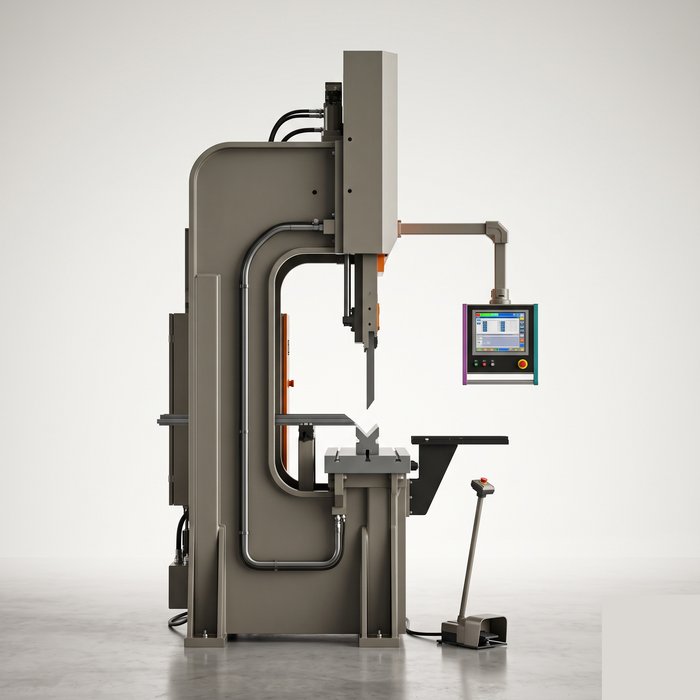
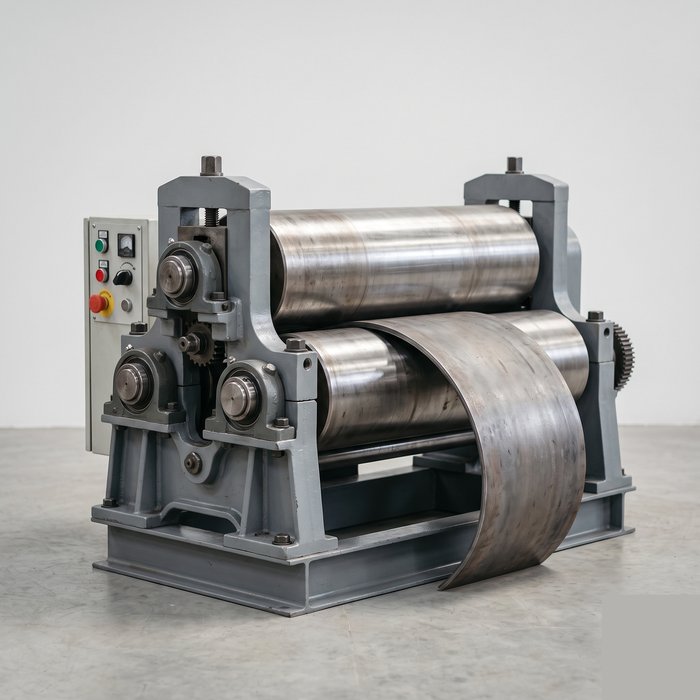
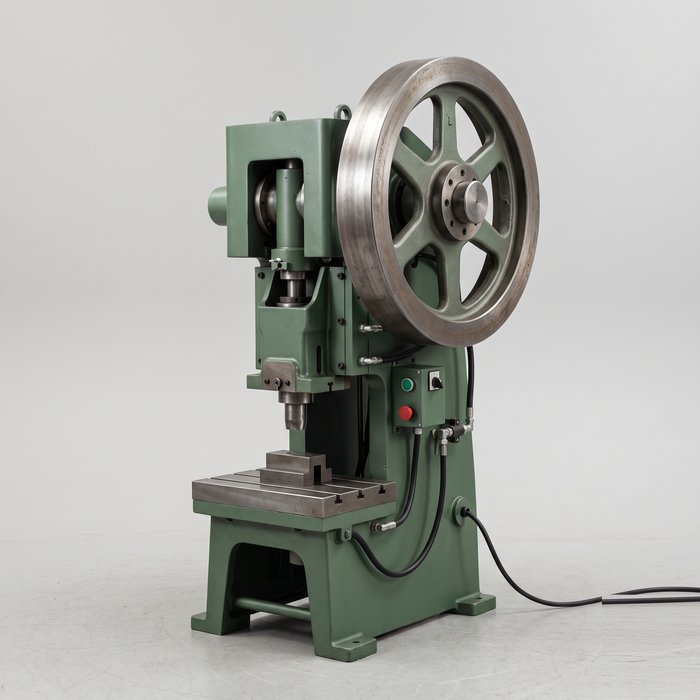
The guillotine shear is almost always the first purchase, because without in-house cutting nothing else moves. The press brake is the one that raises the level: it is what allows quoting for complex, repeatable parts, and it is the one that most frightens an unprepared buyer, because it requires the right ram, tooling and programming. The plate roller opens up an entire niche of pipes, ducts, tanks and silos. The punching machine only pays for itself on volume, and it is the purchase of a workshop that has already become a factory. Anyone selling equipment quickly understands that the customer rarely buys a machine: they buy the next stage of their own capacity.
Why this is an opportunity for Brazil
Brazil has small metalwork shops, body shops, plate fabricators and metalworking businesses in every medium-sized town, and a large share of them still subcontract cutting and bending. It is a market that buys out of concrete necessity, not out of a trend.
- The buyer has already identified the pain: they do not need convincing that they lose orders for want of a machine. They need somebody to size the right machine and guarantee the after-sales.
- Buying in sequence, not one-off: whoever buys the guillotine shear comes back for the press brake, then for the plate roller. A well served customer yields years of sales.
- High ticket with a technical defence: it is a sale that requires explaining tonnage, working length and tooling. Whoever only sends a price by message loses to whoever knows how to size the machine.
- Tooling and parts that repeat: punches, dies, blades and hydraulic components are recurring consumption, revenue that continues after the machine is delivered.
- Timing: the typical lead time is 60 to 120 days. Whoever closes during the October trade fair season delivers in the first half of the following year, when the sector resumes investment.
Before importing: sheet metal forming machines are among the most serious on safety, because the typical injury in the sector is amputation. NR-12 is the centre of the conversation: light curtain or equivalent guarding on the press brake, two-hand control where required, an emergency stop and technical documentation. The electrical side follows INMETRO. Confirm the voltage (220V or 380V three-phase), the maximum sheet thickness and length, and the compatibility of the tooling set, which is where cheap usually turns out expensive. It is worth inspecting before shipment, with the machine actually bending sheet and not merely switched on. See also how to import equipment from China.
Customise the specification (OEM)
A press brake is not bought by catalogue model, it is sized by the part the end customer needs to produce. This is where having someone at source separates whoever delivers capacity from whoever delivers a machine that cannot do the job which prompted the purchase:
- Tonnage and working length: defined by the thickness and the size of the sheet the customer bends. Undersizing means delivering a machine that cannot do their main job.
- Control and axes: from simple control to CNC with several axes and a programmable back gauge, which is what allows repeatable production runs instead of one part at a time.
- Tooling set: punches and dies compatible with the angles and radii the customer works with, negotiated together with the machine and not discovered afterwards.
- Safety to NR-12: light curtain, guarding and interlocking specified with the factory at source, because adapting that in Brazil is expensive and does not always turn out well.
- Voltage, panel and manual: 220V or 380V three-phase, interface and manual in Portuguese, and the supply agreement for blades, punches and hydraulic components.
This calls for direct negotiation with the manufacturer and validation before production. BCVN finds the right factory, sizes the equipment for the end customer's work, handles compliance and validates technical support.
Where to buy press brakes and guillotine shears in China
The sheet metal forming line appears at the universal trade fair and, with far more technical depth, at the fair dedicated to industry:
- Canton Fair, Phase 1 (Machinery and Equipment): from 15 to 19 October, where the manufacturers of guillotine shears, press brakes and plate rollers are, in the same hall as the other industrial machinery.
- CIIF (industrial automation and robotics, Shanghai): from 12 to 16 October, where the conversation moves up a level to numerically controlled machines, automated cells and line integration.
- Guide to industrial equipment: where machinery investment goes astray, and what has to be settled before shipment.
The itinerary the season sets out: CIIF (12 to 16 October, Shanghai) and Canton Phase 1 (15 to 19 October, Guangzhou) overlap across two different cities. Without a planned itinerary, one of the two is lost, and they complement each other: CIIF shows the technology, Canton shows the range of manufacturers. See the full 2026 trade fair calendar.
It is also worth looking at the inverter welding machine and the laser marking equipment, which round out the plant of anyone working with metal.
Steel sheet is the same anywhere in the world, and that is why nobody makes money selling sheet. The money goes to whoever has the machine that transforms it. For the equipment reseller, this is a sale where the customer already knows what they need and is simply waiting for somebody to size it properly, deliver it with the safety the standard requires and still be there when a die runs out. Buying at source is what makes that package possible at the price a Brazilian metalworker can afford.
Frequently asked questions about importing press brakes and guillotine shears
Does a press brake imported from China have to meet NR-12?
Yes, and it is the most serious point in this category. Sheet metal forming machines carry a risk of amputation, and NR-12 requires adequate guarding, such as a light curtain or equivalent device on the press brake, two-hand control where applicable, an emergency stop and complete technical documentation. The electrical side also follows INMETRO. Whoever answers for all of this before the labour inspectorate is the Brazilian importer, not the Chinese manufacturer, and bringing it into compliance in Brazil costs far more than specifying it at source.
What is the difference between a guillotine shear, a press brake and a plate roller?
The guillotine shear cuts flat sheet to the right size, with a straight cut. The press brake applies bends at a controlled angle, turning flat sheet into a three-dimensional part, and it is the machine that adds the most value. The plate roller curves the sheet continuously between rolls, producing cylinders and cones for pipes, ducts, tanks and silos. The punching machine punches and stamps in series. Each one solves a stage, and most workshops buy in sequence, starting with the cutting.
Why does importing sheet metal machines from China pay off?
Because Brazil has small metalwork shops, body shops and plate fabricators in every medium-sized town, and a good share of them still subcontract cutting and bending, losing lead time and margin. The price at source is a fraction of what is charged here, the customer buys in sequence (guillotine shear, then press brake, then plate roller) and there is also recurring business in blades, punches, dies and hydraulic components. It is a high-ticket technical sale, with demand that does not depend on fashion.
Can I import just one press brake for my workshop?
BCVN is an import consultancy for companies and resellers, not a retail shop, and does not sell single units. Import maths only works on volume: freight and paperwork are diluted across the batch, and every factory works to a minimum order quantity (MOQ). Anyone who needs a single machine should buy from a distributor in Brazil; anyone who is going to resell, represent the brand or equip several sites imports at source, and that is where the savings really show up.
Where can I buy press brakes and guillotine shears in China?
At the Canton Fair, Phase 1 (15 to 19 October), which brings together the manufacturers of guillotine shears, press brakes and plate rollers in the machinery hall, and at CIIF in Shanghai (12 to 16 October), where the numerically controlled versions and line integration are. The two overlap in different cities, so the itinerary has to be planned in advance. BCVN validates the manufacturer, sizes tonnage and tooling, handles NR-12 and voltage, and inspects the machine bending sheet before shipment.