
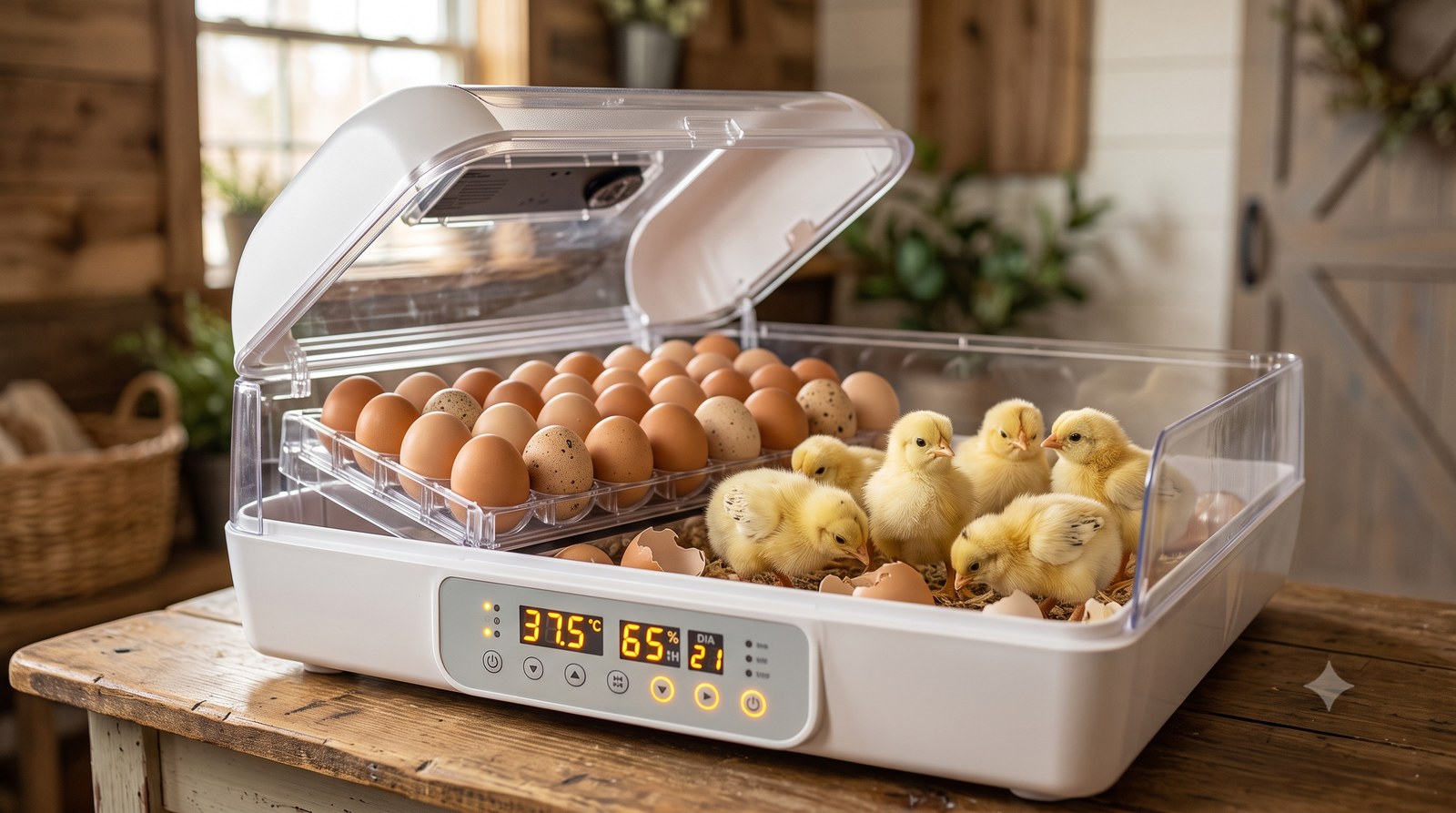
The story almost always starts small. Someone buys a benchtop hatcher to hatch the eggs of their own hens, likes the result and, the following year, is already selling chicks to the neighbours. Except the one who really profits from that curve is not only the keeper: it is the rural supplies shop that started offering the complete line, from the benchtop model to the production one, and the importer who realised China makes this equipment in every capacity, at a cost that opens a margin in every bracket.
What the automatic egg incubator is
It is a piece of equipment that reproduces the conditions of a broody hen: it holds the temperature stable, controls the humidity and turns the eggs automatically at regular intervals, all from a digital panel. The keeper puts the eggs in, sets the type of bird and follows the countdown to hatching, without depending on a hen or on constant watching. It works for hens, quail, ducks, geese and ornamental birds, which multiplies the uses.
On the shelf it is a product that tells its own story: the visible result (chicks hatching) sells the equipment, the entry price is affordable and the ladder of capacities brings the customer back to buy a bigger model as the flock grows. It turns over all year and the ticket rises along with the customer.
Models and variations
It is not one product: at the Chinese trade fairs it is a whole aisle of capacities and formats, from the backyard to the commercial shed. That range is what lets you build a complete resale line.
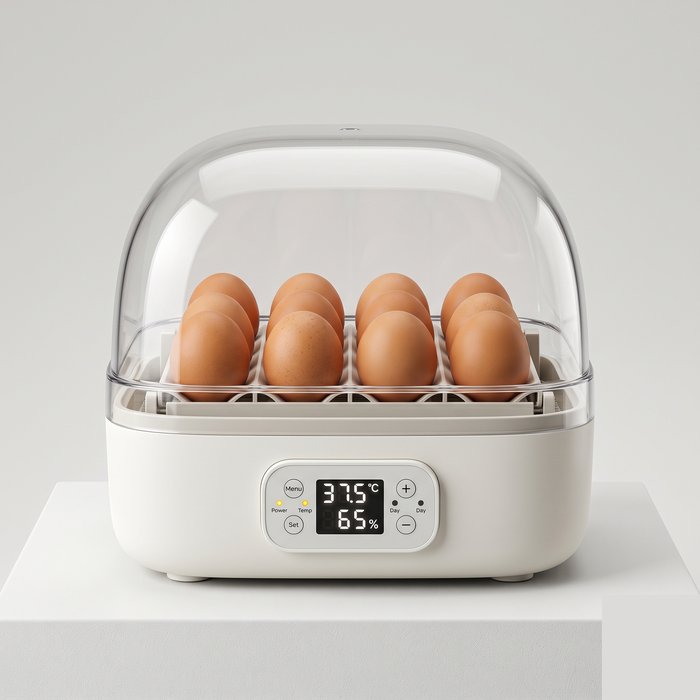
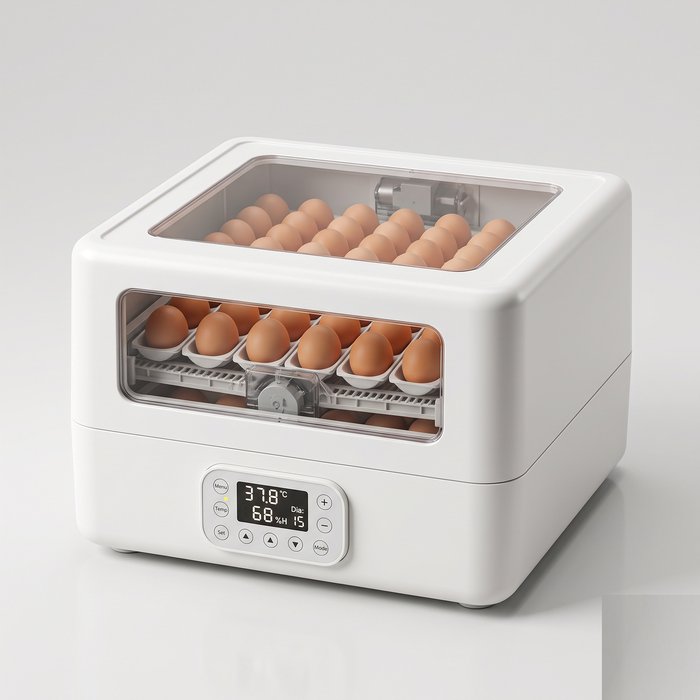
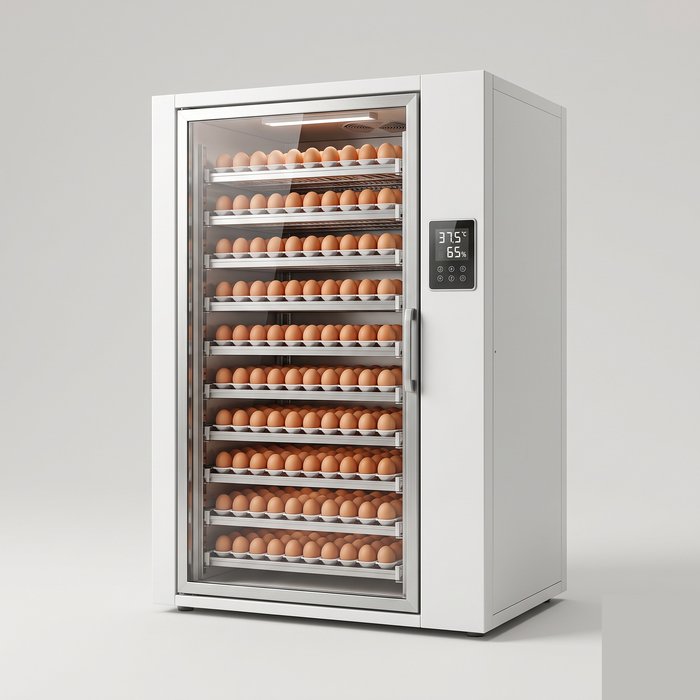
Picking the right bracket and the right manufacturer among hundreds of factories, with a controller that does not fail and parts support, is exactly where BCVN comes in.
Why this is an opportunity for Brazil
Brazil raises birds from north to south, from the weekend smallholding to commercial production, and small-scale poultry farming keeps growing as a source of income in the interior. It is a wide, recurring and loyal audience, and the opportunity serves the rural supplies shop, the distributor and the keeper who resells chicks.
- A ticket ladder built in: the customer comes in through the benchtop model and moves up to the production one as the flock grows, and the same shop follows that journey.
- Low cost at source, good resale: China manufactures in every capacity and the per-unit cost in quantity opens a margin in every bracket, with repeat purchase of parts and trays.
- A wide audience, all year: hatching has no season, and the interest in home flocks only grows, which gives continuous turnover.
- Import timing: equipment is not an impulse buy at the factory. Between the order, the sea freight and clearance, counting on 60 to 120 days means closing now to have stock in the selling season.
Before importing: because it is electrical equipment, confirm the certification requirement and make sure the model runs on the Brazilian voltage (110V or 220V) with a plug to the local standard. It is worth arranging the pre-shipment quality inspection to test the controller, the heating and the turning of the batch.
Customise the specification (OEM)
Importing equipment is not picking the catalogue model and hoping. The factory adjusts the incubator to your audience and puts your brand on it, and that is where having a partner at source separates whoever resells a commodity from whoever builds their own line with margin.
- The right capacity and voltage: from the benchtop model to the commercial cabinet, on the 110V or 220V of your market, with the temperature and humidity controller that does not fail.
- After-sales and parts agreed at purchase: trays, heating element, turning motor and the service, which on equipment that runs 21 days straight is what sustains the resale.
- Your brand on the product and on the packaging (private label / OEM) and a manual in Portuguese, ready for agricultural supplies retail.
That calls for negotiating directly with the factory and validating a sample before the batch. BCVN finds the right manufacturer, closes the specification, tests the equipment and makes sure the after-sales really exists, and not only in the proposal.
Where to buy egg incubators in China
The incubator shows up both at the large general fairs and at the dedicated agricultural fair:
- Canton Fair, Phase 1 (Machinery and Equipment): the biggest starting point, with poultry and agricultural equipment manufacturers side by side.
- CIAME (the agricultural machinery fair): the sector fair for agribusiness, where the manufacturers show the complete lines, from the benchtop model to the industrial one.
- Yiwu Trade Fair: strong in entry-level models and in replacement accessories for volume.
Next edition, October 2026: Canton Fair Phase 1 runs from 15 to 19 October, in Guangzhou, and CIAME right afterwards, from 26 to 28 October, in Tianjin. You can combine the two in a single trip and see the models close up before deciding.
Read the complete guide to the Canton Fair 2026
The automatic egg incubator is one of those finds that grow with the customer: it starts in the backyard and ends in the shed, and the shop that offers the whole line harvests the entire journey. For the importer, the question is not whether Brazil wants to raise birds, but bringing in the right capacities, from the right manufacturer, with your brand and the after-sales that sustains every hatch.
Frequently asked questions about importing automatic egg incubators
Is it worth importing automatic egg incubators from China?
China concentrates the manufacturing of automatic incubators, from the backyard model to the industrial one, at a cost at source far below the already-nationalised product. The Brazilian audience is wide, from the backyard keeper to the commercial producer, and the range of capacities lets you build a complete resale line with a good margin.
Can I import just one incubator?
BCVN imports for resale and for companies, it does not sell single units. The Chinese factory works to a minimum order quantity (MOQ) and the cost of freight and clearance only dilutes across volume, so bringing in a single piece does not pay off. For one unit, buy from a reseller in Brazil; to build a resale line or to equip a production, BCVN takes care of the sourcing and the quantity.
Does an imported egg incubator need INMETRO certification?
Because it is electrical equipment, there may be a certification requirement, and the model has to run on the Brazilian voltage (110V or 220V) with a plug to the local standard. The requirement varies with the category and the power rating, so the right thing is to confirm before placing the order. BCVN validates the manufacturer and the technical documentation.
Where can I find egg incubator suppliers in China?
At Canton Fair Phase 1 (machinery and equipment), at the CIAME agricultural fair and in the utility aisles of the Yiwu Trade Fair, above all for the entry models. BCVN identifies the right manufacturer, tells a factory from a trading company and negotiates capacity, voltage and after-sales.