
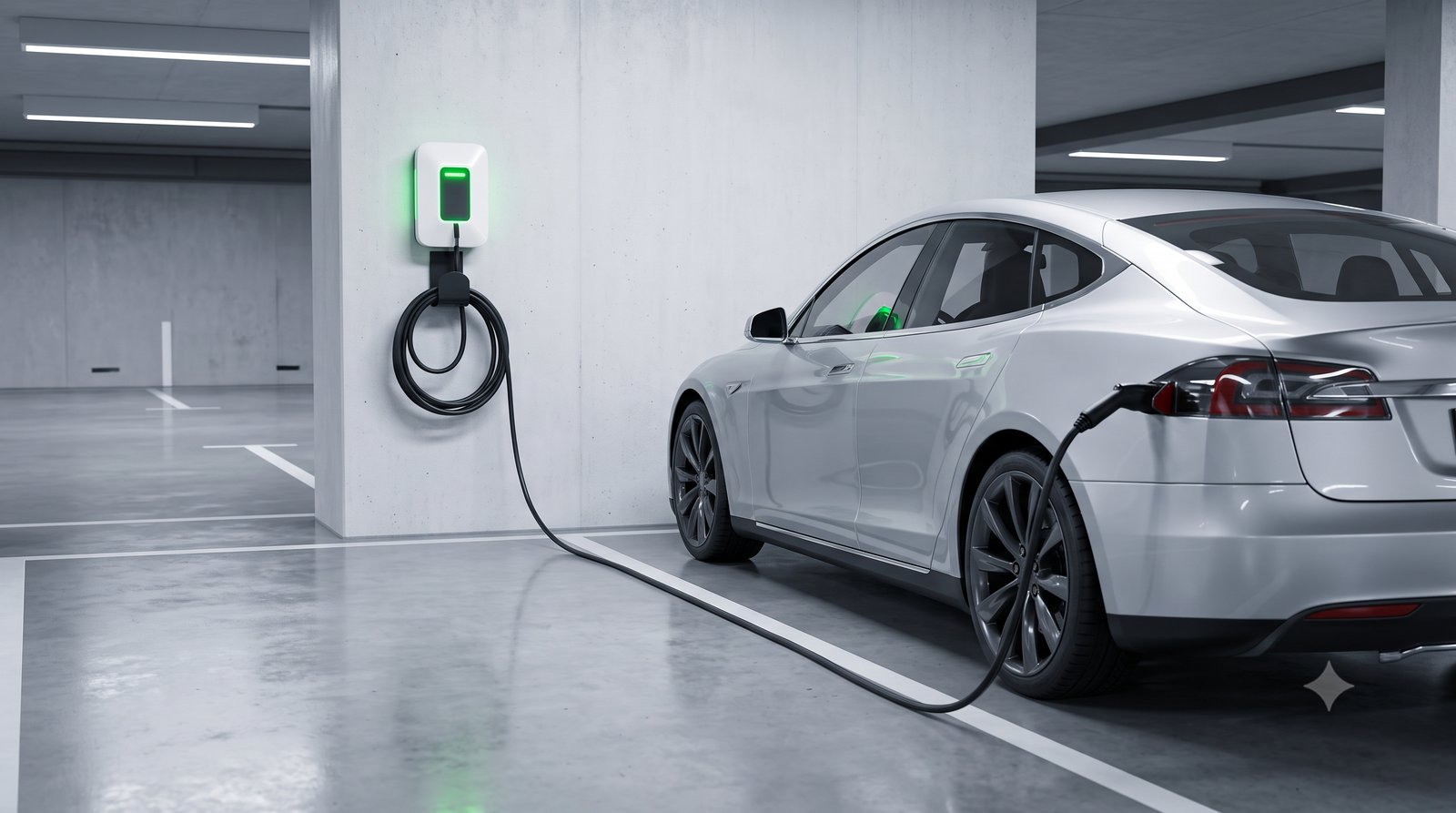
For years the conversation about electric cars in Brazil was about the car. Now it has moved. Those who bought one discovered that the problem is not driving, it is charging: the building has no point, the parking space has no adequate socket, the car park at work offers nothing and the motorway station has a queue. And legislation has begun to move in that direction, with rules that guarantee the resident the right to install their own point in a privately held space, which turns thousands of garages into small jobs waiting for equipment.
For anyone selling electrical equipment in Brazil, this is a comfortable category to serve: the buyer does not need to be convinced that a problem exists, they are living the problem. What is missing is somebody who delivers the right equipment, to the right specification, with somebody to answer afterwards.
What an EV charging station is
It is the equipment that connects the mains to the car and controls the delivery of energy safely. It splits into two families. The alternating current one, which includes the wall mounted wallbox and the car park pedestal, delivers energy and leaves the conversion to the vehicle's onboard charger: it is cheaper, simpler to install and serves whoever charges while parked, at home, in the condominium or at work, over several hours. The direct current one, the rapid charger, converts the energy in the station itself and delivers it straight into the battery, with far greater power and a charge in a fraction of the time, at the cost of equipment of another order of magnitude and a robust electrical supply.
In Brazilian commercial practice, the AC family is the volume, and it is where the opportunity lies for whoever is starting out. DC is the high ticket item for filling stations, motorways and fleets, and tends to be the second purchase of a customer who has already established themselves with the first.
Models and variations
The category is already well organised by use, and each format serves a different buyer:
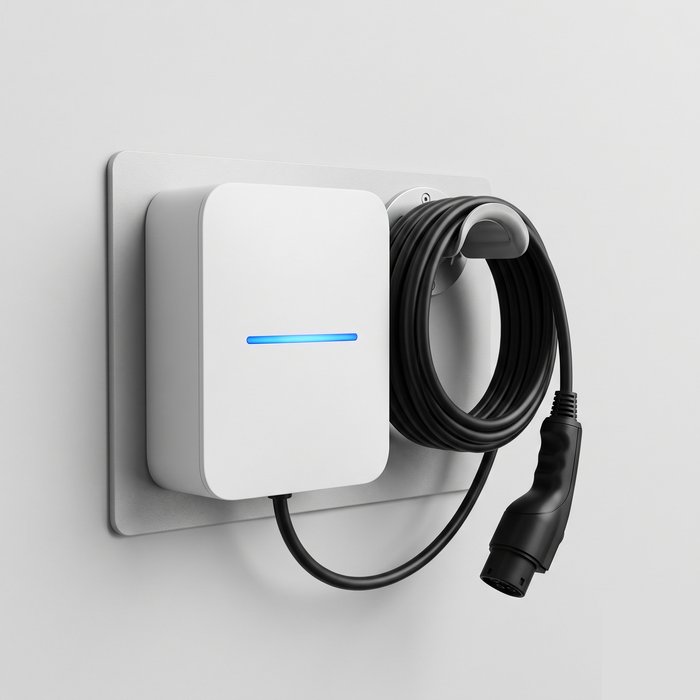
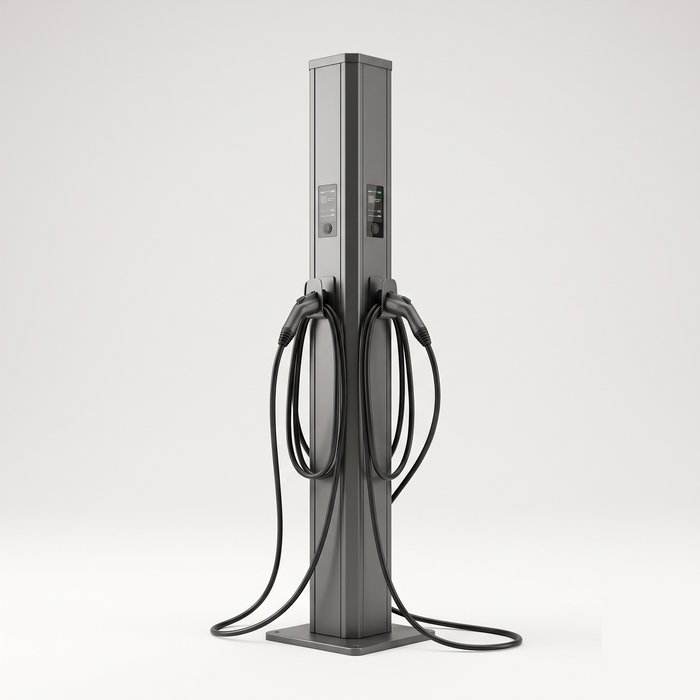
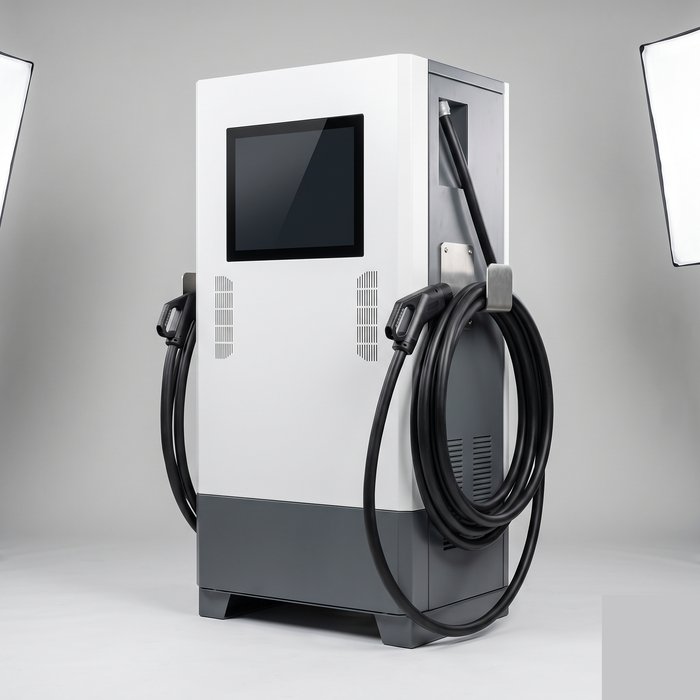
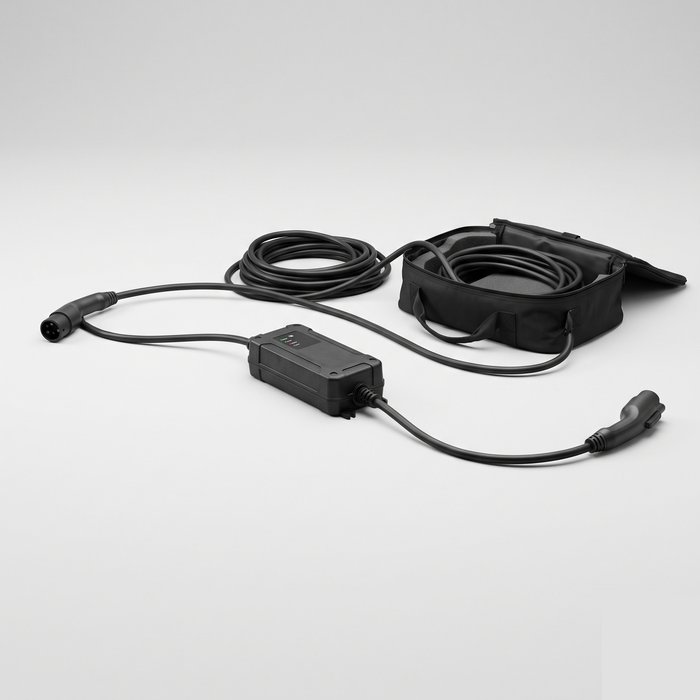
The wallbox is the way in and the fastest moving item, because every parking space is a sale. The twin pedestal is the product for whoever serves condominiums and car parks, where the installation is planned once for several users. The rapid DC is the high ticket equipment, with a technical sale and an electrical design alongside. And the portable is the accessory that is almost never left out of the order, because it solves the improvisation of anyone travelling. Whoever builds the full range serves the same customer at different moments; whoever brings in a single model serves them once.
Why this is an opportunity for Brazil
This is one of those categories where demand is documented, not estimated. The electric fleet is growing at a strong pace, the network of points is growing behind it, and legislation is clearing the way for installation in condominiums.
- The buyer already has the problem installed: they bought the car and discovered the lack of a socket. There is no convincing stage, there is a specification stage.
- Several buyers for the same product: condominiums, car parks, hotels, dealerships, fleets, and the electrical installer who serves all of them and becomes a natural reseller.
- A sale that pulls services along: design, installation and maintenance are additional revenue and tie the customer to the supplier rather than to the marketplace.
- Purchases in sequence: a condominium starts with two points and comes back to expand when more residents buy electric cars. The first order is rarely the last.
- Timing: the typical lead time is 60 to 120 days. Whoever closes in the October and November trade fair season delivers in the first half of the following year, when condominiums approve their budgets.
Before importing: this is the find with the most concrete trap in the Showcase. Brazil adopts Type 2 for alternating current and CCS2 for rapid charging, following the European route. The Chinese domestic standard is GB/T, and the cruel detail is that its alternating current version looks a great deal like Type 2 in a photo, but has its male and female contacts inverted: it does not fit. A batch bought to the Chinese domestic standard becomes expensive scrap. Confirm the connector model by model, and not from the catalogue image. Regulation of the category is also moving in Brazil, so the classification is confirmed on the date of the order: it is worth looking at products that require INMETRO and, for a connected station, the guide to ANATEL approval. Installation is a separate chapter and it belongs to the customer: a dedicated circuit, protection and sizing by a qualified professional.
Customise the specification (OEM)
In this category customisation is not cosmetic, it is what separates equipment that works here from equipment that only works there:
- Connector to the Brazilian standard: Type 2 for AC and CCS2 for DC, confirmed in writing and checked on the physical sample before the batch goes into production.
- Voltage and power: single phase or three phase, 220V or 380V at 60 Hz, set by the installation profile of the end customer, because that changes the model and cannot be adjusted afterwards.
- Protections and ingress rating: garage and outdoor equipment lives exposed, so sealing, surge protection and a residual current device belong in the specification.
- Management and connectivity: decide whether the customer needs access control, metering per user and billing integration, which is what the condominium will almost always ask for later.
- Your brand on the equipment: whoever builds an installation business gains a great deal from having the range under their own name, rather than reselling the same generic model as everybody else.
- Parts and support: cable, connector and board negotiated within the order, because a damaged connector is the item that comes back most in this category.
That calls for direct negotiation with the manufacturer and validation before production. BCVN finds the right factory, confirms the connector standard on the sample, handles compliance and validates the technical support.
Where to buy EV charging stations in China
The category lives between the electrical sector and the automotive one, and for that reason it turns up on two fronts:
- Canton Fair, Phase 1 (Electronics, Energy and Vehicles): from 15 to 19 October, where the manufacturers of wallboxes, pedestals and rapid chargers are, in the same complex as the rest of the electrical sector.
- Auto Guangzhou (cars and car parts): from 27 November to 6 December, where the conversation is about the electric vehicle ecosystem, including those who manufacture the charging infrastructure.
- Solar energy guide: the natural neighbour of this category, because the same customer who installs generation wants to offer charging.
The itinerary the season draws: Canton Phase 1 (15 to 19 October, Guangzhou) and Auto Guangzhou (27 November to 6 December, also in Guangzhou) are in the same city, but weeks apart. Whoever wants both plans two trips or chooses by priority: equipment at the Canton Fair, automotive ecosystem at Auto. See the full 2026 trade fair calendar.
It is also worth seeing the solar energy kit, which serves exactly the same installer, the portable power station and the electric scooter, which round off the mobility and energy range.
Every technology transition creates a window in which demand moves faster than supply. That is exactly where the Brazilian electric car is now: the vehicle is already in the garage and the socket is not there yet. For anyone supplying equipment, it is one of the few categories where the customer comes looking on their own, compares little and needs somebody to guarantee the right specification. And the right specification starts with a detail the catalogue photo does not show: the connector.
Frequently asked questions about importing EV charging stations
Which charging connector standard does Brazil use?
Brazil followed the same route as Europe: Type 2 for alternating current and CCS2 for rapid charging in direct current. The Chinese domestic standard is GB/T, which is a different thing. The cruel detail is that the alternating current GB/T looks a great deal like Type 2, but its male and female contacts are inverted relative to the European standard, so it does not fit. Buying a batch on the assumption that they are the same because the photo looks the same is the most expensive mistake in this category.
Does an EV charging station imported from China need certification?
Regulation of the category is moving in Brazil, and INMETRO itself has already treated Type 2 and CCS2 as the standard consolidating in the country. The classification therefore needs to be confirmed on the date of the order, not copied from older guidance. Beyond the equipment, the installation has requirements of its own, with a dedicated circuit, adequate protection and sizing by a qualified professional, and an internet connected station also falls under ANATEL approval for its radio part.
What is the difference between an AC charger and a DC charger?
The AC charger, which is the case of the wall mounted wallbox and the car park pedestal, delivers alternating current and leaves the conversion to the car's onboard charger, which limits the speed and results in a charge lasting several hours. It is the format for whoever charges while parked, at home, at work or in the condominium. The DC charger delivers direct current straight into the battery, with far greater power and a charge in a fraction of the time, but it costs another order of magnitude and demands robust electrical infrastructure. It is the format for filling stations, motorways and fleets.
Why does importing EV charging stations from China pay off?
Because China is the world's largest manufacturer of the equipment and Brazilian demand is pent up: the electric fleet grew faster than the network of points, and the country's ratio of vehicles per point is well above what is considered comfortable. Add to that the progress of legislation on installation in condominiums and you have a buyer with an immediate need: condominiums, car parks, hotels, dealerships, fleets and the installer who serves all of them.
Can I import just one charger for my own car?
BCVN is an import consultancy for companies and resellers, not a retail shop, and it does not sell single units. The maths of importing works on volume: freight and paperwork dilute across the batch, and every factory works with a minimum order quantity (MOQ). Anyone who wants a wallbox for their own garage buys from a reseller in Brazil; anyone who is going to resell, equip an entire condominium or build an installation business imports from the source, and that is where the saving appears.