
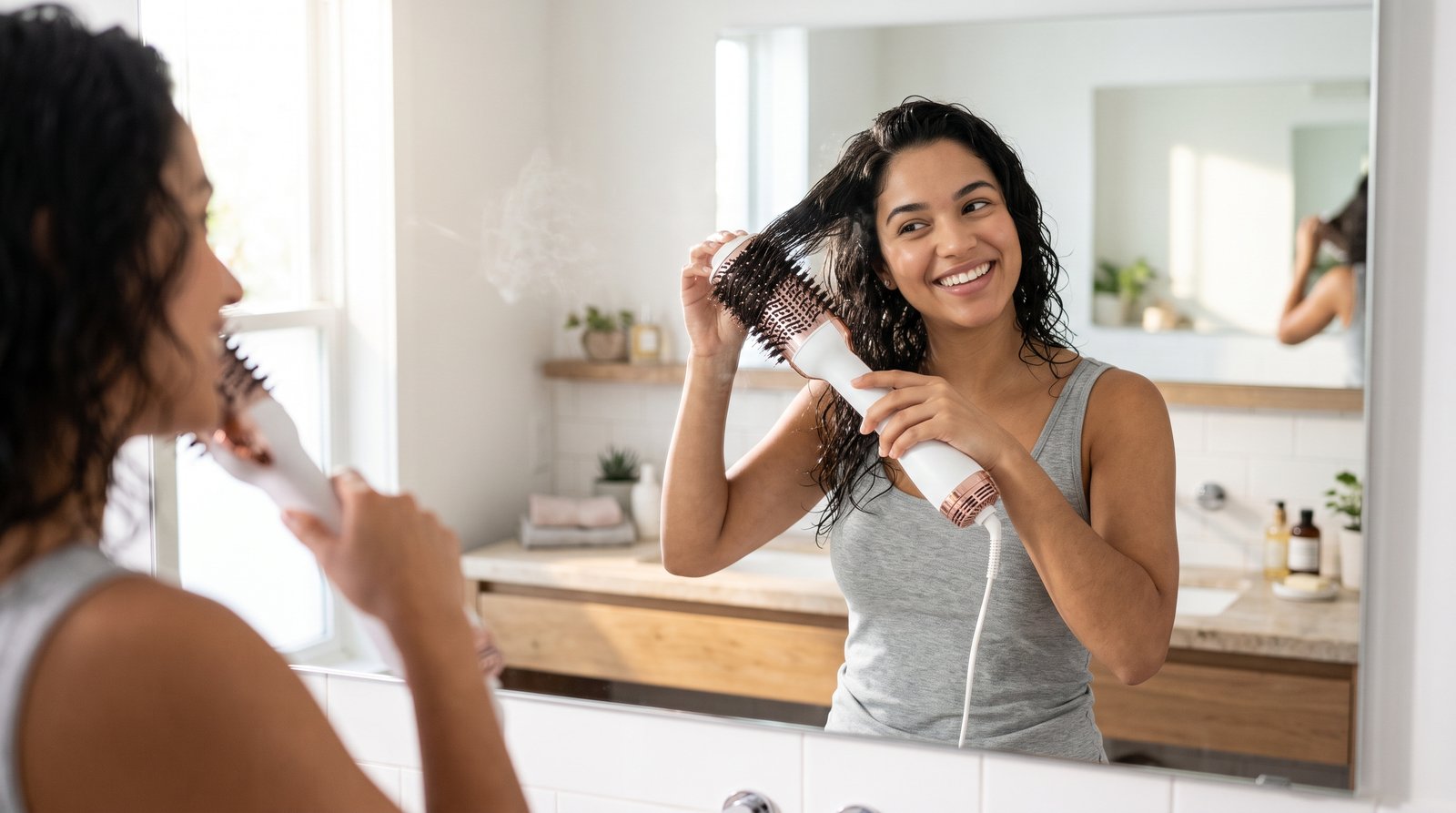
In the beauty aisles of China's trade fairs, one of the devices that draws the most attention isn't the cheapest or the flashiest: it's the one that saves the most tiring step of the routine. The hot air brush is already well known outside Brazil, but it's still rare on national shelves, which leaves the category open for whoever arrives first with a vetted supplier and stock ready.
What a hot air brush is
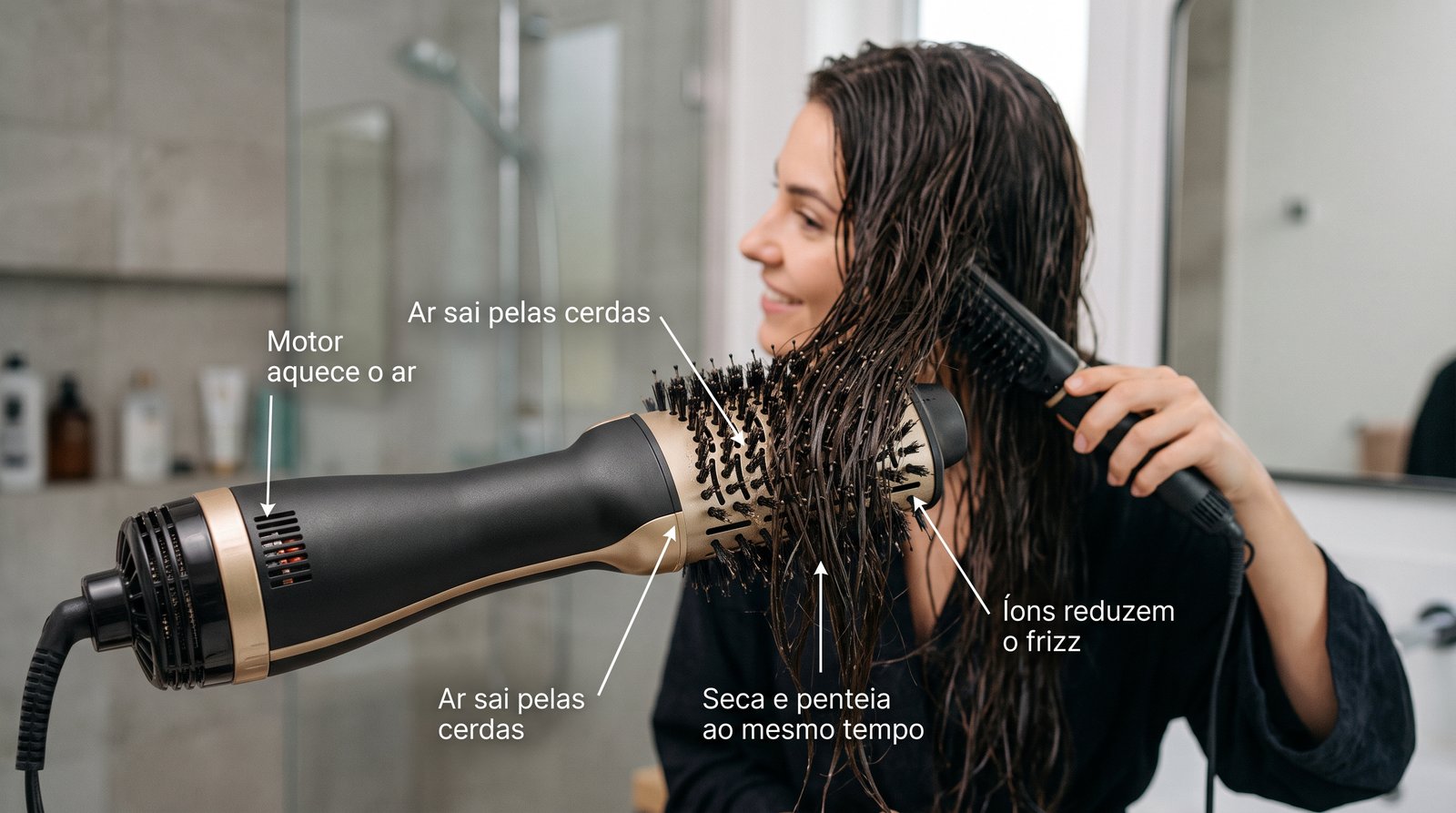
The hot air brush (also called a rotating hot air styler, or "blow-dry brush") is an electric device with an internal motor that draws in and heats air, pushing it out through the bristles while it styles hair that's still wet. It does in a single gesture what used to take two hands and two devices, the hair dryer in one hand and the round brush in the other, leaving one hand free for the rest of the routine.
It's different from the straightening brush: that one works on hair that's already dry, to leave it smooth, with no motor or airflow. The hot air brush comes in earlier, on wet hair, replacing the regular hair dryer and adding volume at the same time. Most models come with nylon bristles with a ceramic or tourmaline pin, ion technology against frizz, and two or three levels of heat and airflow speed, with a cool-shot button to set the style at the end.
Why this is an opportunity for Brazil
Hair is the number one priority for anyone spending on beauty in Brazil, and the hot air brush sells convenience in a market that already understands the value of "two devices in one". It's a routine product, not a calendar one, and that changes the logic for whoever is importing.
- Timing that doesn't depend on the season: unlike a seasonal item, the ritual of drying hair happens every day of the year. The manufacturing and sea-freight lead time (60 to 120 days) doesn't compete against a tight calendar window, and whoever closes the order now isn't racing against the clock.
- Buy cheap, resell well: it's a small appliance with low cost at origin and high perceived value, because it replaces two devices and saves time, which supports a convenience margin, not a commodity one.
- Wide audience: women of every age, salons reselling for home use, catalogue sales and door-to-door.
- Ready-made content: "before and after" videos and morning beauty-routine clips perform well, and the device is easy to demonstrate with just one hand, which makes for a short video with no production needed.
Before importing: by combining a motor, a heating element and rotating bristles, the hot air brush has more parts that can fail than the static straightening brush, and the motor is what varies most from factory to factory: loud noise, vibration and loss of airflow power after just a few uses are the most common defects in a low-quality batch. Being an electric device that heats up, it requires INMETRO certification, with attention to voltage (110V, 220V or dual voltage) and thermal safety. It's a product where inspecting before shipping, testing the motor running for a few minutes straight, prevents receiving an entire batch of brushes that jam or lose airflow power.
Put your own brand on the brush
Importing from China isn't just about reselling a generic product. The factory can put your brand on the brush and on the packaging, and customise the product your way. That's how you build your own brand, with more margin and less price competition, something powerful in the beauty market.
- Your brand on the product and on the box (private label / OEM): printed logo and exclusive packaging.
- Body colour, bristle diameter and heat range of your choice.
- Packaging and manual in Portuguese, with the right voltage and safety information.
Customisation usually calls for a slightly larger minimum order, and that is where having a partner in China makes the difference: BCVN finds the right factory, negotiates the customisation, validates the sample and makes sure the product arrives exactly as you asked.
It is worth understanding how this works in practice before requesting the first sample: the guide on own brand in China: private label, OEM and ODM explains the difference between the three models and what each one changes in the minimum order and the lead time.
Where to buy a hot air brush in China
Personal beauty appliances make up one of the biggest sectors at China's trade fairs, and the hot air brush shows up alongside the regular hair dryer and the straightening brush in the same aisles:
- Canton Fair, Phase 1 (Electronics and Home Appliances): the biggest aisle for personal beauty appliances, with hundreds of manufacturers side by side.
- Hong Kong Electronics Fair: strong in gadgets and new releases, it takes place days before the Canton Fair.
- Yiwu Trade Fair: ideal for entry models and volume, at the largest small-commodities wholesale market in the world.
Autumn 2026 Canton Fair (140th): Phase 1, with the small appliances, runs from 15 to 19 October 2026, at the Pazhou complex in Guangzhou. The Hong Kong Electronics Fair (13 to 16 October) opens before it, and the Yiwu Trade Fair (21 to 24 October) comes after, which lets you combine all three in a single trip. The next Canton Fair, the 141st, is expected in April 2027, going by the fair's usual pattern and with no official calendar yet: the Canton Fair 2027 guide has the expected dates.
Read the complete guide to the Canton Fair 2026
The hot air brush isn't a seasonal bet. It enters the morning routine every day of the year, without depending on a season or a special date to sell, and it's one of those opportunities that stay open longer, but that also reward whoever arrives first with stock ready and a supplier already vetted.
Frequently asked questions about importing a hot air brush
Do I need certification to import a hair drying brush?
You do. By combining a motor, a heating element and wiring in a single body, the hot air brush requires INMETRO certification, with attention to voltage (110V, 220V or dual voltage) and thermal safety, the same way a conventional hair dryer does. Confirm the test report with the supplier before closing the order.
What's the difference between a hot air brush and a straightening brush?
The hot air brush works on hair that's still wet: it has an internal motor that draws in and heats air, drying and styling at the same time, replacing the regular hair dryer. The straightening brush works on hair that's already dry, with no motor or airflow, and it's for straightening hair that was dried some other way. They're two products, two moments in the routine and two customers buying for different reasons.
Where can I find hot air brush suppliers in China?
At the Canton Fair (Phase 1, Electronics and Home Appliances), at the Hong Kong Electronics Fair and at the Yiwu Trade Fair, the same aisles of personal beauty appliances that bring together hair dryers, straighteners and straightening brushes. BCVN vets the supplier, tests the motor and airflow power before shipping, and can accompany your visit to the fairs.
What's the minimum order to import a hot air brush?
It varies by factory, but many work with accessible quantities for anyone who wants to test before scaling up, especially when combining colours and bristle models in the same order. BCVN negotiates the minimum order, consolidates it with other beauty items, and helps you import at the right size for your moment.