
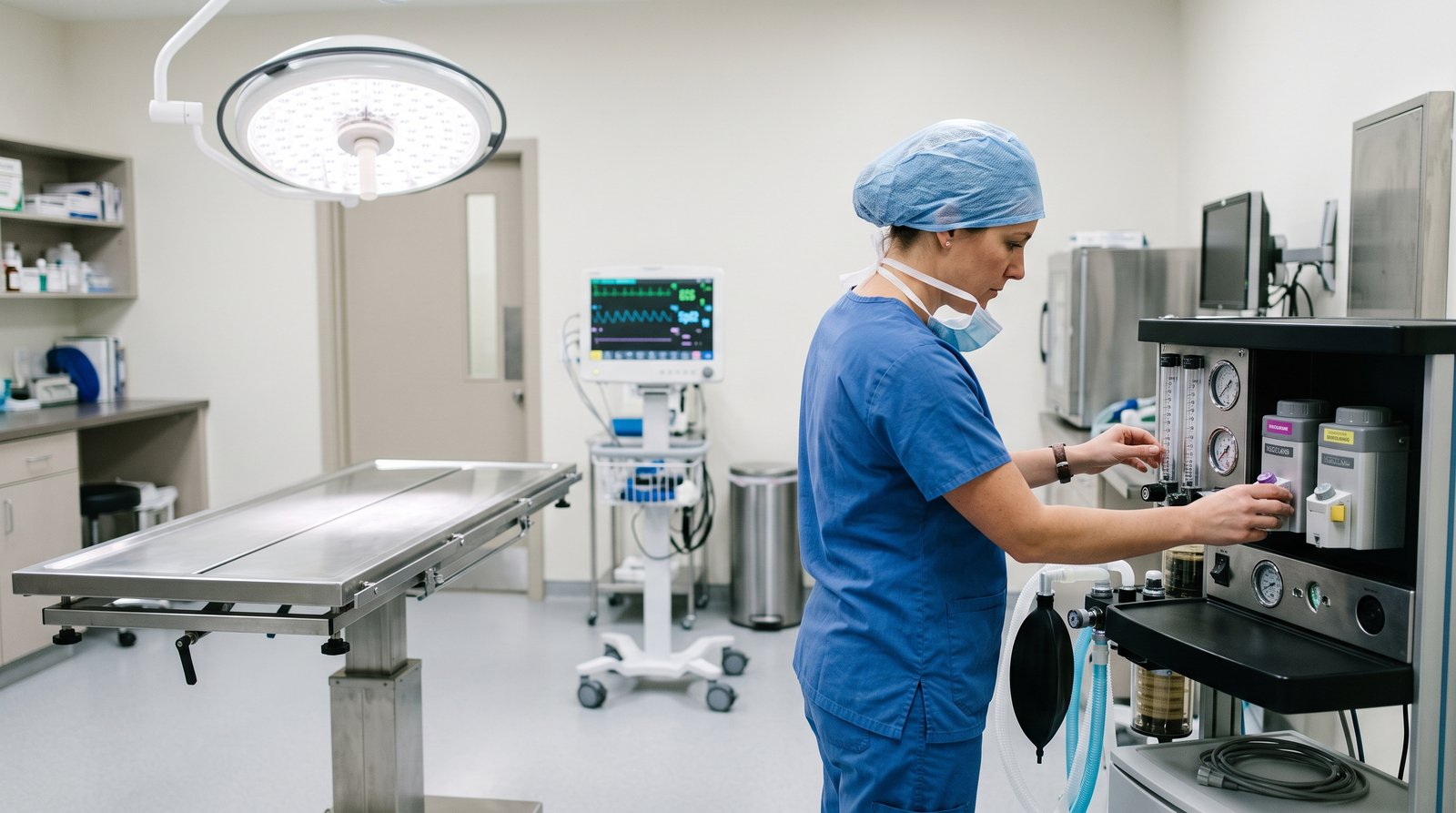
The inspector from the regional council does not ask how many patients the clinic sees in a day. He walks in, opens the door of the operating room and works through a list. That list exists, it is federal, it has a name and a number, and it defines what each type of veterinary establishment must have in order to operate. For anyone selling equipment, that changes everything: the buyer is not weighing up whether they want it, they are solving something they are already obliged to have.
What veterinary clinic equipment is
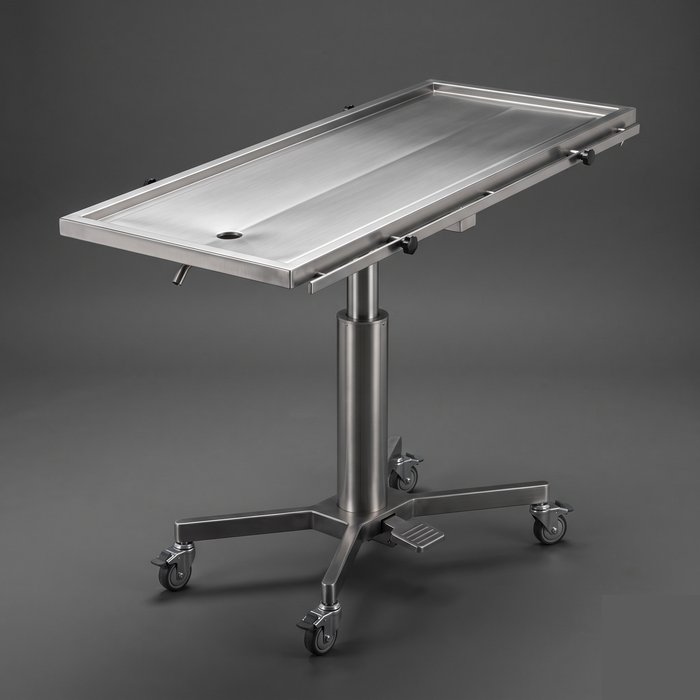
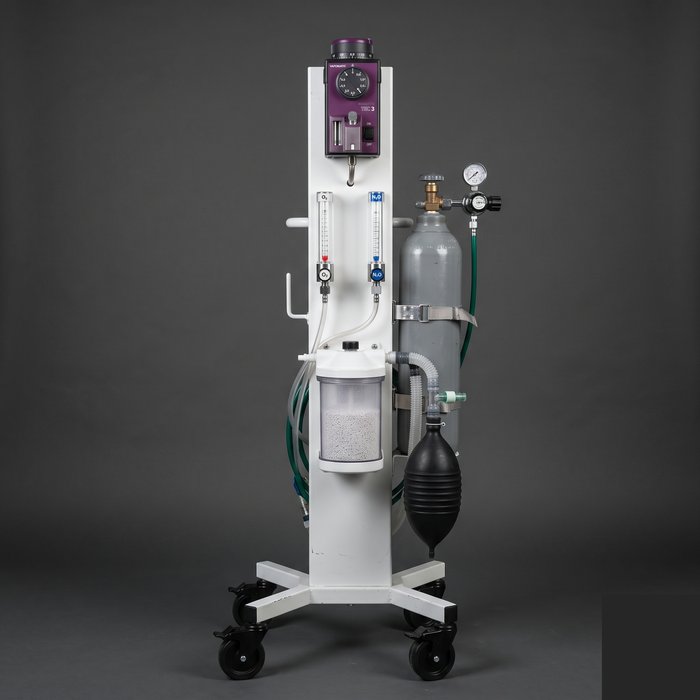
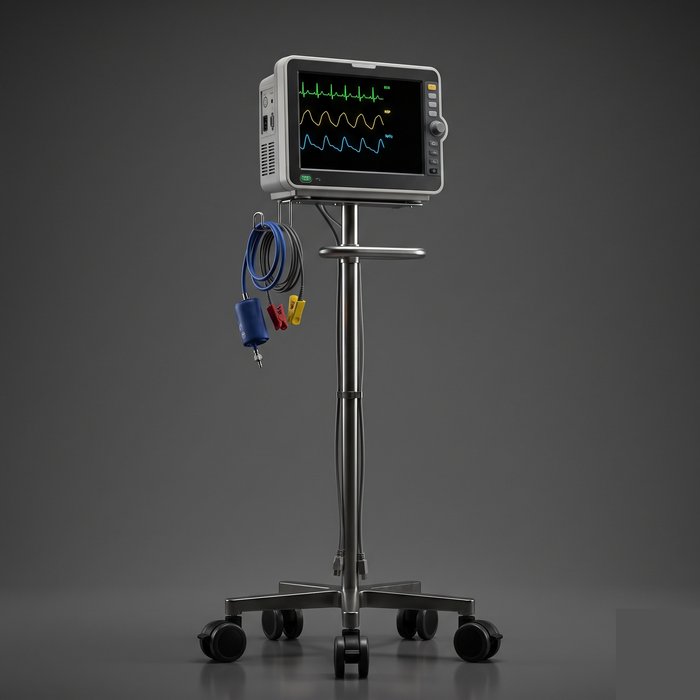
It is not one machine, it is the entire clinical fit-out of an animal health facility. It takes in the surgical table with a waterproof top and drainage channel, the surgical light, the inhalation anaesthesia machine with a ventilator, the multiparameter monitor, the ultrasound scanner, the X-ray unit, the autoclave, the infusion and syringe pumps, the oxygen concentrator, the stainless steel inpatient cages and the incubator for newborns and critical patients. A clinic that decides to start operating buys most of that at once.
The difference that defines this market sits in one sentence of the rule itself: equipment must be species-specific, avoiding machines built for human use because their readings lack accuracy. This is no catalogue detail. A human monitor has no cuff that closes around the paw of a four-kilo cat, and the heart rate range it treats as normal triggers a continuous alarm on a feline, whose heart beats well above a human one. The same goes for the anaesthetic circuit, sized by patient weight, and for ultrasound probes, which work at a different frequency on a small dog. It is precisely this veterinary line that Chinese factories produce at scale, and that is why it leaves the source at a fraction of what an adapted human equivalent costs.
Models and variations
It is not a single item. At the fair it is an entire aisle of veterinary lines, and each family of equipment comes from a different chain of factories.
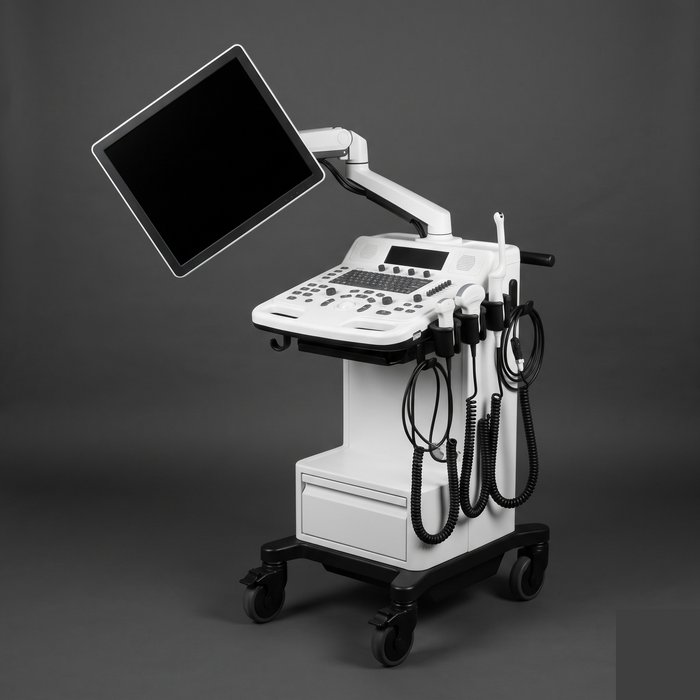
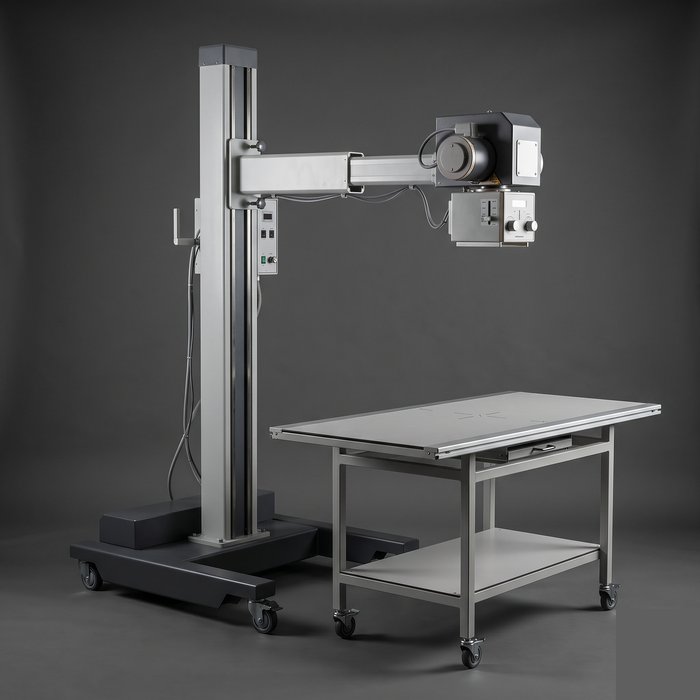
Picking the right factory in each of those families, and making sure the whole batch arrives just like the approved sample, is where BCVN comes in.
What the rule forces every clinic to own
CFMV Resolution 1,275/2019 splits small animal veterinary establishments into four types, and each type comes with a minimum structure. Outpatient units and consulting rooms handle consultations, outpatient procedures and vaccination, with general anaesthesia and surgery expressly forbidden. A clinic may have a surgical wing and inpatient care. A hospital is open 24 hours and needs, as a minimum, a diagnostic wing with a veterinary radiology room and service, either its own or outsourced.
It is in the surgical wing that the rule turns into a purchase order. The operating room must have a waterproof surgical table, anaesthesia equipment, a surgical light, emergency lighting that keeps the surgical field visible during a power cut, instruments in quantities matching the routine, an auxiliary table, an oxygen supply, patient warming, intubation and ventilatory support equipment, and monitoring covering at least temperature, pulse oximetry, blood pressure and heart rate. The washing and sterilisation room needs equipment for washing, drying and autoclave sterilisation, with a physical barrier between the clean and the dirty area, and it can only be left out if the service is outsourced under contract.
Look at what that means for the seller: the list is not a supplier's suggestion, it is the council's inspection script. A clinic that decides to start operating does not buy the table and think about the monitor later. It needs both in the same month, along with the light, the oxygen and the autoclave, because without the full set it cannot declare surgery when registering the establishment.
Why this is an opportunity for Brazil
On the demand side, the Brazilian veterinary market has stopped being the neighbourhood consulting room and turned into chains, franchises and 24-hour hospitals with their own imaging service. On the supply side, whoever serves that buyer is almost always a distributor who brought in one container of a single model, sold the lot and kept not one spare probe.
- A fit-out ticket, not an item ticket: the conversation starts with a surgical table and closes with the light, the monitor, the anaesthesia machine and the autoclave. And whoever opens a second branch comes back to the same supplier, because the team has already been trained on that interface.
- The rule is the sales argument: a seller who turns up knowing what the inspection checks is selling consultancy alongside the equipment, and steps out of the price fight with whoever just emails a price list.
- After-sales decides the repeat order: oximetry sensors, cuffs, soda lime, rebreathing bags and anaesthetic circuits are consumables that come back every month. Negotiating that kit on the same invoice costs a fraction of the batch and turns a one-off sale into a running account.
- Timing: with a lead time of 60 to 120 days between China and Brazil, an order closed now lands in time for the first-quarter wave of openings, when the calendar of new commercial premises heats up.
- A wider audience than it looks: the same line serves small animal clinics, veterinary hospitals, universities with a teaching hospital, pet shops deciding to open a consulting room, and equine practices, which buy the larger version of the same machines.
Before importing: equipment for exclusively veterinary use is not regularised as a medical device, because ANVISA keeps products not intended for human diagnosis, veterinary use among them, outside the registration regime. The care needed moves elsewhere, to customs: the same tariff code covers both the human and the veterinary machine, and it is the end use declared in the paperwork that decides whether the import licence clears or ends up in sanitary review. If there is an X-ray unit in the order, the responsibility sits with whoever installs it: the room needs a design with shielding calculations, a radiometric survey once it is finished and a radiological protection report, which is the document demanded during sanitary inspection. It pays to settle the tariff classification of each item before closing the order and to schedule the pre-shipment inspection, so the vaporiser, the oxygen cell and the monitor alarm get tested across the batch, not only on the sample.
Where to buy veterinary equipment in China
The veterinary line does not all come out of the same aisle, and that is what separates a well-planned trip from three separate orders with three freight bills.
- CIPS, the China International Pet Show: the fair for the whole pet universe, with a veterinary section of its own, where surgical tables, monitors, ultrasound scanners and professional grooming equipment sit side by side.
- Canton Fair, Phase 3 (health and medical products): this is where the factories that build the human line and the veterinary line in the same plant are, useful for comparing finish and negotiating a mixed volume.
- CMEF: Asia's largest medical equipment fair, in Shanghai. This is where the engineering behind the monitor and the ultrasound scanner is found, including the manufacturers who supply boards and probes to the veterinary brands.
Next edition, CIPS 2026: 12 to 15 November, at the China Import and Export Fair Complex in Guangzhou, the same complex as the Canton Fair. Canton Fair Phase 3 runs shortly before, from 31 October to 4 November, in the same city, which makes it possible to cover medical products and the pet universe in a single season.
Read the guide to importing pet products from China
Selling veterinary equipment means selling somebody's licence to operate. That is why this buyer asks little about price and a great deal about who solves the problem when the vaporiser fails on a Tuesday afternoon. Whoever has the answer ready is not competing on quotes.
Frequently asked questions about importing veterinary equipment
Does veterinary equipment imported from China need ANVISA registration?
Equipment for exclusively veterinary use falls outside the medical device regime, because ANVISA lists products not intended for human diagnosis, veterinary use included, among those that are not regularised as health products. The point to watch sits at customs: the same tariff code covers both the human and the veterinary machine, and the declared end use is what determines whether the import licence requires sanitary clearance. That framing is settled with the customs broker before shipment, not after the cargo lands.
What does the CFMV rule require in the operating room of a veterinary clinic?
CFMV Resolution 1,275/2019 calls for a waterproof surgical table, anaesthesia equipment, a surgical light, emergency lighting, instruments matching the routine, an auxiliary table, an oxygen supply, patient warming, intubation and ventilatory support equipment, and monitoring covering temperature, pulse oximetry, blood pressure and heart rate. The same resolution defines what each type of establishment may do: outpatient units and consulting rooms may not perform general anaesthesia, surgery or inpatient care.
Can human medical equipment be used in a veterinary clinic?
The rule calls for species-specific equipment and advises against machines built for human use, because their readings lack accuracy. That shows up in daily practice: a cuff that will not close around a paw, a heart rate range that sets off a continuous alarm on a cat, and an anaesthetic circuit far too large for a patient of a few kilos. The Chinese veterinary line is dimensioned for exactly this, and that is what makes direct importing competitive against adapted human equipment.