
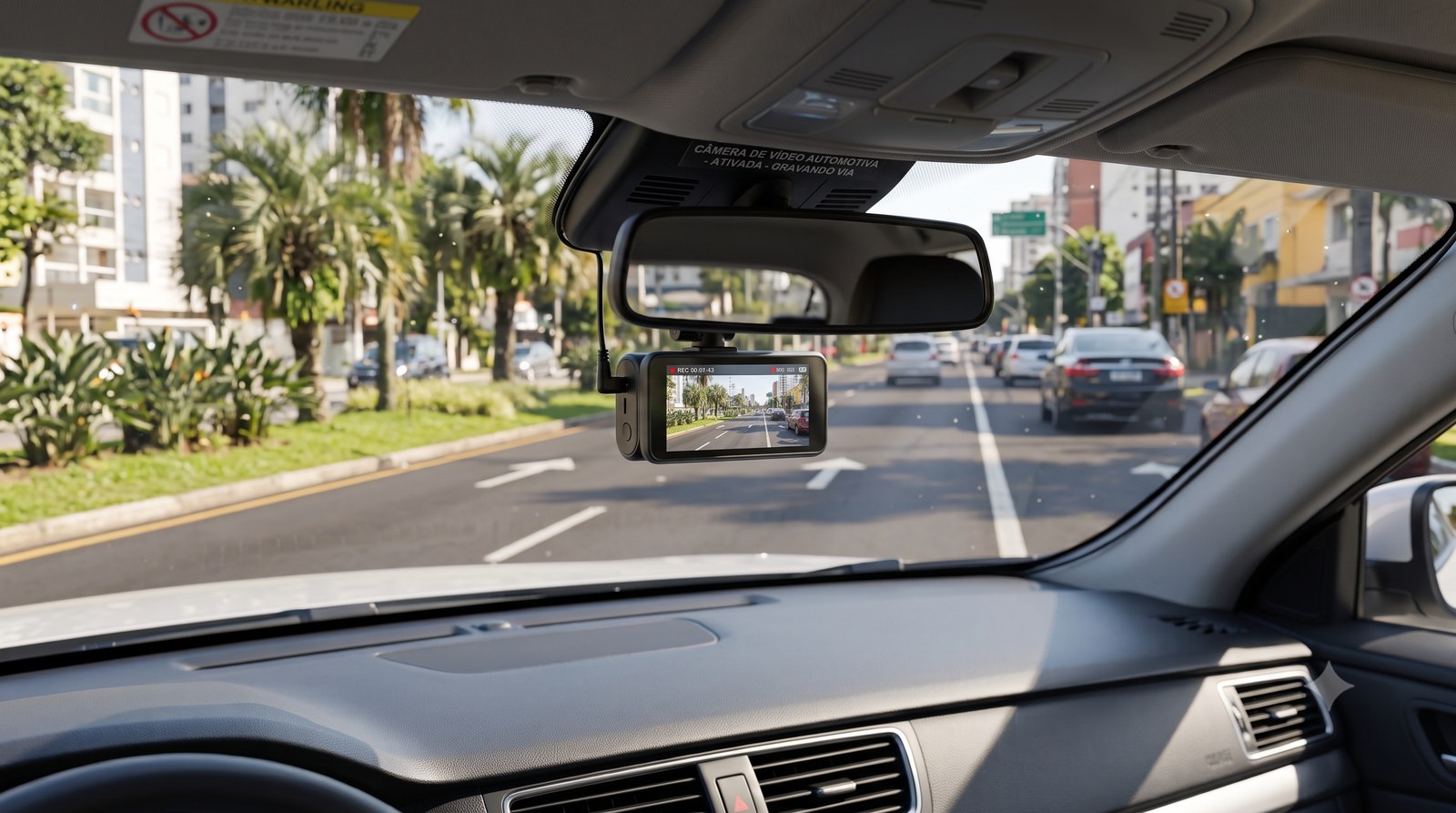
The scene is familiar to any driver. A sudden brake, a rear-end shunt, and each person's version of who caused what. Without footage, it is one person's word against the other's. It is that discomfort, daily and universal, that sustains the product. Except the one who profits from it is not the driver who fits the camera after the fright: it is the importer who saw a category with permanent demand, high turnover and a full margin.
What the dashcam is
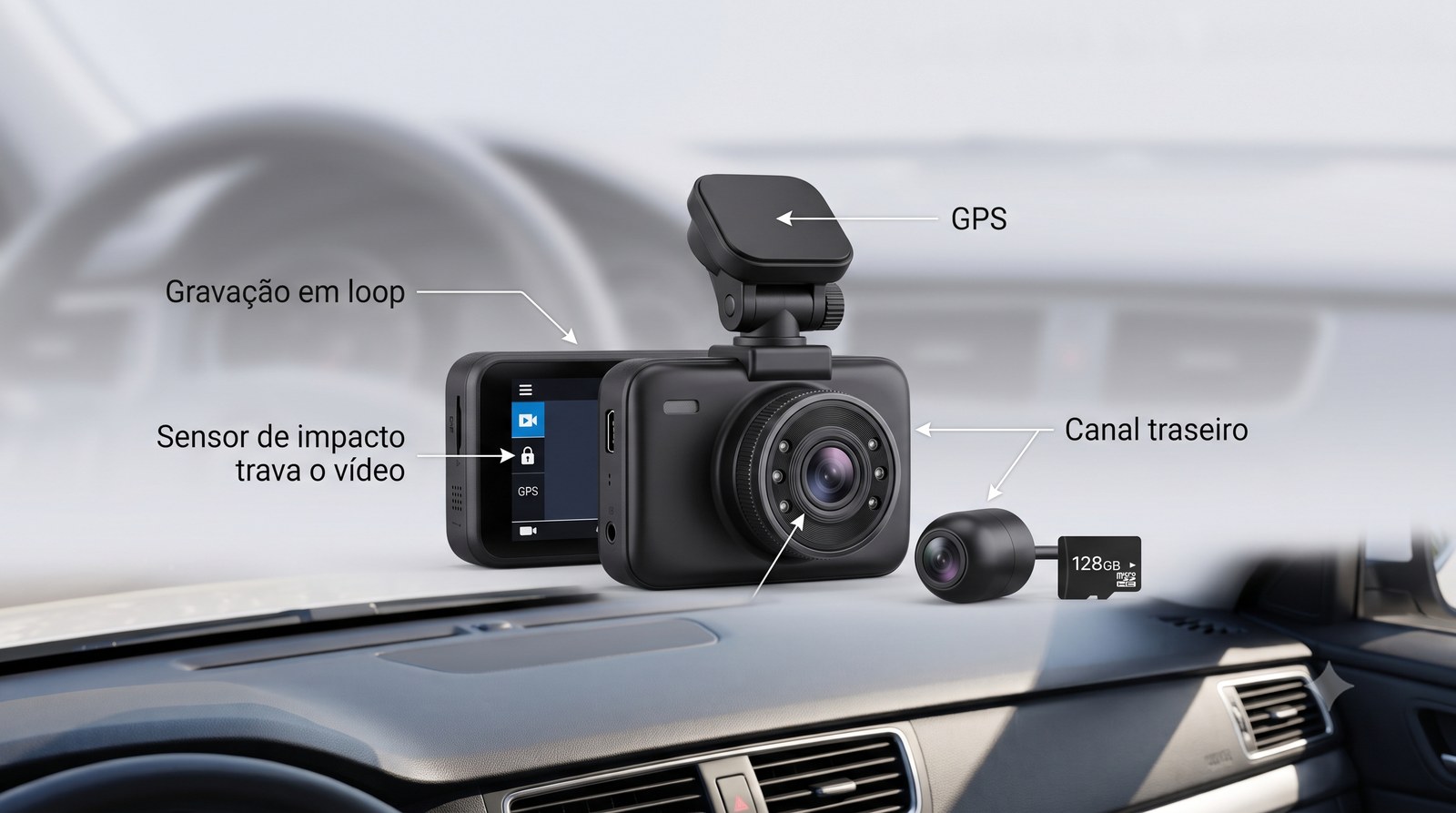
The car camera, or dashcam, is a compact camera that sits on the windscreen and records the journey continuously. It switches on with the car, records in a loop (deleting the oldest footage so the card never fills up), has night vision and an impact sensor that locks the video of the crash. The fuller models come with GPS, Wi-Fi to the phone, dual channel (front and rear) and parking mode, which watches over the car while it is parked.
It is neither an expensive product nor a complex one to fit. That is exactly why it turns over: it answers a real fear, it has universal use and an appeal that only grows as ride-hailing drivers, fleets and families realise the camera pays for itself the first time something happens.
Why this is an opportunity for Brazil
Brazil has one of the largest vehicle fleets in the world, an army of ride-hailing drivers and a constant concern with traffic and safety. It is an enormous, permanent audience, and the dashcam is one of the finds that best combines steady demand, turnover and margin for importing.
- Demand all year round: it does not depend on the season. Insurance, evidence in a claim, ride-hailing drivers, company fleets and the end-of-year trip, when the roads fill up, all pull the demand along.
- Buy cheap, resell well: it is a product with a low cost at source and a high perceived value, because the buyer sees safety and evidence, not just an electronic device. Well negotiated in China, it resells in Brazil with a comfortable margin.
- Repeat purchase on accessories: every camera sold opens the door to memory cards, mounts and the rear channel. The accessory is the second sale, at an even better margin.
- Content ready to go: dashcam videos go viral on their own, which makes the product sell itself in video and pulls online resale along.
Before importing: because it has Wi-Fi and, on many models, GPS, the dashcam requires ANATEL homologation, and because it has an internal battery it usually requires INMETRO. The quality of the image sensor, the night recording and the card that comes with it varies a great deal between factories, and this is a product where inspecting before shipment separates the model that records sharp evidence from the one that records a useless blur.
Put your own brand on it
Importing from China is not just reselling a generic product. The factory can put your brand on the camera and on the packaging, and put the kit together in the way that makes sense for your customer. That is what separates one more item on the shelf from a product that is yours alone, with more margin and less fighting over price.
- Your brand on the product and on the box (private label / OEM): logo printed on and an app with your identity.
- Kit to your choice: front only or front plus rear, with or without a memory card included, so you can build price brackets.
- Packaging and manual designed for Brazilian retail, in Portuguese.
Customisation usually calls for a slightly larger minimum order, and that is where having a partner in China makes the difference: BCVN finds the right factory, negotiates the customisation and the kit, validates the sample and makes sure the product arrives exactly as you asked for it.
It is worth understanding how this works in practice before requesting the first sample: the guide on own brand in China: private label, OEM and ODM explains the difference between the three models and what each one changes in the minimum order and the lead time.
Where to buy dashcams in China
Dashcams are a classic of the electronics and car accessories sector, and they turn up in force at the main fairs:
- Canton Fair, Phase 1 (Electronics and Vehicle Accessories): the biggest aisle for this product, with dozens of manufacturers and models side by side.
- Hong Kong Electronics Fair: strong in cameras, gadgets and in-car electronics, it takes place days before the Canton Fair.
- Yiwu Trade Fair: ideal for volume and for closing on the accessories (cards, mounts, cables) at the largest small-commodities wholesale market in the world.
- Auto Guangzhou: the big motor show (27 November to 6 December, at the Canton complex), ideal for reading the trend in in-car electronics and seeing the top-of-the-range model.
Next edition, Canton Fair 2026 (140th): Phase 1, with the electronics, runs from 15 to 19 October 2026, at the Pazhou complex in Guangzhou. The Hong Kong Electronics Fair (13 to 16 October) comes just before it, which allows the two to be combined in a single trip.
Read the complete guide to the Canton Fair 2026
The dashcam is not a bold bet. It is one of those products with permanent demand and an appeal that only grows, and it pays off for whoever builds the stock at the right pace. With the roads full at the end of the year and demand steady the rest of the time, whoever places the order now reaches the peak with the shelf ready.
Frequently asked questions about importing dashcams
Do I need certification to import dashcams?
Yes. Because it has Wi-Fi and, on many models, GPS, the dashcam requires ANATEL homologation, and because it has an internal battery it usually requires INMETRO certification. Confirm both requirements before placing the order.
What does the dashcam record and how does loop recording work?
It switches on with the car and records continuously in short files, deleting the oldest ones so the card never fills up, which is called loop recording. An impact sensor (G-sensor) automatically locks the segment of the crash so it is not overwritten, and models with parking mode watch over the car while it is parked.
How much does it cost to import dashcams from China?
The cost at source is a fraction of the price charged at Brazilian retail, which opens a good margin for the reseller. The figure varies with the resolution, the number of channels (front only, or front plus rear) and features such as GPS and parking mode. BCVN quotes the right model and negotiates the order.
Where can I find dashcam suppliers in China?
At the Canton Fair (Phase 1, electronics), at the Hong Kong Electronics Fair and at the Yiwu Trade Fair, strong in car accessories and volume. BCVN validates the suppliers and can accompany your visit to the fairs.