Sterilising instruments is not optional, it is the line between a clinic that works and a clinic that gets shut down by an inspection. Dentistry, advanced aesthetics, tattooing, chiropody, veterinary practice: every one of those businesses is obliged to have its own sterilisation, and the autoclave is the heart of that process. Except that the people who really profit from that obligation are not only the clinics that buy. It is the distributor and the importer who worked out that China makes this equipment and these consumables for a fraction of the price charged here, provided you buy the right machine, the right way.
What the sterilisation autoclave is
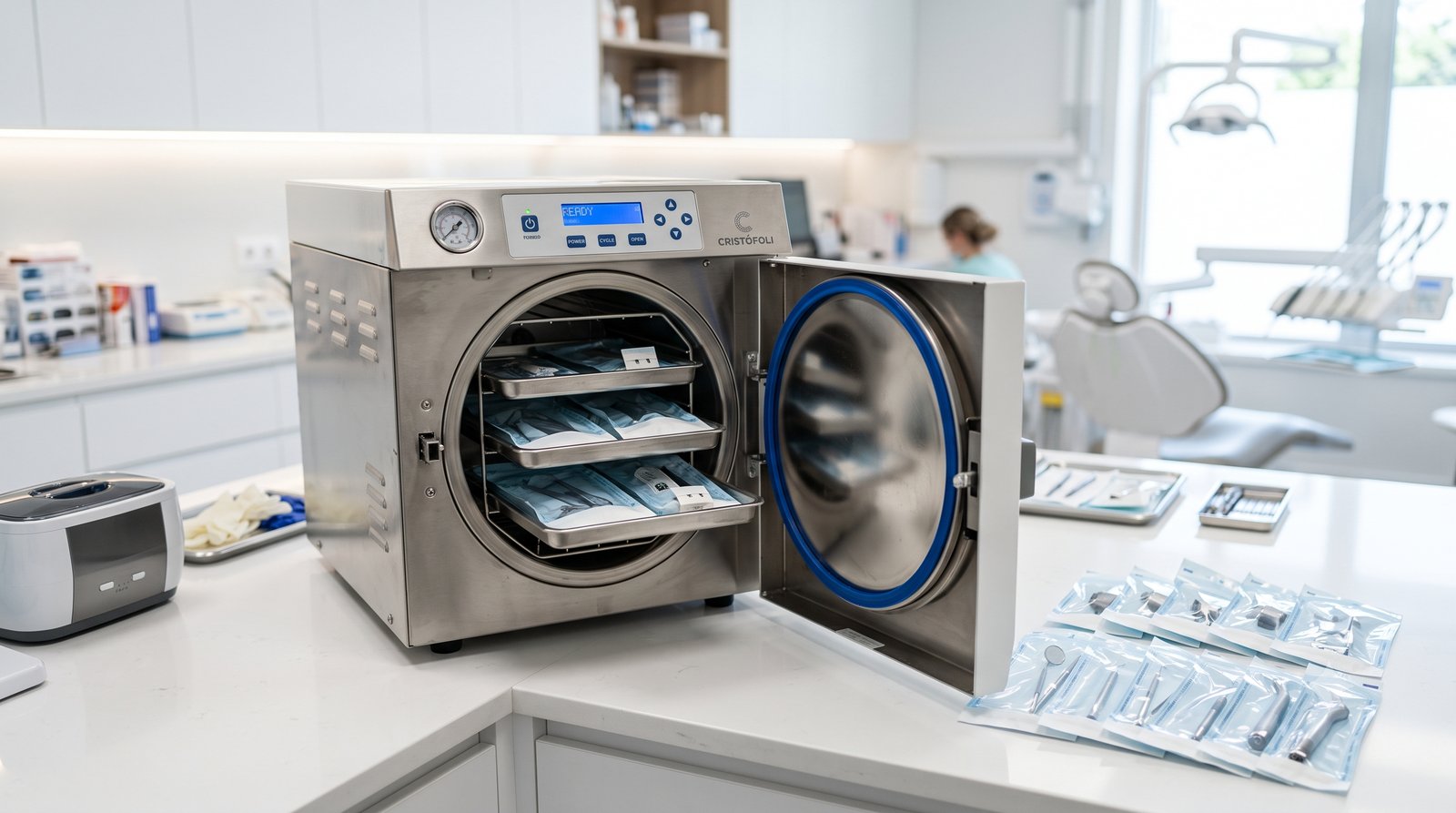
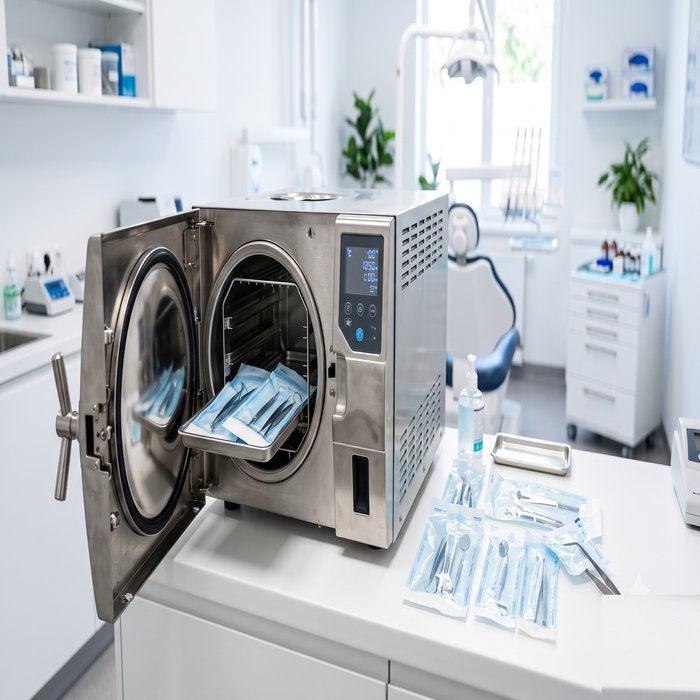
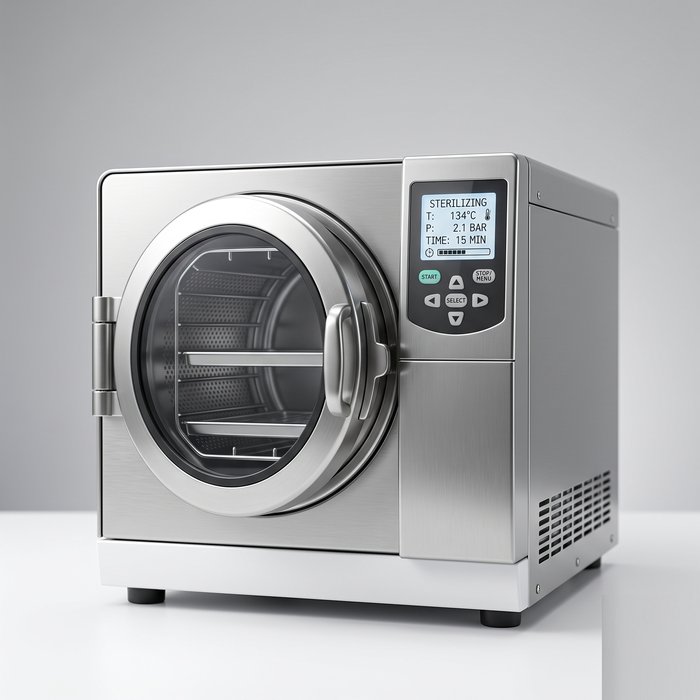
The autoclave is the equipment that sterilises instruments with steam under pressure at high temperature, the standard required to eliminate micro-organisms on material that comes into contact with the patient. It works alongside a line of repeat consumables: sterilisation pouches and papers, chemical and biological indicators, and the treated water for each cycle. It is that combination that sustains the business: the machine is the durable investment, and the consumable is the sale that repeats for as long as the clinic stays open. It is a medical device, and that is what sets its yardstick.
Models and variations
"Autoclave" is not one single product. At the Chinese fairs it is a whole hall of equipment and consumables, and each item opens up a part of the market:
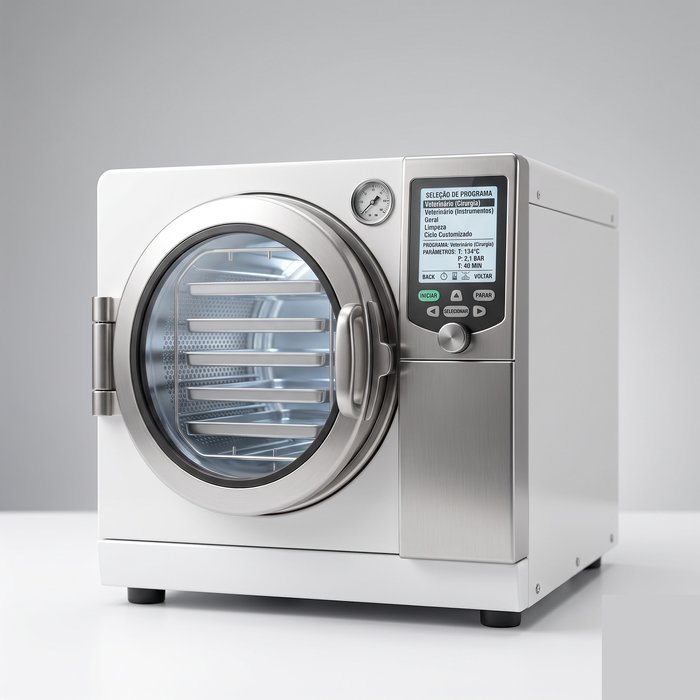
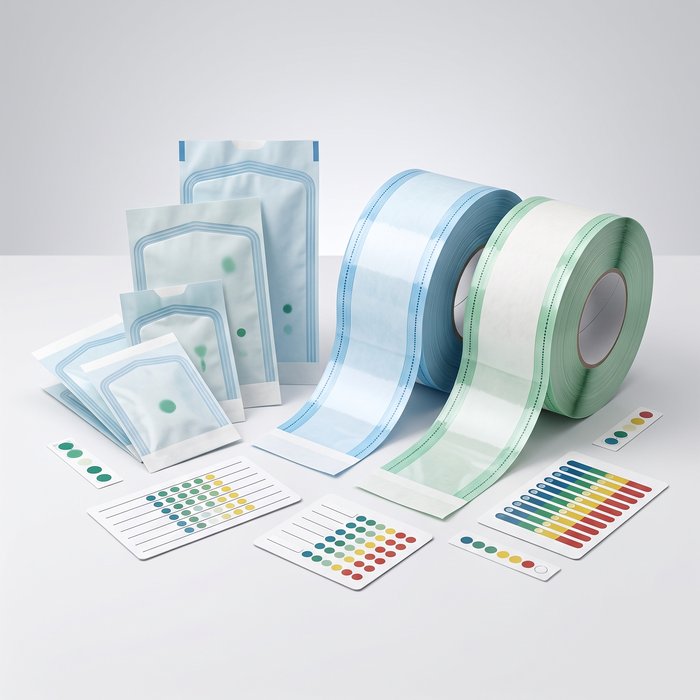
Choosing the right machine for each segment and the supplier who delivers the consumable with the paperwork in order, among hundreds of factories, is exactly where BCVN comes in.
Why this is an opportunity for Brazil
Brazil has hundreds of thousands of dental surgeries, aesthetics clinics, tattoo studios and veterinary practices, and all of them need sterilisation by regulation. For the importer the opportunity is twofold: the clinic that wants to kit itself out at a much lower cost, and the distributor who wants to supply a whole network with machines and consumables.
- Demand guaranteed by law: the autoclave is not an impulse purchase, it is a requirement for the clinic to operate. It is one of the health equipment markets least subject to fashion or seasonality.
- Repeat business built in: pouches, chemical and biological indicators are used up on every cycle and come back. Whoever comes in through the machine keeps the sale that repeats, month after month.
- Extremely qualified leads: the buyers are clinic owners, dentists and distributors of dental and hospital equipment, a high value customer with a long-term relationship.
- The barrier is the filter: the health requirements keep the chancer away and protect whoever does it properly. Being serious about compliance is not a cost, it is a competitive advantage.
Compliance: the equipment inspectors ask about
Here we need to be direct, because the autoclave is a medical device and a pressure vessel at the same time, and Brazil treats that strictly. Understanding the rules before importing is what separates whoever builds a legal operation from whoever ends up with a container of machines stuck in the warehouse.
ANVISA, the central point: the autoclave is classed as a medical device and requires ANVISA regularisation in order to be sold, with the risk class defined by its use. The sterilisation consumable follows its own sanitary rules as well.
Not every factory will do: this is the detail that catches out many importers. Some Chinese factories do not supply the technical documentation needed for registration in Brazil. Buying from the wrong manufacturer means a batch that can never be sold legally.
Pressure vessel and INMETRO: because it works with steam under pressure, the autoclave carries equipment safety requirements, on top of electrical safety and a check on the voltage (110V or 220V) for your region.
Health surveillance: the clinic using the equipment answers to the local health surveillance authority and has to prove the sterilisation has been validated, which reinforces the need for regularised, traceable machines and consumables.
The rules change and vary by type of equipment and by use. The golden rule is to confirm the current requirements and the manufacturer's capability before placing the order. The barrier frightens the amateur, but it is where the value lies for whoever has a partner.
Seeing and testing at source
That is why this is a find that calls for one thing: going to China to watch the machine run a cycle before buying. Seeing the autoclave working, checking the time and temperature of the cycle, opening the chamber, assessing the stainless steel finish and confirming in person whether the factory has the documentation your registration will require, that is not tourism, it is the diligence that protects a high value investment with high regulatory risk. That is exactly what the BCVN Canton Fair Mission exists for: to take the importer to the fair and to the factories, to separate the serious manufacturer from the improvised one and to follow the negotiation and the inspection.
Customise the specification (OEM)
Importing from China is not a matter of taking the catalogue model and hoping. The manufacturer adjusts the equipment and the range to your market, and that is where having a partner at source separates whoever resells a commodity from whoever builds a serious operation.
- The right voltage, chamber capacity and finish, and the interface and manual in Portuguese.
- Your brand on the equipment and on the packaging (private label / OEM), for the distributor who wants to build their own line of autoclaves and consumables.
- Documentation, after-sales and spare parts agreed at the time of purchase: what makes registration possible and covers the maintenance the clinic will demand.
That calls for direct negotiation with the factory and validation of the sample before the batch. BCVN finds the right manufacturer, settles the specification, validates the documentation and makes sure the after-sales really exists.
Where to buy sterilisation autoclaves in China
China is one of the largest medical equipment manufacturing hubs in the world, and autoclaves show up at the machinery fairs and, above all, at the medical fairs:
- CMEF (China International Medical Equipment Fair): China's largest medical equipment fair, where the autoclave manufacturers with a structure for regulated export are. It is the sector fair that goes deeper into the segment.
- Canton Fair, Phase 1 (Machinery and Equipment): a good starting point, with equipment manufacturers and the chance to see the autoclave run a cycle.
- Canton Fair, Phase 3 (Health and Beauty): it brings together the health and hygiene side, useful for combining the autoclave with the consumable and care line.
Next edition, Canton Fair 2026 (140th): Phase 1, with machinery and equipment, runs from 15 to 19 October 2026, and Phase 3, with health and beauty, from 31 October to 4 November, at the Pazhou Complex in Guangzhou. BCVN combines the fair schedule with visits to the right factories.
Get to know CMEF, the medical and aesthetic equipment fair
Read the complete Canton Fair 2026 guide
The autoclave is not the easiest find in the Showcase, and that is why it is one of the most valuable. The sanitary barrier that keeps the unprepared away is the same one that protects the margin of whoever does it properly. For the Brazilian importer, the question is not whether the market wants the product, the market is obliged to buy it, but whether you buy the right machine, from the manufacturer who supplies the documentation, after watching the cycle run at source.
Frequently asked questions about importing autoclaves from China
Do I need a registration to import a sterilisation autoclave from China?
Yes. The autoclave is classed as a medical device and falls under the ANVISA yardstick in order to be sold in Brazil, with the risk class defined by its use. As it is an electrical pressure vessel, there are also safety requirements (INMETRO) and a check on the voltage for your region. And there is one detail that breaks many importers: not every Chinese factory supplies the technical documentation needed for registration. Confirm the current requirements and the manufacturer's capability before placing the order.
Can I import just one autoclave from China?
BCVN works with importing for resale and for companies, in quantity, not with the purchase of a single unit. Equipment and consumables carry a minimum order quantity (MOQ) and freight and operations only dilute across volume; on top of that, sanitary compliance weighs the same for one unit as for a batch. Anyone who wants a single machine for their own use should buy from a reseller in Brazil. For the distributor of dental and hospital equipment, or for anyone who wants their own brand, that is where direct importing pays off.
Where do you find autoclave manufacturers in China?
At CMEF, China's big medical equipment fair, and at the Canton Fair (Phase 1, for machinery, and Phase 3, for health), where the manufacturers of benchtop autoclaves and the sterilisation consumables are. Seeing the equipment running, checking the cycle and validating who supplies the documentation for registration is what separates a safe purchase from a trap. BCVN organises the visit and validates the manufacturer.