
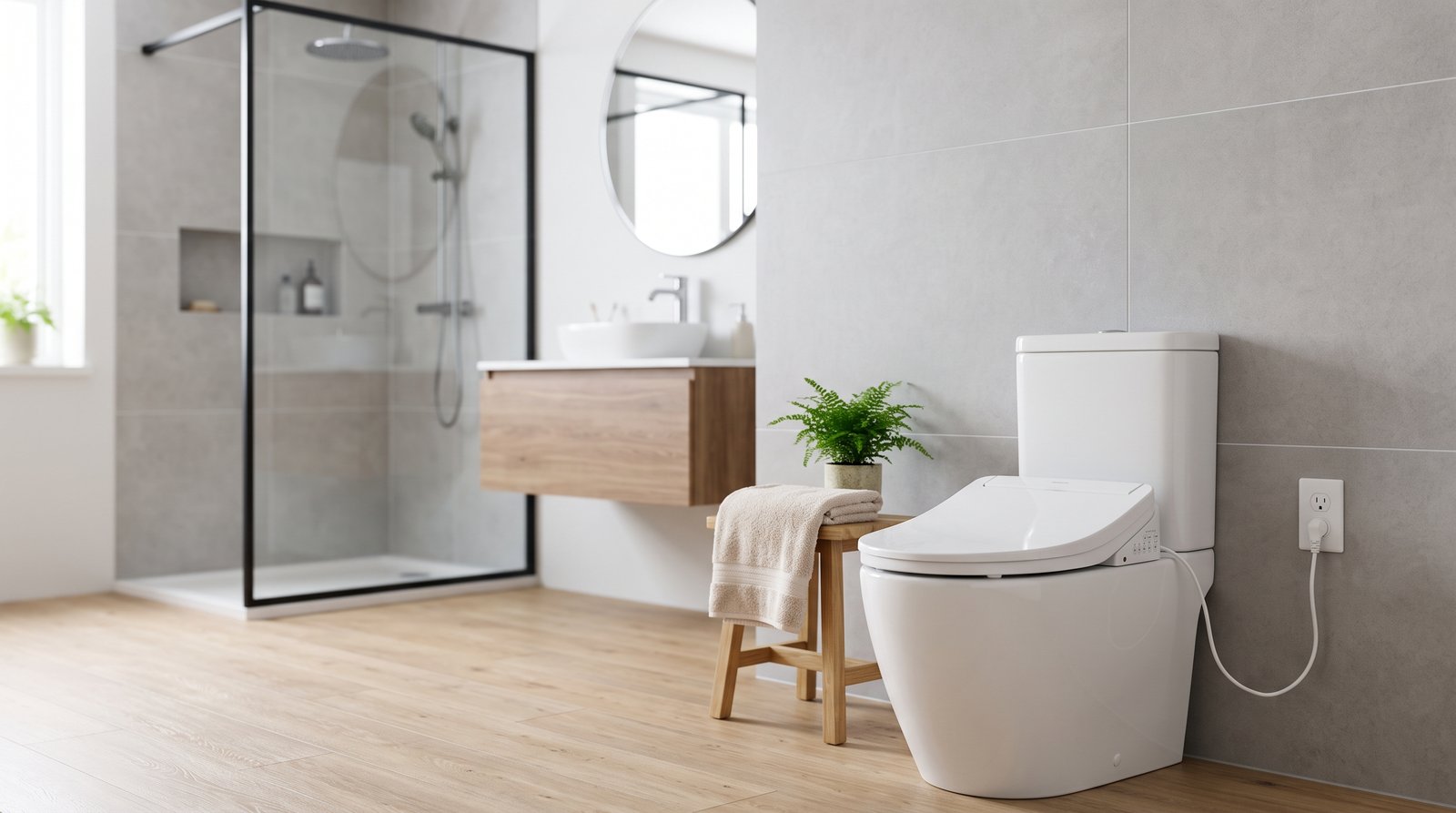
In Asia this stopped being a luxury item a long time ago. In much of Japan and Korea it is the standard in any bathroom, public ones included, and in China it has gone from novelty to a middle-class refurbishment item. What in a photograph looks like an expensive toilet lid is, in the experience, another category of product altogether.
And that is where the commercial peculiarity sits: whoever has never used one does not understand why they would pay for it; whoever has used one once tends not to want to go back.
What a smart toilet seat is
It is a lid and a seat that replace the ones on the toilet already installed, without changing the pan. Inside them there is a retractable nozzle that delivers a jet of warm water with adjustable pressure and position, a heated seat, a warm air dryer and, on the fuller models, a lid that opens automatically on a sensor, a night light and a self-cleaning function for the nozzle itself. All commanded from a side panel or a wall remote.
From the seller's point of view, the figure that matters is this: the product fits over the pan that is already there. It needs no building work, no change of toilet, no wall broken open. That changes the size of the market, because the buyer is not only somebody refurbishing: it is any home with a toilet and a water point.
The item turns on high impulse with a decent average ticket, and it has a shelf advantage few household products have: it demonstrates itself. In a showroom, one unit plugged in on a display pan does more for conversion than any leaflet, and that is why it sells well in a builders merchant and badly in an advert.
Models and variations
The Chinese shelf for this product is wide, running from the entry-level lid to the top-of-the-range one-piece toilet. Picking the wrong bracket is the commonest mistake of the first-time importer.
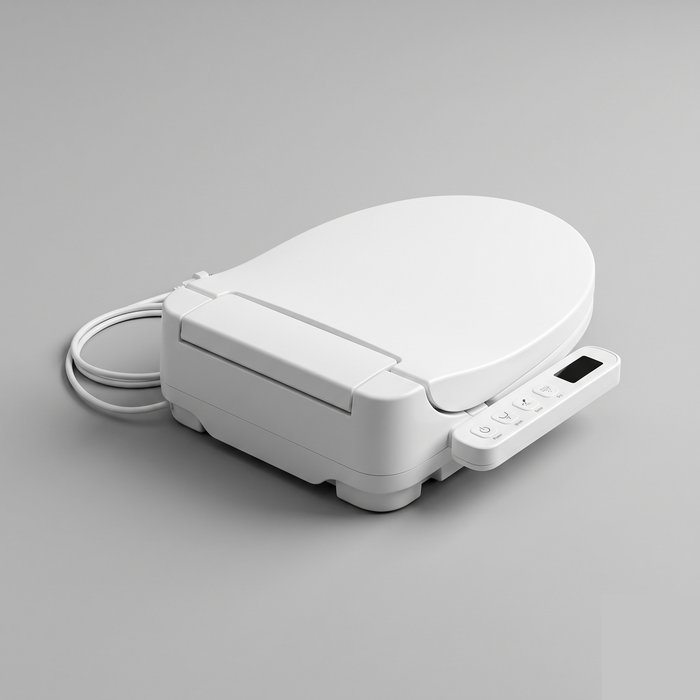
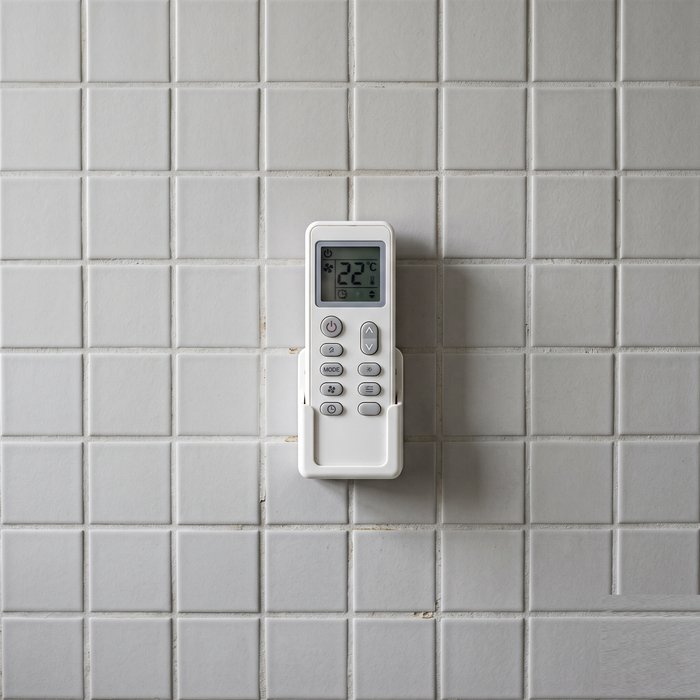
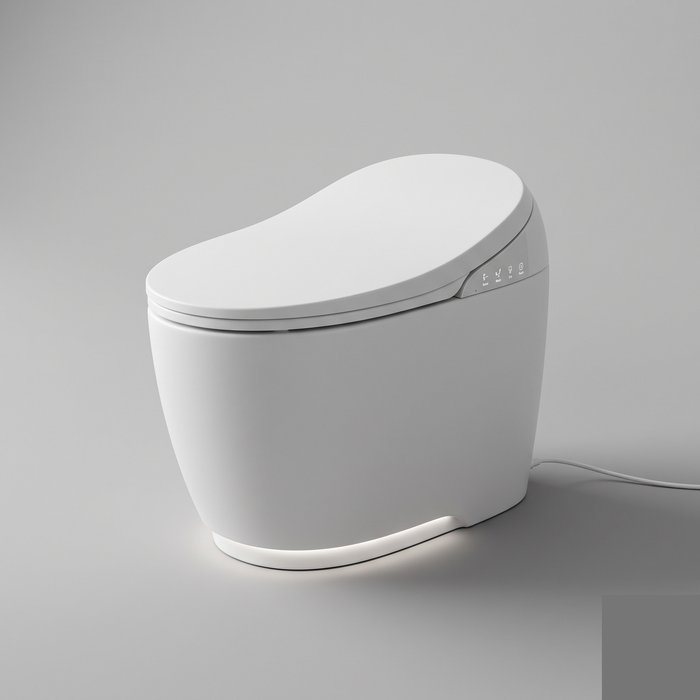
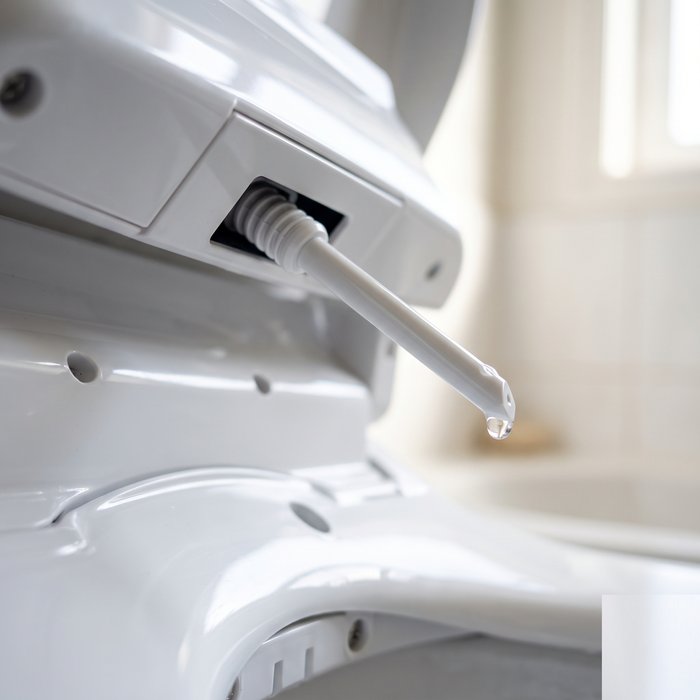
Beyond the price bracket there is a technical choice that has to be made before requesting a sample: tank heating or instantaneous heating. The tank stores a small volume of already hot water, costs less and consumes less, but runs out of hot water on prolonged use. The instantaneous one heats on the way through, has no limit, and in exchange draws far more current. For a Brazilian resale range, the first comes in on price and the second holds up the top end.
Why this is an opportunity for Brazil
The country has a cultural habit that works in this product's favour and that most markets do not have: Brazilians already use water in the bathroom, through the bidet shower, and need no convincing about the principle. The objection that exists in the West, which is the strangeness of the idea, simply does not exist here. What is missing is the product and somebody to show it working.
- An empty room in the Showcase and in the shop. Practically every imported household find today goes to the kitchen, the living room or the bedroom. The bathroom was left out, and whoever arrives first in a whole room sets the price reference.
- It sells by demonstration, and that protects the margin. A product that only converts after the experience is not a price-war product on a marketplace. It favours whoever has a physical location, a showroom or a partnership with a fitter, and it is precisely that reseller who holds margin.
- It pairs with a service. Since installation is the real obstacle, whoever delivers product plus installation sells two things and earns on both, besides removing the main cause of returns.
- No season. Unlike a fan, Christmas lights or a toy, this item sells all year round, and the 60 to 120 day lead time stops being a race against the calendar.
Before you import: this is the point that decides the deal, and it is more delicate than it looks. Ordinance Inmetro 148/2022, which regulates household appliances and similar products, works from a closed list, and the electronic toilet seat does not appear in it under that name: the electric toilet item that is on the list describes a different product, the one in which excrement is stored, dried or destroyed. Except that the seat has water heating inside it, which puts it next to families that are within the scope. In plain terms: the scope cannot be read off a catalogue and cannot be settled by analogy, and the answer changes everything, because it decides whether the cargo clears customs. Ask an accredited certification body for a written opinion, with the datasheet of the exact model, before closing the order. If the model has Wi-Fi or an app, then there is no doubt at all: the radio part requires ANATEL type approval. And confirm the voltage, because Brazil lives with both 127 and 220 volts and this product stays installed.
Put your own brand on it
Importing is not only reselling generic goods. In this category customisation is worth even more than average, because the buyer is deciding on an item that will be visible in their bathroom for years, and a brand conveys a guarantee.
- Your brand on the product and on the packaging (private label / OEM): logo on the panel, on the remote and on the box.
- Colour, finish and set of functions of your choosing, including stripping out functions that only inflate the entry-level line.
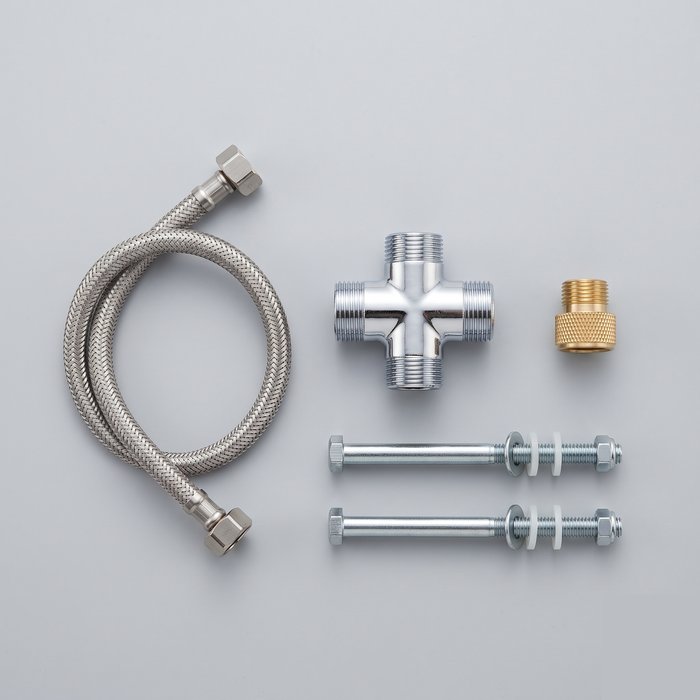
- Packaging and manual in Portuguese, ready for Brazilian retail, and the installation kit with the threads used here.
Customisation usually calls for a slightly larger minimum order, and BCVN finds the right factory, negotiates the customisation, validates the sample and makes sure the product arrives exactly as you asked for it.
It is worth understanding how this works in practice before requesting the first sample: the guide on own brand in China: private label, OEM and ODM explains the difference between the three models and what each one changes in the minimum order and the lead time.
Where to buy a smart toilet seat in China
It is a sanitary ware and bathroom fittings product, and therefore it lives in the home and construction aisle, not in the electronics one, despite being electrical. Knowing that saves half a day of fair.
- Canton Fair, Phase 2 (home, furniture and decoration): this is where bathroom, sanitary ware and fittings sit, and it is the right aisle for comparing genuine manufacturers.
- Canton Fair, Phase 1 (electronics and building materials): worth a walk to see who makes the electronic part, the heater and the board, which is often not the same company that assembles the seat.
- Yiwu Market: good for the accessories around it, from the installation kit to the wall bracket, with low minimum orders. For the seat itself the factory price is not at the stall, and what exists outside the market explains why.
Next edition, Canton Fair 2026 (140th): Phase 2 runs from 23 to 27 October 2026, in Guangzhou, and it is the phase that matters to this product. The Yiwu Market opens from 21 to 25 October, so the two fit into the same trip, with two days in between.
Read the complete guide to the Canton Fair 2026
It is one of those products where testing it in person is worth more than the datasheet, for a simple reason: what separates a good seat from a bad one is the stability of the water temperature and the finish of the nozzle, and neither of those shows up in a table. You feel it with your hand, on the stand, in front of whoever built it.
Frequently asked questions about importing a smart toilet seat
Does a smart toilet seat need INMETRO certification?
The honest answer is that this has to come in writing before the order, and not from the supplier's catalogue. Ordinance Inmetro 148/2022, which regulates household appliances and similar products, works from a closed list of products, and the electronic toilet seat does not appear in it under that name. The electric toilet item that is on the list is a different product, the one in which excrement is stored, dried or destroyed. At the same time, the seat has water heating inside it, which puts it next to families that are within the scope. That ambiguity is resolved with an opinion from an accredited certification body, obtained before closing the order, because the answer decides whether the container clears customs.
What is the difference between the tank model and the instantaneous one?
The tank model stores a small volume of already heated water, costs less and draws less power, but the hot water runs out on prolonged use and takes a few minutes to reheat. The instantaneous one heats the water as it passes, has no usage limit and responds immediately, and in exchange draws far more current, which makes the home's electrical circuit part of the decision. For reselling in Brazil the tank model comes in better on price and the instantaneous one holds up the top of the range, and it is worth carrying both.
What blocks the installation of an electronic bidet in a Brazilian home?
Two banal things, and they are what kill the sale. The first is the socket: the Brazilian bathroom almost never has a power point near the toilet, and the product requires an earthed socket protected by a residual current device. The second is the water: you have to branch off the cold water feed from the cistern with a T connector, and the thread and the stopcock do not always match what comes in the box. Anyone reselling without offering installation, or without supplying an adapter kit with the threads used in Brazil, turns every sale into a return.