
China is one of the world's largest producers and exporters of food. Mushrooms, seasonings, seaweed, industrial ingredients, honey, processed fruit and plant protein leave Chinese ports at scale, and the price at origin is tempting enough to catch the eye of any Brazilian distributor.
The thing is, food is the one category where the supplier has to be authorised before you buy. With electronics or clothing, a compliance problem is solved with a certificate and a document. With food there is a wall that comes before all of that: if the Chinese establishment is not listed, the shipment does not enter Brazil, however good the product is and however correct the rest of the paperwork may be. This guide is about where importing food stalls, and why almost everything is decided before the goods sail.
Who governs imported food, and where the agencies overlap
The Ministry of Agriculture, Livestock and Food Supply oversees the entry of products of animal and plant origin, in practice through VIGIAGRO, the agricultural inspection service that keeps a post at every point of entry in the country. ANVISA handles processed food. The first expensive mistake in this sector is not knowing which of the two your product falls under.
Products of animal origin
Meat and offal, fish and seafood, dairy, honey and its derivatives, egg products, animal fat and collagen. This is the toughest bar, and the one that requires the exporting establishment to be listed in advance.
Fresh plant products
Fresh fruit, vegetables, grain, seed, cut flowers and plant propagation material. These come in under the phytosanitary bar, which centres on plant pests and disease.
Processed food
Biscuits, pasta, packaged seasoning, drinks, supplements and food with additives. The agency changes, but the bar does not drop: additives, labelling and registration each carry their own requirements.
Mixed products
A product with both animal and plant ingredients, such as instant soup with meat or a sauce with animal protein, can answer to both agencies at once. This is where the wrong classification shows up most often.
The question that settles the order: before discussing price, the question is "does this product contain anything of animal origin?". If it does, even in a small proportion, the agency changes, the documents change and the timeline changes. Getting the classification wrong does not produce a fine at the end, it produces a stalled shipment at the start.
The supplier's listing: the wall with no way around it
For products of animal origin, the Chinese exporting establishment has to be listed for Brazil. That listing comes out of an agreement between the two countries, under which the health authorities recognise each other's inspection systems, and in China it is the central customs administration, the GACC, that certifies an establishment for export.
The point almost nobody grasps in time is this: the listing belongs to the establishment, not to the product and not to the trader. A trading company offering the product may have no listed factory behind it. A factory listed for one category may not be listed for the one you want. And the listing has an expiry date and can be suspended between the moment you negotiate and the moment the shipment arrives.
When that fails, there is no possible fix. It is not a fine, not a fee, not a document you can issue afterwards: the goods cannot enter the country. The importer is left with the shipment in a foreign port or in suspension in Brazil, paying storage, choosing between re-exporting and destroying it. It is the most expensive scenario in the sector, and it starts with a check that takes minutes and that almost nobody runs before negotiating.
The documents are not red tape, they are points of failure
Food carries the longest document set in importing, and every piece of it is a place where the shipment can stop. What matters is not the list itself, but understanding that any discrepancy between one document and another is grounds for holding the goods, even when the product is perfect.
- Sanitary Certificate: issued at origin for products of animal origin, it ties the shipment to the listed establishment. A product name that differs from the invoice, an incorrect registration number or a missing stamp is enough to hold the whole shipment.
- Phytosanitary Certificate: the counterpart for plant products, attesting the absence of pests and disease. It applies to grain, fruit, vegetables and propagation material.
- Prior licensing: a good share of foods require an authorisation registered before the goods sail. A shipment that leaves China before that can be treated as irregular even if the document is issued later, and that is a sequencing error, not a content one.
- Invoice and packing list: description, weight, batch and value have to match what the certificates say. A discrepancy between documents is the most banal and most frequent cause of a hold.
- Temperature log: for refrigerated cargo, the container's history is the document that proves the cold chain never broke. A single logged excursion in transit compromises the whole batch.
- Labelling in Portuguese: in many cases the label artwork has to be validated before the goods sail, not after the shipment arrives. It is the item that holds up more food at Brazilian ports than any other.
Labelling: the leading cause of holds
A product can have every sanitary document in order and still stop, because the packaging does not meet the Brazilian standard. The label has to be in Portuguese and carry, among other things, the sales denomination, the ingredient list, the net contents, the importer's identification, the country of origin, the expiry date, the nutrition information and allergens set out clearly.
The date trap: China writes the expiry date as year-month-day, Brazil requires day/month/year. A label with the date in the origin format counts as irregular, and the entire product goes for repackaging. It is a two-character detail that costs the operation: the batch sits still, somebody has to relabel unit by unit and storage charges run the whole time at the importer's expense.
Labelling is the clearest example of why food is settled at origin: adjusting the label at the factory, before the goods are boxed, is part of the production process. Adjusting it in Brazil is a manual, expensive operation on goods that are already paying storage and losing shelf life.
What passes in China and does not pass here
Brazilian law on additives, contaminants and residue limits is not Chinese law. A product that is perfectly legal at origin, approved by the tests there, can contain a substance that is not authorised here. And that difference appears on no certificate: it appears in the sample the inspector takes at the port.
| Category | How Brazil treats it | Common risk in Chinese products |
|---|---|---|
| Artificial colourings | Positive list: only what is on it is allowed | A colouring approved in China and absent from the Brazilian list |
| Preservatives | Positive list with a limit per category | Use above the limit accepted here |
| Pesticide residue | Maximum limit per crop and per substance | A pesticide used in China with no registration in Brazil |
| Heavy metals (honey, mushrooms) | Maximum limit per type of food | Lead, arsenic or cadmium above the tolerance |
| Antibiotics (honey, fish, meat) | Substances banned from use | Residue of a substance banned in Brazilian production |
What changes the game here is when the analysis happens. Finding the problem at the port means the shipment is held waiting for a lab report, with the risk of destruction. Finding it at origin, with the batch still at the factory, means changing the batch. It is the same information with two completely different consequences, and what separates one from the other is having somebody on your side in China before the container is sealed.
The mistakes that hold the shipment at the port
1. Supplier not listed. The gravest mistake and the only one with no remedy: the shipment simply cannot enter. Checking the listing for that specific category, before negotiating, is what stops you losing the whole operation.
2. Discrepancies between documents. A product name that differs between certificate and invoice, a wrong registration number, a missing signature. The product is right, the paperwork does not agree, and the shipment waits while that gets sorted out.
3. Shipping before the licence. For products subject to prior control, the document has to exist before the vessel leaves China. Reversing that order makes the shipment irregular even if everything else is correct.
4. Label in the origin language or format. Packaging in Mandarin, or with the date in the Chinese pattern, forces compulsory repackaging. The cost is per unit, and storage runs throughout the process.
5. Contaminant above the Brazilian limit. The product passed the tests in China and the sample taken here shows residue above what is permitted. The shipment is held pending a lab report and can be destroyed if the finding is confirmed.
6. Break in the cold chain. Refrigerated cargo that suffered a temperature excursion in transit is held on the strength of the container's own log. Arguing liability with the carrier afterwards gives you back neither the time nor the product.
All of them are settled before the goods sail, at origin, and none of them can be fixed with the shipment already on its way. For the full picture of what holds goods at customs, see the mistakes that get your shipment held by the Receita. Tariff classification also weighs in: see the guide to NCM and tariff classification and the one on what it costs to import from China.
What you cannot settle from a distance
There is plenty of content teaching you to import food on your own, and it almost always stops at the point where the business really begins. Because with food, the difference between the shipment that gets in and the shipment that sits at the port is decided in China, not at a computer:
- Confirm the listing before you negotiate. Not that a factory exists, but that this establishment is listed, for this category, and is valid right now. It is the cheapest check in the whole operation and the one that avoids its most expensive loss.
- See the factory, not the office. A great many food suppliers are traders buying from third parties. Knowing who actually produces the goods, and under what sanitary conditions, is fieldwork, not catalogue work.
- Analyse the batch at origin. Take a sample of the batch that is going to ship and test it before it sails, so you find at the factory what you would otherwise find at the port. The same information is worth a change of batch rather than the loss of one.
- Validate the label before boxing. Text in Portuguese, Brazilian date format, allergens set out clearly, importer's details. Once it is packed, every correction is manual and per unit.
- Follow the sequence of the documents. With food, the order matters as much as the content: what has to exist before the goods sail cannot be sorted out afterwards, and this is where the first-time importer reverses the steps without noticing.
None of those stages fits into a tutorial, because none of them can be done remotely. This is where a partner at origin stops being a luxury and becomes what separates the shipment that gets in from the one that rots at the port. A single quality inspection before shipment pays for that care many times over.
The sum that rarely shows up: the cheapness of importing on your own ignores the cost of the mistake. With food, a mistake does not produce a discount or a bit of rework, it produces perishable goods sitting still with storage running and shelf life shrinking, and sometimes it produces the destruction of the shipment. The partner does not make the operation more expensive, they remove the risk that no insurance covers.
Where to find your food supplier in China
A food supplier cannot be judged from a catalogue, because what matters is what sits behind the product: the plant, its sanitary condition and its listing. The fair is where that conversation starts face to face:
Food and consumer goods
The phase that brings together food, textiles and consumer goods, with suppliers from across the country in one complex, in Guangzhou. See the guide to Canton Fair Phase 3.
Food service and ingredients
The sector has dedicated fairs in China, with producers, ingredients and processing equipment in the same place. Fitting one of them into the trip greatly widens the reach of the visit. See the 2026 China trade fair calendar.
Being there lets you meet whoever produces the goods, see the plant and deal with listing and labelling before an order even exists, which is exactly the right order of things in this category. It is also where you negotiate own-brand production and packaging already built to the Brazilian standard: see the guide to own brand, private label and OEM.
The other side of the sector: equipment in the Showcase
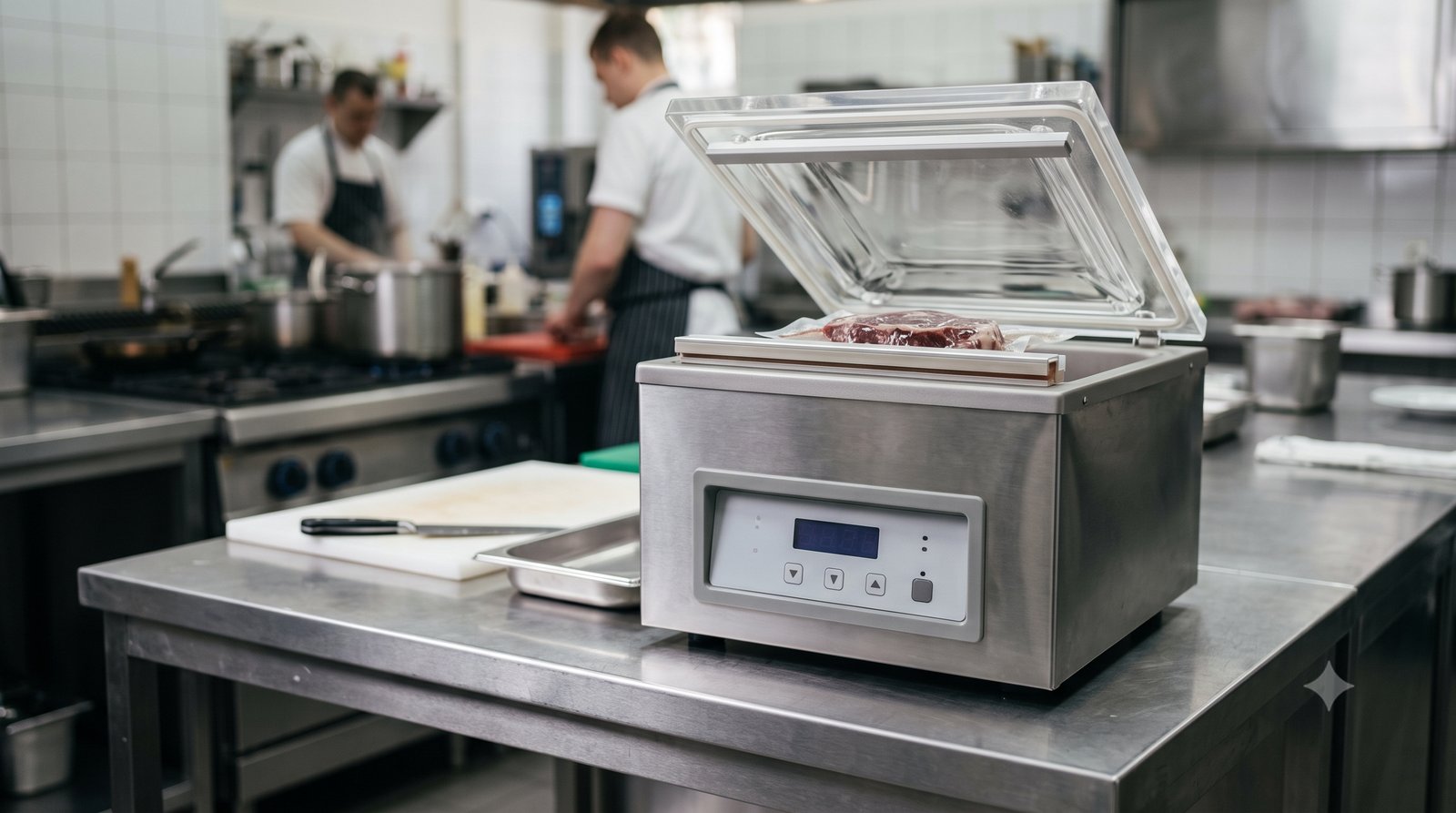
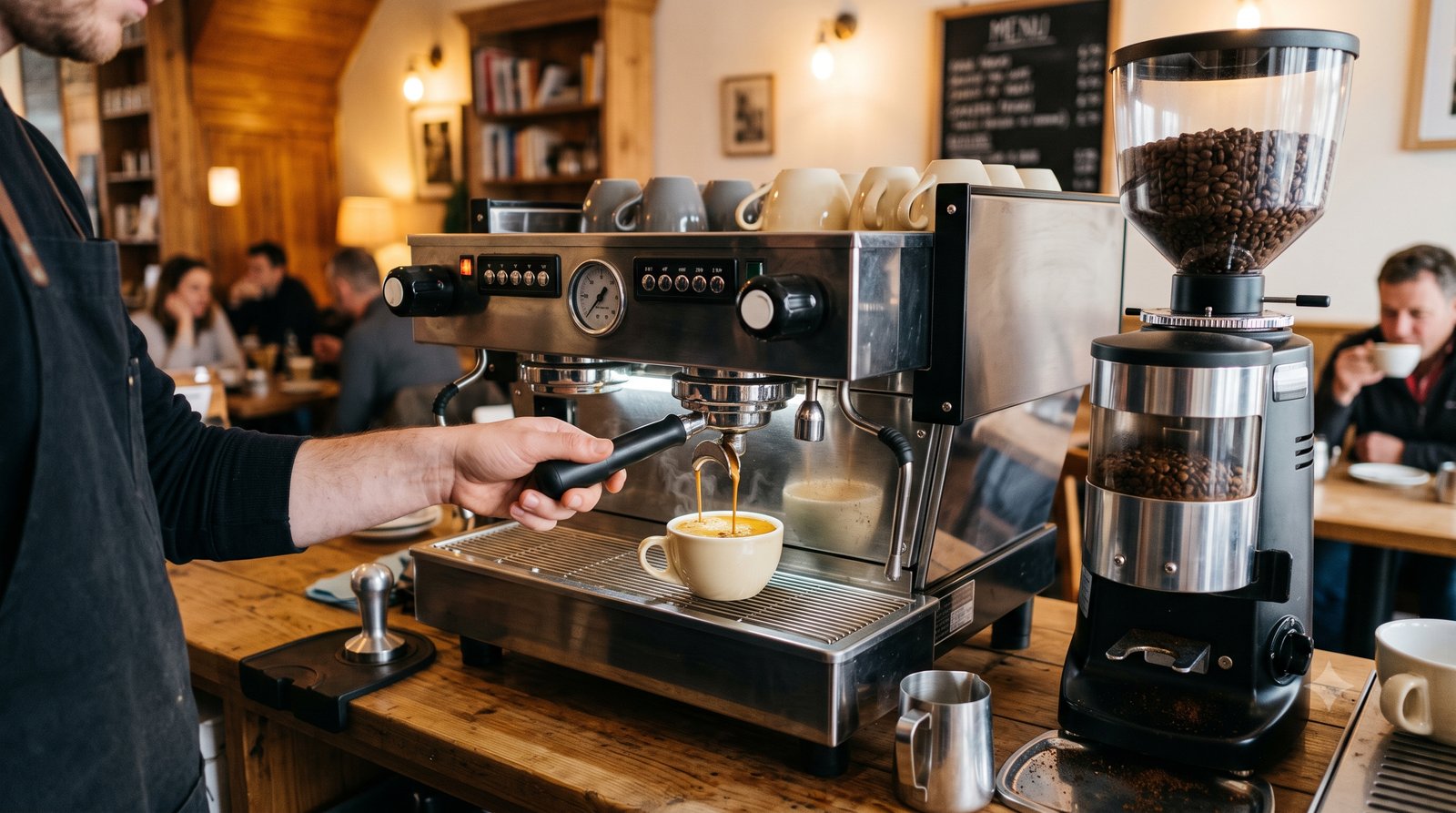
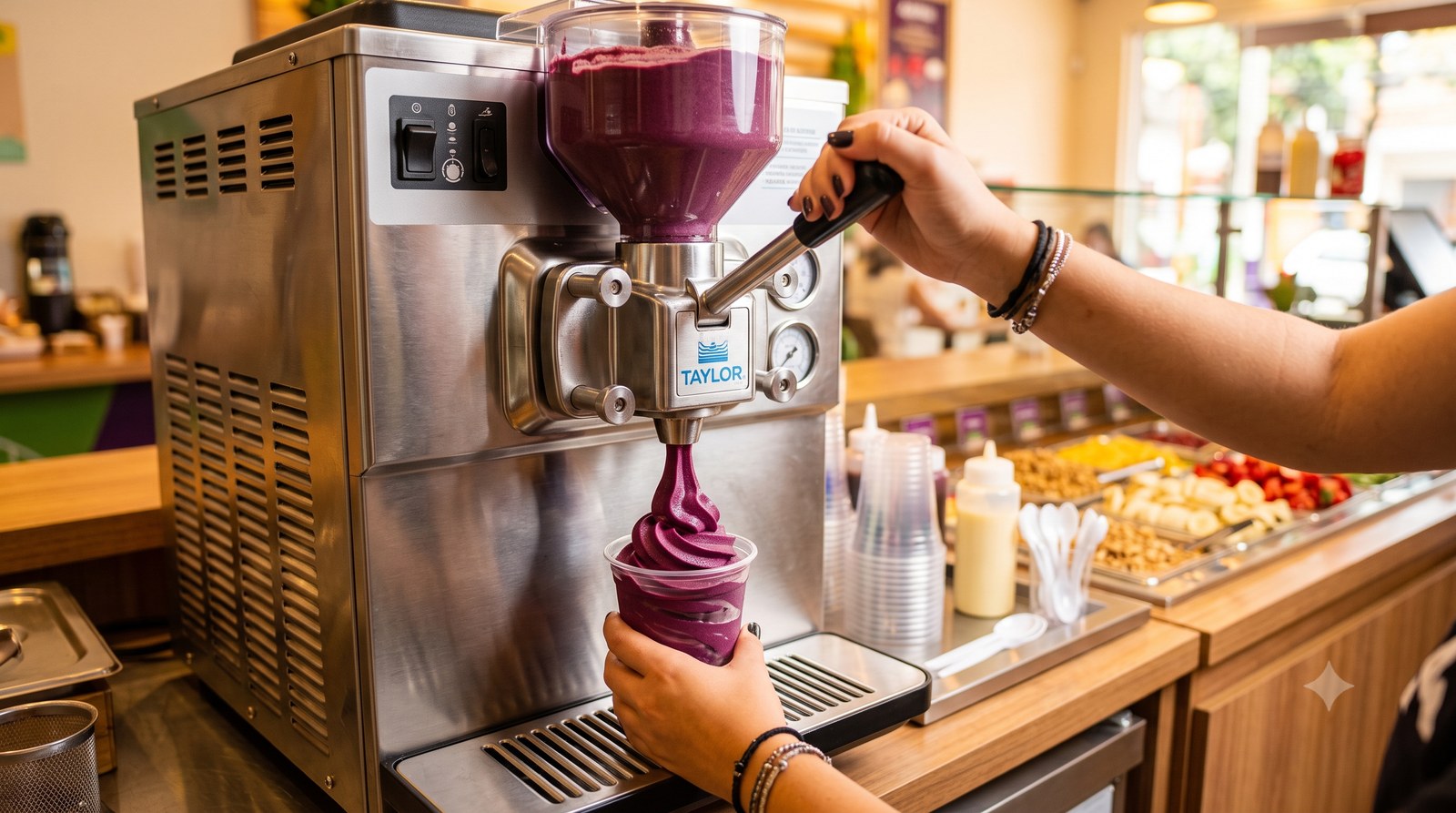
Equipment that processes food follows a different bar, closer to electrical certification and machinery safety than to sanitary rules. These are real finds from the fairs, each with the cost and resale logic behind it. See more in the China Showcase.
Frequently asked questions about importing food from China
Which foods need MAPA approval to be imported from China?
MAPA approval is required for products of animal origin, such as meat, fish, dairy, honey and egg products, and for fresh or minimally processed plant products. Processed food of plant origin, such as biscuits, pasta and packaged seasoning, generally falls to ANVISA. A product that mixes animal and plant ingredients can answer to both bodies at once, and that is exactly where the wrong classification tends to show up.
Does the Chinese supplier have to be listed in order to export food to Brazil?
Yes, for products of animal origin. And the detail that costs the most is that the listing belongs to the establishment, for a specific category, with an expiry date: it does not belong to the product or to the trader selling it. If the establishment is not listed, the shipment cannot enter Brazil, and no document, fee or appeal will fix that once the goods have sailed.
What most often holds up food imported from China at the port?
Labelling is the most frequent cause: a label in Mandarin, without the mandatory information in Portuguese, or with the expiry date in the Chinese year-month-day format instead of the Brazilian day/month/year. After that come discrepancies between documents, a licence issued out of sequence and residues above the Brazilian limit. In every case the cost is the same: storage charges running on perishable goods.
Can a food approved in China be non-compliant in Brazil?
Yes, and it happens often. The lists of permitted additives and the residue and contaminant limits differ between the two countries, so a product that is perfectly legal at origin can contain a colouring, preservative or residue that is not authorised here. This shows up on no certificate: it shows up in the sample taken at the port, when the shipment is already in Brazil. Testing the batch while it is still at the factory turns a total loss into a change of batch.
What happens if MAPA holds a food shipment?
The shipment is suspended until it is put right and, depending on the irregularity, it can end in re-export, repackaging or destruction. Storage costs for the whole period fall on the importer, and with food there is the added problem of shelf life, which keeps running while the goods sit still. That is why the only strategy that works in this category is settling everything before the goods sail.