
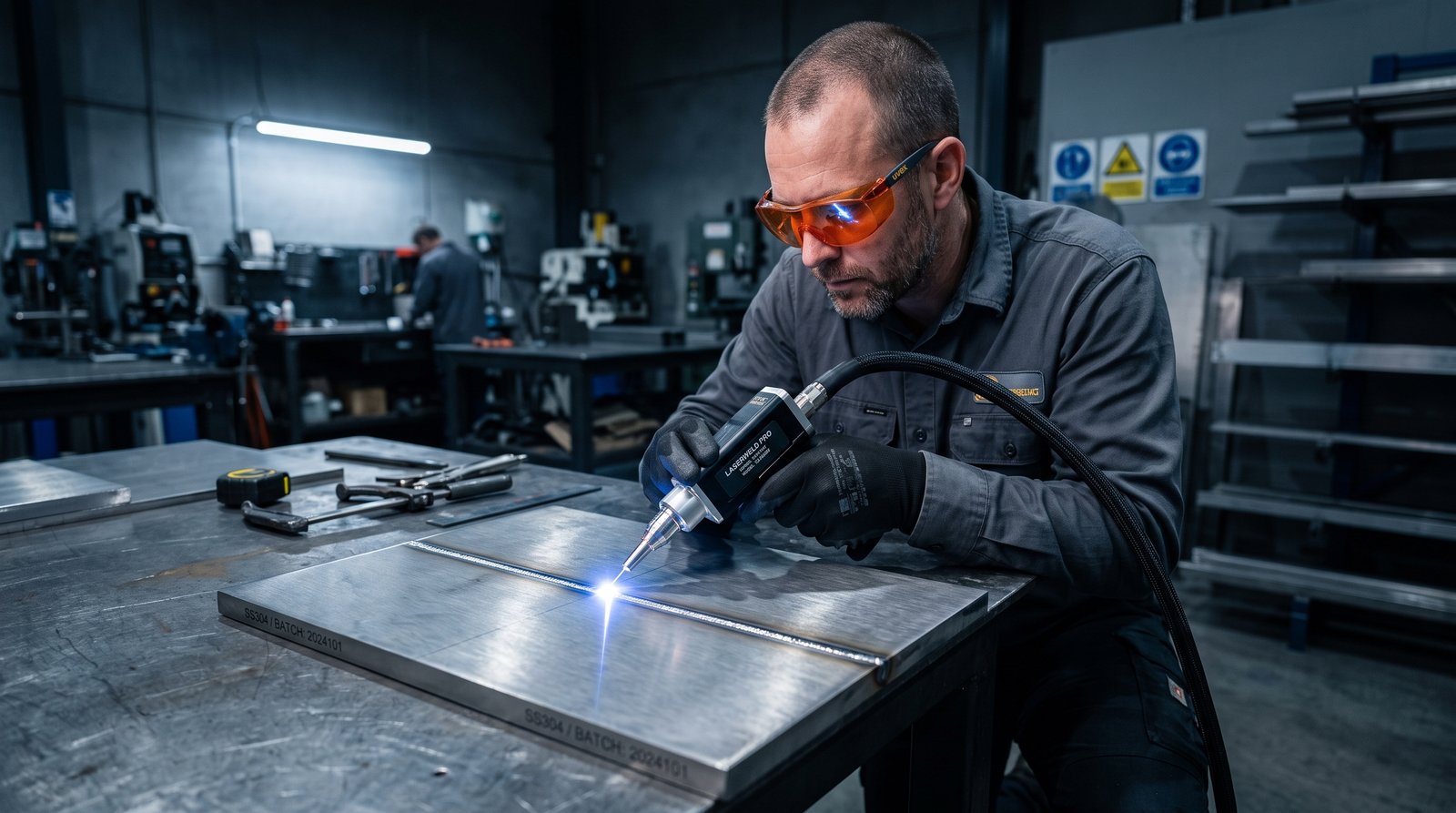
The clip that goes around online always shows the same thing: somebody runs a gun over two stainless sheets and out comes a continuous, even bead with no spatter. It is impressive. And on its own that clip sells the machine to the wrong buyer, because it suggests the point is welding faster.
Anyone who works metal knows welding was never the bottleneck. The bottleneck is what comes after.
What a handheld laser welder is
It is a fibre laser source, built into a cabinet on castors, connected by a cable several metres long to a gun the operator holds. The beam melts the metal at a very concentrated point, and the operator runs the gun along the joint as they would a torch, except that the heat does not spread through the part.
That concentration is what changes everything. In conventional welding, much of the energy heats what surrounds the bead, and it is that heat which warps thin sheet, stains stainless and forces you to grind, sand and polish afterwards. With a concentrated beam the affected zone is a fraction of that: the part comes out straighter, the bead comes out cleaner, and the finishing stage shrinks or disappears. The time the workshop gains is not in the welding, it is in the finishing it no longer does.
The same source, with a different head, does laser cleaning: the pulsed beam vaporises rust, paint, oil and oxide without touching the base metal. That is why most of the machines on show at fairs today are sold as a two or three function package rather than as a welder.
Models and variations
It is not one single product. In the metalwork aisle of a Chinese fair it is a whole family of configurations, and choosing wrong means buying power you never use or falling short of the power you meant to have.
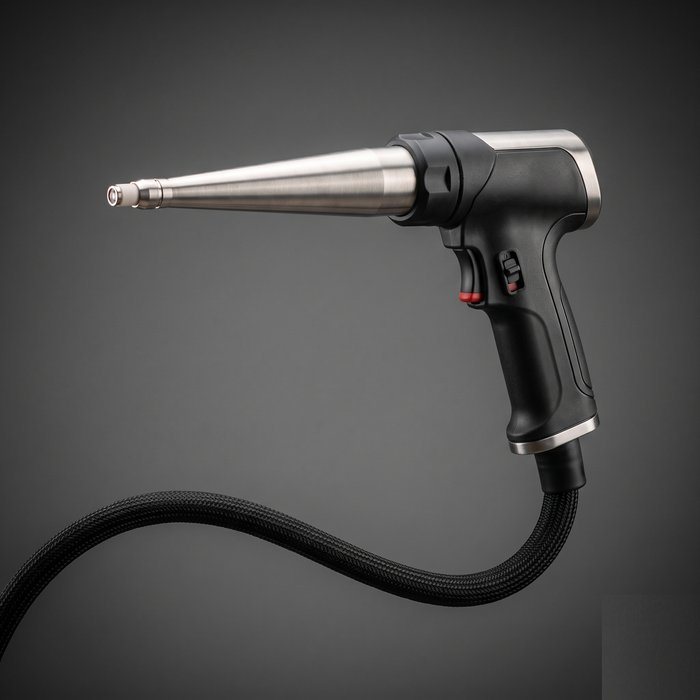
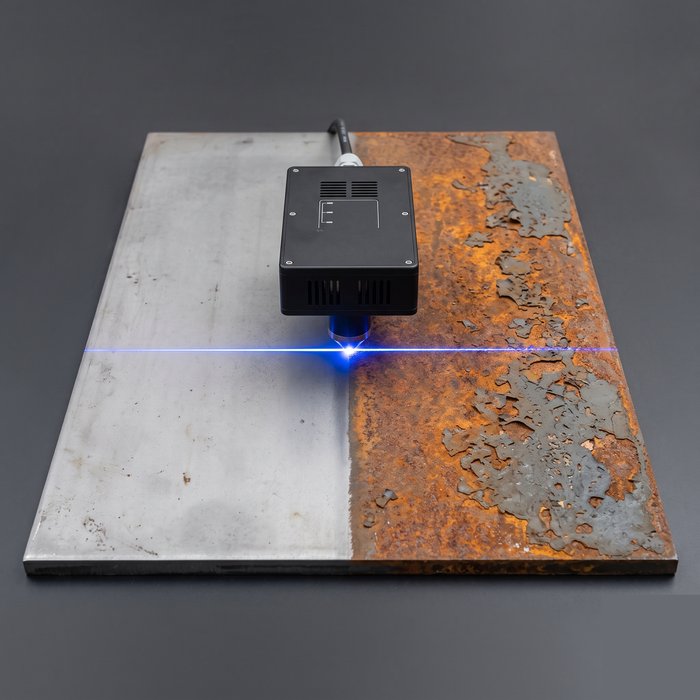
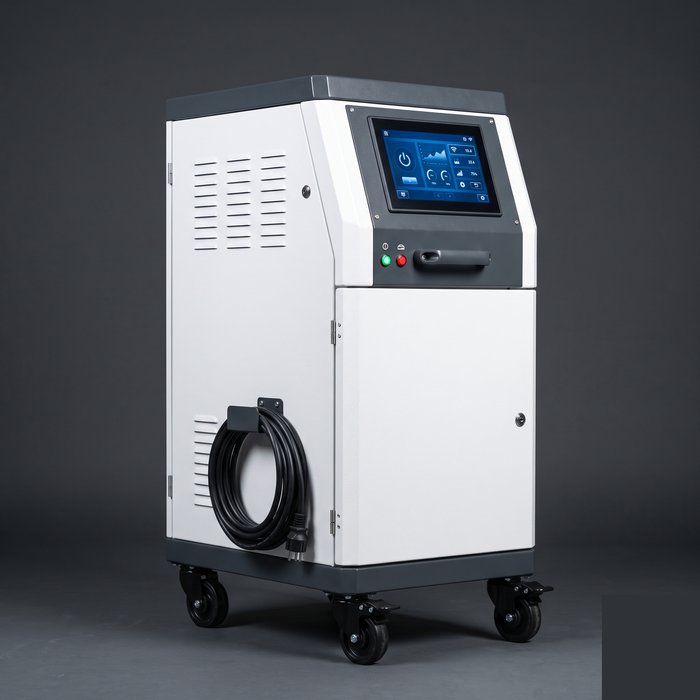


Four differences matter when you close the order: the power of the source, which sets the maximum thickness; whether the package is welding only or welding, cleaning and cutting; whether it comes with a wire feeder, indispensable on joints with a gap; and the electrical supply, which shifts from single to three phase as the power rises. Choosing between hundreds of factories advertising the same thing is exactly where BCVN comes in.
Why this is an opportunity for Brazil
Brazil's population of metalwork shops, boilermakers, steel furniture plants, industrial kitchens and maintenance workshops is enormous, and nearly all of it welds by processes that demand heavy finishing. The shortage of qualified welders is a real and growing problem across the country, and laser welding shortens the learning curve: an operator is trained in days, not years.
- It does not fight on price with what is already in the shop. Anyone reselling a conventional welder haggles over a discount on a product the customer already knows. Here the conversation is about removing two stages from the process, and that conversation is not had on price.
- The return is calculable, and this buyer likes that. An industrial buyer decides on payback, and the payback here comes out of the finishing hours and the blasting hours that stop being paid for, not out of gas consumption.
- Consumables and service follow behind. The protective lens on the head is a wear part, the nozzle is a wear part, and the customer comes back. Whoever sets up technical support moves from selling machines to selling uptime.
- Lead time favours whoever moves early. It is 60 to 120 days between the order in China and the machine in the shed, and demand for industrial refurbishment and maintenance has no season: whoever has stock serves it, whoever does not loses the sale to the wait.
Before you import: these are class 4 laser machines, the most dangerous class there is, and the danger is not the direct beam, it is the reflected one, which reaches the retina without any visible flash. A welding helmet offers no protection. You need eyewear with the correct optical density for the source's wavelength, a marked area and a trained operator. In a Brazilian workplace the machine answers to NR-12 (guarding, emergency stop, manual in Portuguese) and the eyewear needs a Certificate of Approval to count as legal PPE, which the pair in the factory box almost never has. Confirm the voltage and the number of phases before closing too: above a certain power the machine is three phase, and finding that out in the customer's shed is expensive. None of this comes solved from the factory, and this is where the pre-shipment inspection stops being optional.
Where to buy a laser welding machine in China
This is a product that turns up in three different aisles, and each one shows a different part of the chain. It is worth knowing which one serves what you are after.
- Canton Fair, Phase 1 (machinery and equipment): the widest aisle and the easiest to walk for anyone comparing manufacturers and price brackets in a single morning.
- CIOE, in Shenzhen: the laser fair proper, where you find whoever makes the source and not only whoever assembles the machine. That is where you learn whose technology is inside the cabinet.
- CIIF, in Shanghai: the country's largest industrial fair, and the right place to see the automated version with the head mounted on a robot, which is the next step up for a reseller.
Next edition: the Canton Fair opens Phase 1 from 15 to 19 October 2026, in Guangzhou. Before that, CIOE runs in Shenzhen from 9 to 11 September, and CIIF in Shanghai from 12 to 16 October, which fits into the same Canton Fair trip with one train leg.
Read the complete guide to the Canton Fair 2026
It is worth seeing this machine running before deciding, for a reason no video solves: what impresses on the stand is the bead, and what closes the sale is the part propped against the bench beside it, already finished, without a single grinder mark. Whoever grasps that difference buys for the right reason, and that is the buyer who comes back.
Frequently asked questions about importing a laser welding machine
Does a laser welder really replace TIG?
On most thin-sheet work in stainless steel, aluminium and mild steel, yes, and with an advantage that is not bead speed: the heated zone is far smaller, so the part warps less and the bead comes out clean enough to skip much of the grinding and polishing. Where TIG stays unbeatable is on root passes in pressurised pipework, thick plate and any job that demands a qualified welding procedure. Anyone buying it expecting to retire the whole process is disappointed; anyone buying it to remove the finishing stage gets it right.
Does laser cleaning replace abrasive blasting?
For removing rust, paint, oil and weld oxide, it does, and the argument is not the cost of the abrasive: it is that the cabinet, the dust, the masking of everything that must not be hit and the contaminated waste to dispose of all disappear. That allows cleaning an assembled part in place, which blasting does not. Where it does not serve is surface preparation with a specified roughness for heavy industrial coating, because the anchor profile that abrasive blasting creates the laser does not reproduce.
What does it take to run one of these laser machines safely in Brazil?
These are class 4 lasers, the most dangerous class, and the reflected beam blinds without any visible flash. That means a marked and restricted area, a trained operator, and eyewear with the correct optical density for the machine's wavelength, which on a fibre laser is usually 1064 nanometres. A welding helmet offers no protection against it. On top of that, a machine in a Brazilian workplace answers to the NR-12 machine safety standard, with guarding, emergency stop and a manual in Portuguese, and the eyewear needs an official Certificate of Approval to be legal PPE. None of this comes solved from the factory.