
Why health and aesthetics does not forgive the shortcut
The health and aesthetics cluster is today the largest in our China Showcase, with eight published finds, from aesthetic equipment to the dental chair, passing through autoclaves, physiotherapy and mobility. That is no accident: it is one of the highest-ticket, highest-margin categories for anyone reselling in Brazil, because clinics, doctor's offices and beauty salons pay well for equipment that works and arrives with the paperwork in order. It is also, for that very reason, one of the most closely inspected categories in the country.
The costliest mistake in this category is not buying from the wrong supplier. It is treating compliance as a single-agency problem, when in fact two agencies decide whether aesthetic equipment can be sold in Brazil: INMETRO and ANVISA. They do not ask the same question, they do not require the same dossier, and what delays importers the most is not either one on its own: it is trying to resolve them in the wrong order.
Two agencies, an order that cannot be swapped
Start with what most people already half know. ANVISA regulates the health product: it decides whether the equipment's sanitary risk and clinical efficacy justify selling it in Brazil, and the general guide to importing with ANVISA explains that screen for cosmetics, sanitizers, food and health products together. What that guide does not cover, and this one does, is the other half: for electromedical equipment, such as aesthetic laser, radiofrequency, intense pulsed light and LED, there is an earlier requirement, from a different agency, without which the ANVISA process does not even move forward properly.
That requirement is INMETRO certification under Ordinance 384/2020, which specifically governs electromedical equipment and names aesthetic equipment by name among those that need it. It assesses what ANVISA does not: the device's electrical safety and essential performance, against the IEC 60601 series of technical standards, with a laboratory type test and an assessment of the manufacturer's quality management system, based on the ISO 13485 standard.
The sentence to remember: having ANVISA registration does not mean INMETRO is already sorted, and having the INMETRO certificate does not mean the product can already be sold. They are two documents, from two agencies, and Brazil requires both, one after the other.
ANVISA's risk scale: four classes, two paths
RDC 751/2022, which replaced the old RDC 185/2001, organizes every health product into four risk classes. It is that class, not the device's commercial name, that decides whether the path is fast or long:
| Class | Risk | Regime |
|---|---|---|
| I | Low | Simplified notification |
| II | Medium | Notification, with more documentation required |
| III | High | Registration, with a full technical dossier |
| IV | Maximum | Registration, with additional requirements and a longer review |
The trap here is assuming the class from the product instead of requesting a determination for the model. Two hair-removal lasers from different brands, with the same advertised purpose, can have power, wavelength and cooling system different enough to fall into different classes, with regularization timelines and costs that have nothing in common. Whoever closes the order by category name, and only afterward asks which class the specific model falls into, risks having bought a problem that is six months bigger than it needed to be.
What counts as electromedical, even when it doesn't look like it
The point that most confuses those coming from another Showcase category, such as consumer electronics, is thinking that "aesthetic" is a lighter label than "medical." It is not. Brazilian rules look at what the device does to the body, not at the counter where it is used:
- Aesthetic laser (hair removal, rejuvenation): concentrated energy acting on tissue, the same risk family as a surgical laser, scaled down.
- Radiofrequency: current-controlled heating, with its own standard within the IEC 60601 series.
- IPL, intense pulsed light: a broad light spectrum, with a specific eye-protection requirement built into the equipment itself.
- LED phototherapy: less energy than a laser, but still within the electromedical scope because of its action on tissue.
- Aesthetic ultrasound: a high-frequency mechanical wave, with its own particular standard within the same series.
Not every find in the Showcase's health and aesthetics cluster follows exactly this double rule. An autoclave is a pressure vessel with its own rule, a manual wheelchair can have low enough risk to skip electrical certification altogether, and a laboratory microscope answers to a different classification. The INMETRO 384 plus ANVISA 751 rule applies with full force to whatever emits energy onto the body: laser, radiofrequency, IPL, LED and aesthetic ultrasound, which is exactly where most of this category's ticket value lives.
What the importing company needs to have, before the product
The two certificates above are for the product. There is an earlier layer, for the company, without which neither process even begins. To import a health product, the company needs the Authorization to Operate (AFE) granted by ANVISA, with a compatible CNAE code and articles of incorporation describing the activity of importing health products, plus a qualified technical officer. Add to that the foreign-trade authorization required for any import, RADAR Siscomex. The guide to importing with ANVISA details this structure for the whole set of sanitary categories; here it is a prerequisite before even opening the process for the specific electromedical device.
What photos and a catalog cannot solve
Much of what decides whether the equipment gets in or stays stuck happens before the order is closed, and it is not the kind of thing confirmed with a chat message to the supplier:
- Confirm the risk classification of the exact model, in writing, before committing to the order. Power, wavelength and advertised purpose change the class, and the class changes the timeline by months.
- Check that the manufacturer's quality management system is in order, based on ISO 13485, because that is what INMETRO assesses together with the type test, and a factory without that documented structure does not move out of the queue.
- Translate and adapt the manual and labeling into Portuguese, with the technical and safety information ANVISA requires, not a literal translation of the Chinese or English manual.
- Take the type test to an accredited laboratory, and do not accept the manufacturer's European or American certification report alone as proof of Brazilian compliance.
- Fit the real timeline into the production schedule: INMETRO certification alone usually takes several months, and only after that does the dossier move on to ANVISA. Closing production without that time set aside is the costliest mistake on this list.
None of these five steps can be solved from a distance, with a PDF spec sheet. This is exactly where the role comes in of someone who has already walked this path, validates the manufacturer and runs both processes in parallel with production, instead of discovering the second agency only after already having dealt with the first.
The mistakes that stall health and aesthetic equipment
1. Thinking "aesthetic" escapes the "medical" rule
Buying a laser or an RF device and treating it as a salon electronic, without INMETRO certification or ANVISA registration. The law looks at the energy the device emits, not at the counter where it sits.
2. Trusting the CE mark or FDA clearance as if they were enough here
The manufacturer's European or American certificate proves compliance abroad. In Brazil, the type test has to go through an accredited laboratory within the INMETRO process, and the foreign seal does not replace that.
3. Opening the ANVISA process without the model's INMETRO certificate
Filing the sanitary dossier thinking INMETRO will be sorted out "in parallel, later." The process stalls at exactly the point where the certificate should be, and the order already closed with the factory keeps the clock running.
4. Assuming the risk class from the product's name
Quoting as if every aesthetic laser were class II, without confirming the power and purpose of the exact model. A difference in specification can push the product into the full registration of class III or IV, with a much longer timeline and higher cost.
5. Not checking the manufacturer's quality management system
Choosing the factory only by spec sheet and price, without confirming whether it has the quality structure INMETRO certification requires. Discovering the lack of it after the order is closed means starting the supplier search over from zero.
The pattern in these five is the same as in the Showcase's other regulatory finds: the problem never shows up at delivery, it shows up months later, when there is no longer a way back without losing what has already been invested. For the general picture of what holds cargo at customs, see the mistakes that make Customs hold your cargo, and for the full cost breakdown, how much it costs to import from China.
Where to see health and aesthetic equipment before importing
The technical specification of electromedical equipment cannot be assessed from a photo. Testing the device, comparing the finish and asking for quality documentation on the spot is what separates the informed buyer from the one buying on faith:
Being at the fair, with a partner who already knows what to ask about certification and quality systems, is what turns an afternoon of booths into a short list of suppliers worth the order. See the complete 2026 China trade fair calendar to fit the dates into your trip.
Health and aesthetics in the Showcase
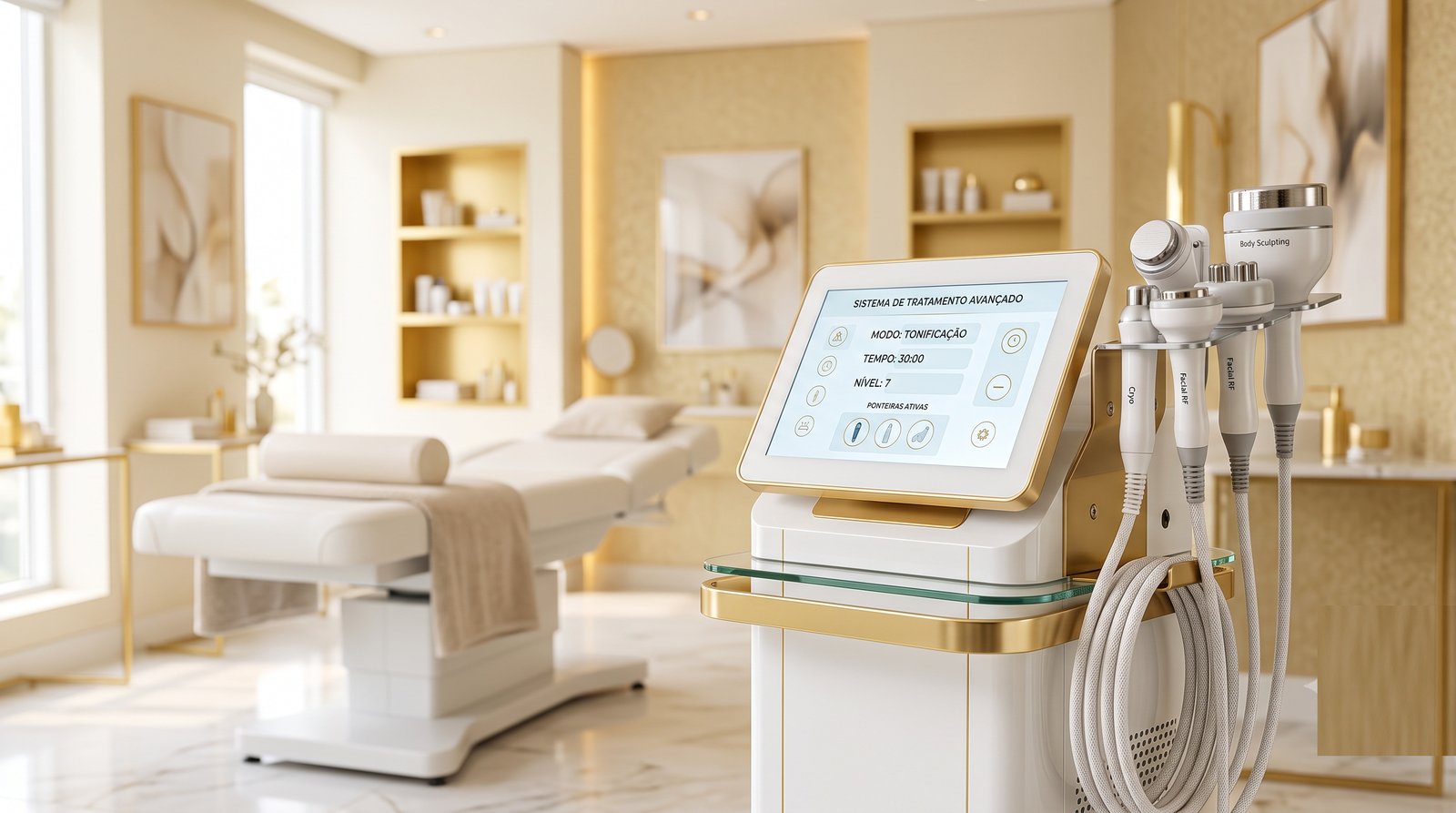
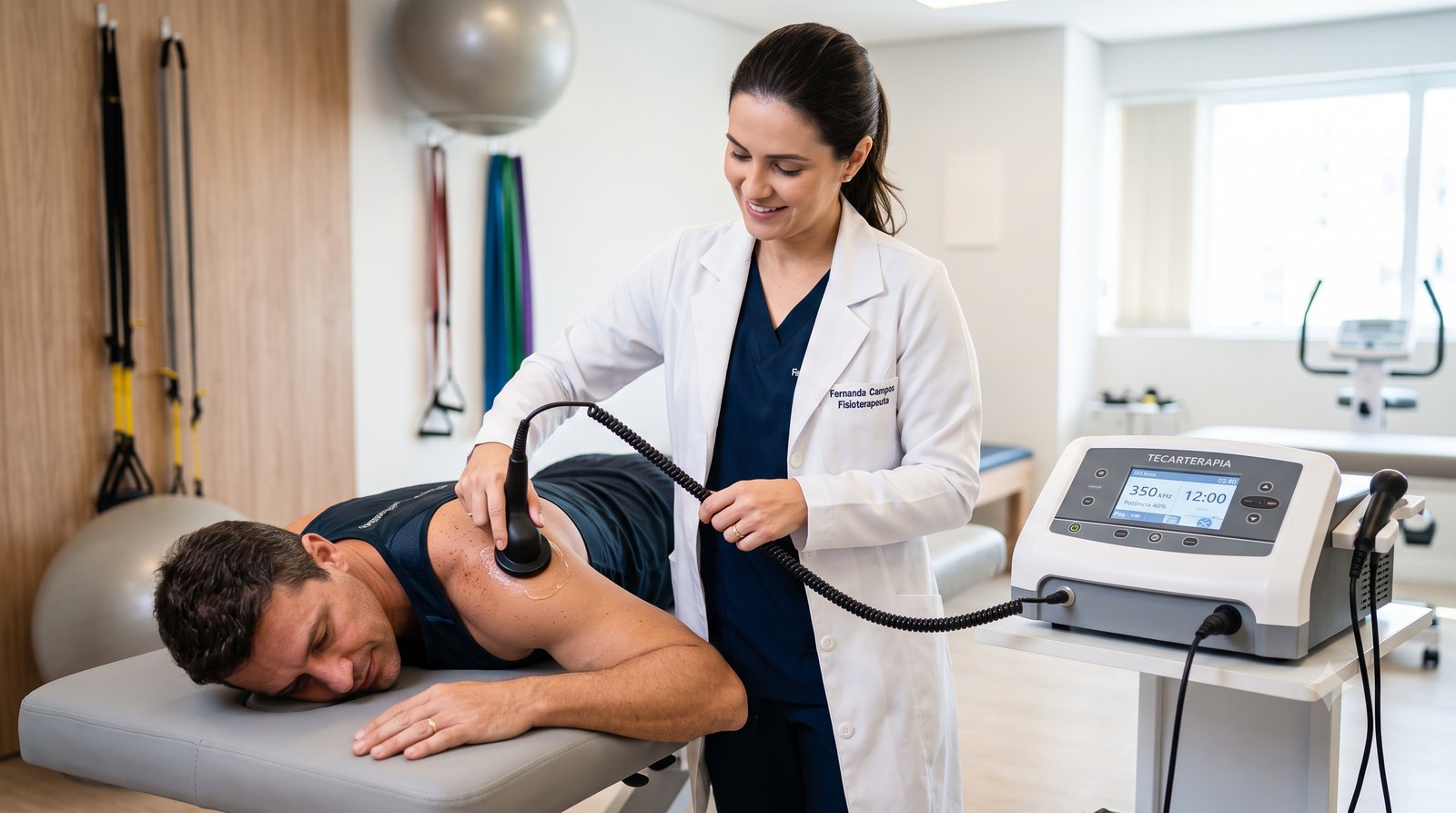
Real finds from this category, with the resale logic and regulatory wall for each one. See more in the China Showcase.
Frequently asked questions about importing health and aesthetic equipment
Does aesthetic equipment need ANVISA registration even if it is only used in a beauty clinic, not a hospital?
It does. The classification does not ask where the device will work, it asks what it does. Laser, radiofrequency, intense pulsed light (IPL) and LED phototherapy are classified as electromedical equipment under Brazilian law regardless of whether the use is clinical or aesthetic, because they emit energy that acts on human tissue. INMETRO Ordinance 384/2020 expressly lists aesthetic equipment among those requiring certification, and ANVISA applies the same RDC 751/2022 risk scale to them. Treating the device as a "salon gadget" and skipping regularization is the mistake that shows up most often in this category.
Do INMETRO and ANVISA ask for the same thing, or are they two different requirements?
They are two agencies, two processes and two dossiers, and neither replaces the other. INMETRO, under Ordinance 384/2020, certifies the device's electrical safety and essential performance against the IEC 60601 series of standards, with an assessment of the manufacturer's quality management system. ANVISA, under RDC 751/2022, assesses the product's sanitary risk and clinical efficacy and decides between notification and registration according to the risk class. A device can have a valid INMETRO certificate and still not have ANVISA registration, and neither document alone allows the product to be sold.
Which comes first, the INMETRO certificate or the ANVISA registration?
The INMETRO certificate comes first, as a piece of the dossier filed with ANVISA, not afterward as a complementary formality. It is this order, more than any single requirement, that separates an import that moves forward from one that stalls: whoever tries to open the ANVISA process without the INMETRO certificate for the exact model discovers the problem halfway through, with the order already closed with the Chinese manufacturer, and loses the months already spent.
Does all aesthetic equipment fall into ANVISA's highest risk class?
No, and assuming that without checking is just as risky as assuming the opposite. RDC 751/2022 organizes health products into four classes: I and II follow the simpler notification path, III and IV require full registration, with a technical dossier and prior review by the agency. Where a specific laser, RF device or physiotherapy equipment falls depends on classification rules applied to the model, not on the product's commercial name. That determination should come in writing from whoever is running the process before the order is closed with the factory, for the same reason that already applies to the INMETRO classification of other Showcase categories: the supplier's catalog does not decide this for you.
How long does it take to regularize a health or aesthetic device imported from China?
Months, not weeks, and that needs to be part of the planning before production is closed. INMETRO certification, with type testing and an assessment of the manufacturer's quality management system, usually takes on the order of several months, and only after that does the dossier move on to ANVISA's review, which has its own timeline depending on the risk class. Whoever treats this as a last-minute rubber stamp, to be sorted out after the container is already at sea, is the one who ends up with the product held at customs clearance or off the market after clearance.
BCVN — Brasil China Viagens e Negócios has connected Brazilian companies to the best suppliers in China and Asia since 2008. Find out about our services in commercial intermediation, quality inspection, factory audits and guided business trips to China's main trade fairs.